December 28 – 31, 2005
These restored messages come from the Quilt History List, an online forum where quilt historians, collectors, researchers, appraisers, and enthusiasts discussed antique quilts and related textiles. The archive dates from 1996 through approximately 2016 and is being restored gradually. Sign up in the form at the bottom of the page if you want to know when a new page is added. Original spelling, opinions, formatting, and inactive links may remain unchanged.
Primary topics of this QHL Digest:
- The Fylfot, Running Foot, and Swastika: A Deeper Discussion — Members continue an extended, thoughtful conversation about the historic “running foot” quilt block pattern, its swastika associations, and how to discuss a painful symbol’s history with sensitivity and context.
- A Reader’s Objection and the List’s Response — The thread is sparked by one reader’s discomfort with the pattern’s inclusion in a published quilt-block book, and members offer a range of historical, cultural, and personal perspectives in response.
- Simply Quilts Cancellation Concerns — Members organize around news that the television show Simply Quilts may be cancelled, sharing contact information for viewers who want to protest the decision.
- Ringing in the New Year — As the year closes, Kris and other members reflect on the list’s community and professionalism heading into the new year.
Date: Wed, 28 Dec 2005 16:38:38 -0900 | From: Gloria hanrahan <gloria@>
Until I became interested in quilt history in the last decade, I had no idea that the swastika was an old, old emblem in many cultures and a frequent quilt pattern. This woman many not know that and I think it is unfair to blast her as having too much time on her hands. I’m sure there are numerous quilters out there who don’t realize it is an old design and may be offended.
I have not seen your book and don’t know what notation was made next to the design, but if it did not have any qualifying information as to the history, then I can see how it could be offensive. Has anyone made a swastika quilt in the last 50 years? I would doubt it.
The view of this symbol has been forever changed and other than being useful for dating older items, I believe it is important for a quilt design reference to have more information included and why it may be important to remember older, positive meanings.
Margaret, what about Sunbonnet Sue? I’ve read The Quilters, but don’t remember anything about the pattern.
Gloria
Date: Wed, 28 Dec 2005 17:48:38 -0800 | From: <chrisa@>
Isn’t the point of reading a book to learn something? So this lady learned that there was a quilt pattern, pre- dating WWII, that used the same design properties Hitler chose to use. That’s art history in effect and for her to actually write to the publisher to get her money back seems way over the top. Perhaps there is a personal family experience that brought about this reaction, since she mentions it was insensitive, causing a response similar to post-traumatic reactions…but the “too much time on her hands” explanation is a good possibility too.
Perhaps the fact that it was a good luck symbol is why Hitler chose it, so he could debase the concept.
Kim Wulfert www.antiquequiltdating.com
—– Original Message —– From: Maggmalone@
This has been bothering me since it happened, and I thought I’d throw it out to see what you think about it. In my last book, 5500 Quilt Designs, was a pattern called Swastika. A lady purchased the book and was quite irate to see this pattern listed. She was so furious, she returned the book and wrote the publisher, complaining about the insensitivity of even including this name in the book. ——=_NextPart_000_014E_01C60BD6.EEAF2380–
Date: Wed, 28 Dec 2005 20:11:03 -0600 | From: Gail Ingram <gingram@>
Kim’s remark about the point of reading being to learn seems apt.
People who buy and use and live with books know that and behave accordingly. How many times have we bought a book, only to be disappointed by it?
I doubt this particular woman is much of a reader. She couldn’t be unless she spent a good deal of her time writing publishers asking for refunds.
The only problems with political correctness are the “political” and the “correctness.” If one uses them as a rubric, she cannot also be concerned with truth.
A writer has an obligation to truth and information thereabout. Yes, if she wants to sell books, she has to take into consideration the demands of the marketplace and the reading levels and experience of her given audience. But to censor one’s work in the name of P.C. Is to guarantee fluff and silliness and disinformation.
Think of it: this one reader was so self-absorbed she felt a publisher should return the small amount she spent on the book because she found one word or pattern “offensive.” Not only is that arrogant, but it is silly and ignorant.
She hardly bears mention, but the pattern does bear mention. Are there certain colors it tended to be used in? I’ve seen lots of blue and yellow.
Gail
Date: Wed, 28 Dec 2005 22:26:05 -0500 | From: “Lucinda Cawley” <lrcawley@>
Thanks to Barb Garrett’s timely reminder I stopped to see the quilts at the Montgomery County (PA) Historical Society on the way to our daughter’s for Christmas. The first two quilts were originally a single Ohio Star friendship quilt. In the 1930s it had been cut in half to make two twin size quilts with scalloped yellow print borders. The signatures dated 1843-45 and there were lots of Quaker names and a wonderful variety of fabrics in great shape. The exhibit includes two other early 1840s signature quilts. A spectacular Chimney Sweep has mostly turkey red blocks with a startling blue sashing fabric. A quilt with turkey red Compasses has an oversized hearts and spades motif in the center. We saw the quilts when J. G. Row’s study group met at the hist. Soc. in 2004, but it’s always good to see such treasures again. The display of sewing items is especially nice. The exhibit is up until Jan. 20 if you’re in the Philadelphia area. One word of caution, get directions from Mapquest; the directions on the website are wrong. Cinda on the Eastern Shore wishing everybody a very Happy New Year
Date: Wed, 28 Dec 2005 22:39:35 -0500 | From: “J. G. Row” <JudyGrow@>
Thanks to Cinda Cawley who made the initial contact and then the arrangements for us, on July 20th 2004, we were welcomed at the Montgomery County Historical Society (PA) for the day.
Go to www.quilthistory.com and click on Study Groups on the left side. Then click on SQSG, scroll down to July 24, 2004 and you will see the photos we took of the quilts Cinda mentioned and more.
> We saw the quilts when J. G. Row’s study group met at the hist. Soc. in > 2004, but it’s always good to see such treasures again.
I welcome Bill Volckening, my old friend from New Jersey, to the list. I told him about “us” before he moved to the left coast and am so glad he is finally with “us” — but oh! the pleasures of study group he is missing having left the right coast!
Judy, aka The Ringoes Kid judygrow@
Date: Thu, 29 Dec 2005 01:02:03 -0700 | From: “Judy Anne” <anne_j@>
I wrote a little article about the swastika quilt a while back. It’s at http://www.womenfolk.com/quilt_pattern_history/swquilt.htm
An article I linked to talks about swastika history in much more detail. http://www.intelinet.org/swastika/
Judy Anne
Date: Wed, 28 Dec 2005 21:09:09 EST | From: MargaretFahey@
When I saw the musical, as I remember it, the young woman has a song where she vents her restrictions by denouncing the block Sunbonnet Sue.
Who remembers the musical better than I?
Margaret
Date: Thu, 29 Dec 2005 01:34:08 EST | From: CRantquilt@
HI all,,, and thanks for taking a look at the Dancing Girls And Butterflies quilt on my site. I would like to find out if anyone knows anything about this pattern. I had never seen one before, but thought it so charming…. Also, in regard to the Swastika pattern, from a dealers view point, I had bought Swatiska quilts years ago esp since the ones I came across were 1890’s-1910 and priced ok with good colors, but found a reluctance of customers to buy them. But now, in just the past month 2 have sold. One was in my booth in an antique mall and the other had an email request for a Christmas present, so I was pleasantly surprised. ( The next time my husband looks over my shoulder I will have several again.) He reminded me of the negative thoughts people had to the pattern, so I always did some explaining. It got to where I would not take any to shows. Again education of the pattern may be the life this quilt needs. How about a special exhibit??? Just a thought…. And Happy Holdiays
Cindy Rennels www.cindysantiquequilts.com
Date: Thu, 29 Dec 2005 07:01:26 EST | From: LinusDonna@
The discussion is fascinating on the meaning and emotions surrounding the swastika symbol.
I can think of at least two other symbols that are currently infused with meanings far different from their original use.
The Stars and Bars was one of the battle flag for troops of the Confederate States of America. It was adopted as the banner of the Ku Klux Klan during Reconstruction, and still today remains one of that organization’s recognizable symbols. It has also been adopted by motorcycle enthusiasts, I suppose as a sign of the rebel.
At any rate, that banner originally had great meaning to those sons of the South who felt they were protecting their traditions and their native land. Today the message is unclear. When I see it displayed on a truck, I wonder if the owner is Southern proud or KKK.
The pentacle, a five pointed star within a circle, is another common symbol infused with meaning far different from the original. Today’s Wiccans use it regularly in worship. Many Christians see it as a mark of Satan.
Originally it was the ancient symbol of the goddess Ceres or Core. It can be found on temples and jewelry and vases all over Rome and Greece. The apple was her symbol and if you cut one in half you see the star formed by the seeds, surrounded by the circle of the apple.
That has been lost to the more common usage in pop culture. When I see a pentacle now, its more likely to be as I channel surf past reruns of “Charmed” and “Sabrina the Teenaged Witch.”
Donna Laing Bucks County PA
Date: Thu, 29 Dec 2005 14:42:30 +0000 | From: Sally Ward <sallytatters@>
> I can think of at least two other symbols that are currently infused with > meanings far different from their original use.
Here in the UK there has recently been a drive to reclaim the English flag (as distinct from the Union Flag). Our ‘Union Jack’ is an amalgam of the flags of England, Scotland and Ireland – the English part being the red cross on white. Some years ago members of organisations such as the British National Party and the National Front adopted it as their symbol and very quickly it became synonymous with bigotry and violence, particularly when perpetrated by gangs of hooligan skinheads associating themselves with football.
I think the battle is being won, but people still have mixed feelings about it – particularly those who are in the minorities targeted by the racist, homophobic and bigoted ‘patriots’.
Sally Ward in a slightly snowy Yorkshire
Date: Thu, 29 Dec 2005 09:45:38 EST | From: Maggmalone@
The book, 5500 Quilt Block Designs, is set up with 15 pattern blocks to a page along with a list of any other names they were known by. It’s not as if Swastika had its own page, although in some of my other books it does.
Date: Thu, 29 Dec 2005 10:43:44 EST | From: RAGLADY@
Maggie Your 5500 Quilt Block book is absoutely wonderful! As a total newbie to quilting in 2001, it was one of the first books I purchased. Then of cour se I had to have 1001 Patchwork Designs. This year I’ll be looking for your 120 Patterns for Traditional Patchwork Quilts. I did a quick net search to make up my 2006 list of “gotta haves” and that book got some excellent reviews. I s it still in print? If not, I’ll be scouring some of the used book lists
Hope it’s okay to gush on the list abt some of my favorite designers. <grin> I have several of Pepper Cory’s books to as among my favorite quilt designs are all of the great variations of Drunkard’s Path block – another design which fell out of favor during the Prohibition era
Gloria raglady@
Maggmalone@ writes:
> The book, 5500 Quilt Block Designs, is set up with 15 pattern blocks to a > page along with a list of any other names they were known by.
Date: Thu, 29 Dec 2005 09:31:51 -0600 | From: Gail Ingram <gingram@>
For a look at a bunch of symbols in one quilt, go to http://www.quiltsquilts.com/q5080.jpg—the flyfoot, the eagle, the love apple, etc.
Gi
Date: Thu, 29 Dec 2005 11:01:01 EST | From: RAGLADY@
I am so sorry for the duplicate post – but had my orginal post returning for excess quoting (over 5 lines) so I cut it back .. and then gremblins inserted blank lines and it got rejected again… Corn-fusing — BUT I do like the auto-edit feature…
Definitely wish that my CyberQuilters YahooGroups list offered that feature.!!!!!! It would be “on” in a flash <grin>
Gloria raglady@
Date: Thu, 29 Dec 2005 18:24:52 +0000 (GMT) | From: CELIA EDDY <celia.eddy@>
This exchange on the swastika quilt name is fascinating and, although it’s clear that this particular name has associations stretching far back into history, prompts me to remember that not all quilt names created in more recent times have pleasant and happy associations. For example, Sherman’s March commemorates a desperate and tragic episode in American history, while many patterns refer to slavery or have other unhappy associations.
So, of course the swastika pattern should definitely appear in lists of patterns – it is part of the history of quilting – but because of the notoriety it acquired in the 20th century by being selected by the Nazis as their symbol, few people would choose to use it today. A pity, because it and related patterns, such as Crazy Anne, have much design potential. Unfortunately, so strongly imprinted are the horrific images which the swastika conjures up that even if it was re-named I suspect we’d still reject it.
Celia Eddy
MargaretFahey@ wrote: I don’t even make the pinwheel block because it reminds me of a swastika. However, it certainly belongs in a collection of patterns since it existed during and before WWII. A catalog of patterns does not endorse any political feelings about any one pattern.
Those of us of a “certain age”, do have these feelings which I am always surprised to feel at odd moments like that. However, I know they are my feelings and I try to balance them with current reality. I guess that several of the patterns we now embrace once had such feelings attached. Does anyone have a list? Weren’t they created because of feelings? We don’t shun the Whig Rose, or keep it from being displayed because we feel angry about the politics.
Just as I write that, I must confess that what the swastika represents does not come close to the example I just gave. Perhaps Native Americans have a symbol they detest, or Black Americans. Are they also quilt patterns? Kind of an interesting subject now that I think of it.
Because my grandmother made me a Sunbonnet Sue quilt, I liked it with its remembrance of her other sewn garments. Naming whose apron, dress, sunsuit, etc. from the patched blocks was always a fun “quiet” time for my cousin and myself. Then in Quilters, the musical, a very different reaction to the pattern is expressed.
We are our experiences I guess. But a collection, or an historical accounting, etc. must include all. Otherwise, what might be omitted without anyone knowing? I would miss Sue, although I have not pieced the old dear.
Margaret
From: “Bill Volckening”
Hi Judy!!! I’m glad I found this group. It’s the perfect time for me to be involved in discussions and research. My collection has grown substantially in the last couple years. This year is set aside for documentation, research, appraisals, etc. (and maybe I’ll even add a couple pieces to the collection).
I wanted you to know I still have that wonderful New York Beauty quilt we showed at that big old barn space in PA a few years back. In fact, I now have 8 or 9 New York Beauties in my collection. Will post pictures sometime soon.
You’re right that I miss the antique scene on the east coast, but I don’t miss the traffic!! Although I haven’t found too many quilt collectors out here, I absolutely love Portland, Oregon!
My apologies for hijacking this thread to say “hi” to Judy…but I know everyone else will understand…old friends reunited in time for the New Year! What could be better?
Cheers! Bill
Date: Thu, 29 Dec 2005 15:02:29 -0500 | From: “Lynne Z. Bassett” <lzbassett@>
Happy New Year, everyone!
Now that Christmas is over, I finally had a chance to sit down and read the latest Blanket Statements. As you may recall, I wrote a few months ago regarding my article about Mark Twain, Horace Greeley and an 1872 calico–at that time, Blanket Statements had omitted my footnotes. It was promised that they would appear in the next issue–and, indeed, there’s an apology from the editor and a “bibliography” for my article. What was actually printed, however, are the footnotes for the article on applique quilts by Helen Ewer, also in that issue. Argh! So, again, I am offering to send the article–with footnotes but without pictures–to anyone who’s interested.
Also, I heard from lots of people that they couldn’t find the September issue of _Antiques_ (with my article on New England whole cloth wool quilts) at their local bookstore, so I ordered a bunch from the magazine office. I just received 10 copies. I will be glad to send a copy to anyone who’d care to receive it, for $9.00 to cover the cost of the magazine and mailing.
Best, Lynne
Date: Thu, 29 Dec 2005 18:10:19 -0500 | From: “Pepper Cory” <pepcory@>
Let’s not forget the Simply Quilts threatened cancellation (I refuse to give up…) Go to http://www.petitionspot.com/petitions/simplyquilts and sign the online petition please.
The number of people who have signed is now in the 8000’s. Let’s go for 10,000 people! When you sign, be sure to add a personal comment and tell them why you think HGTV should keep Simply Quilts. If you meant to sign the petition and didn’t, then please do so now.
If you know quilters who aren’t on the Net and would like to voice their dismay, please pass on this address: HGTV Viewer Services 9721 Sherrill Blvd Knoxville TN 37932.
Signing the online petition is good but writing REALLY gets their attention. Let’s go for 10,000 by New Year’s Eve!
Pepper Cory in NC
Date: Fri, 30 Dec 2005 08:27:01 +0200 | From: adi hirsh <adamroninetvision.net.il>
CRantquilt@ wrote:
>,I had bought Swatiska quilts years ago… but found a reluctance of customers >to buy them. But now, in just the past month 2 have sold….. Again education of the pattern may be the life this quilt needs. How about a special exhibit??? Just a thought….
I have been following this discussion, and though I do think that historically, the pattern has its place in quilt history and pattern books, I also think that is where it belongs, and where it should stay. Tthe buyer who returned the book may have overreacted, but as an Israeli, I know quite a few holocaust survivors and their descendants who refuse, to this day, to touch German products, let alone bring into their house anything containing a swastica. One should always remember, I think, that life does not begin or end at quilts and quilt history – this person may have been the daughter of a woman with a blue number tatooed on her arm, something which a response like “she should get a life” does not bring into account. As to the post quoted above – with all due respect, I tend to regard with suspicion anyone buying today a quilt bearing such a symbol, much like anyone buying Nazi memorabilia. I suspect this stems more from unsavory sympathies than any love of quilts o r quilt history. A special exhibit? really, the Nazis have done such a thourough job of contaminating this symbol, that (again, in my opinion), all such an exhibit would do is encourage exactly the things this symbol stood for under the Nazi regime. I personally cannot regard this symbol, and anything it appears on – including quilts, even if they predate Nazi Germany – with anything but revulsion. The comparison to the Southern flag adopted by the KKK is very apt, but I believe the holocaust, and the horrors the swastica evokes, are so unique, so truly abominable, that I sincerely hope nothing ever cleanses this symbol, or make us forget what has been done in its name. Incidentally, if memory serves, it’s exaclty the ancient Arian roots and traditions that had led the Nazis to adopt the swastica as their symbol. <getting off my soap box now> Ady in Israel
Date: Fri, 30 Dec 2005 04:36:09 -0500 | From: Debby Kratovil <kratovil@>
When I lived in Maryland and was a member of the NeedleChasers of Chevy Chase, DC we had an older member who with obvious discomfort brought a set of Swastika blocks to our attention at our meeting one day. She didn’t want them but she didn’t really want to destroy them. A guild friend suggested we divide them up between two of us and then we take them apart and give them a new life. Kathleen (guild president) and I did just that. The beauty of these blocks is that they were from the turn of the century and the fabrics were in excellent condition. I kept the flying geese sections and created new stars. Kathleen did something totally different. We had two small quilts as a result and the blocks were redeemed.
A second incident occurred on a quilt art listserve about 10 years ago. The members were discussing this block and its history and – oh, my! – did feathers fly. Some insisted it was perfectly ok to make quilts with this symbol and to the devil with anyone who objected. Some were so offended that we were even having this discussion that they quit the list! This block is a lot of things, but neutral is not one of them! Debby — Debby Kratovil http://www.quilterbydesign.com Special Projects Editor, Quilt Magazine http://quiltmag.com
Date: Fri, 30 Dec 2005 12:12:13 +0000 | From: Sally Ward <sallytatters@>
Pepper Cory wrote: > Let’s not forget the Simply Quilts threatened cancellation (I refuse to give up…) Go to http://www.petitionspot.com/petitions/simplyquilts > and sign the online petition please.
I have tried twice to sign the petition, and get told ‘this offer is not available in your area’. Is there any other address I can write to?
Sally Ward (evidently living in the netherworld)
Date: Fri, 30 Dec 2005 07:19:43 -0600 | From: “Doug and Sarah Hough” <dougandsarah1@>
I would like to thank Adi for stating my sentiments. Until we have walked in that lady’s shoes, let’s not tell her to get a life. We don’t know what has happened in her life.
Sarah
Date: Fri, 30 Dec 2005 12:02:02 EST | From: TEXTIQUE@
Sally; This address was on BQHL to write your protest directly.
HGTV Viewer Services 9721 Sherrill Blvd. Knoxville, TN 37932
Jan Thomas
In a message dated 12/30/2005 5:13:29 A.M. Mountain Standard Time, sallytatters@ writes:
I have tried twice to sign the petition, and get told ‘this offer is not available in your area’. Is there any other address I can write to?
Sally Ward (evidently living in the netherworld)
Date: Fri, 30 Dec 2005 20:41:27 +0000 | From: Sally Ward <sallytatters@>
TEXTIQUE@ wrote: > > Sally; This address was on BQHL to write your protest directly.
Thanks Jan, I’m onto it. Now I know I live in the netherworld. My BHQL delivery is spasmodic, and this one I obviously missed 🙁
Sally
Date: Fri, 30 Dec 2005 15:34:12 -0600 | From: Gail Ingram <gingram@>
I was happy to see Adi’s response re what I persist in calling the Running Foot pattern in quilt history. We need to recall the visceral, complex responses that symbols elicit. Like the member who noted her affection for Sunbonnet Sue, I have a certain love of old Sue because of a body of experiences I associate with her from childhood. When I see Sue, even now after seeing her in 3 zillion very ordinary versions, I go home in my heart. I am flooded with the feelings of great-aunts’ homes. A well-done Sue is vanilla to my soul.
That is the way symbols work, why they are symbols: they pull together an entire complex of emotions rooted in the subconscious level of our minds.
I never hear the song “Dixie” played that I don’t feel pride of place and in my “homeland.” Suddenly I am in college and my school’s team has scored a touchdown and somehow reaffirmed that though the world beyond might consider Southerners yokels or Al Capp creations, we know better: we know and love the strengths of family and place and all that constitutes our culture.
This reflexive response is the real reason the people of any nation detest the sight of their flag being burned, feel prouder when they see it unfurled in a nice strong breeze. Symbols can represent a group experience, not just private experience.
Hence the wars over the flags of the Confederacy, for instance. For those of us who are white and reared in the South, these flags have intense, personal and cultural meaning. They link Virginian with Louisianian. That meaning is generally unrelated to racism. Those flags embody among other things a sense of loss and endurance of our people, an awareness of our common experience and strength.
Yet, a number of Southerners have entirely different associations with the Confederate flags. To them, they embody the feeling of degradation, hostility to a ruling group that dehumanized them.
And for a younger generation of Southerners, those flags have no deep symbolic meaning at all. Oh, they might be affixed to back window of a pick-up truck along with a sign saying, “America–love it or leave it.” Yet I really doubt in such cases, they rise to the level of symbol. And despite nearly 150 years’ time, the cross of the Kluxers has never managed to represent anything more than an obnoxious misuse of a sacred symbol, the Anti-Christ, not the Christ.
All of this complexity lies behind our responses to the Running Foot/Swastika. It also suggests the need for analyzing those responses.
Like Adi, I personally could not own or use a quilt or anything else with the Swastika on it, though I do own and enjoy objects with other variations of the Running Foot pattern. Yet I was born in an age when Nazi Germany had hijacked that ancient symbol for its icon, and something deep within me shivers when I see it. The thought of a Sherman’s Path sickens me, for it represents both a new and horrific idea of warfare that has permitted peoples to rationalize and dehumanize civilian populations and a brutality that reared its head in the London blitz and other places through time.
That said, I believe we have within us the power to defuse negative symbols, to diminish their power over us. We can condition our reflexes. And sometimes we need to do that to get past hatreds and fears. In America Southerners have had to deal with this need in a variety of ways.
I personally think an exhibit that studied the evolution of the running foot in art or one that studied the evolution of the pattern in quilting would be valuable and might give those of us who knew it as the swastika a power and even understanding that we do not now feel.
And then, again, it might not. What, for instance, is the origin of the modest popularity of the running foot motif in the 19th century? Was it Wagner’s and Nietzche’s popularization of the Ayran Myth? Was it more popular among some quilters from sections than among those from others? (I, for instance, have seen it more frequently in midwestern quilts. If that or any other concentration is true, what is its explanation? If it was more general in use and popularity, I’d like to know that). Lot of questions that I think need to be answered.
Such a spirit of inquiry would be unlikely to feed any nasent neo-Nazi feelings. It could answer questions that are legitimate and ones we ought to face honestly. Maybe those quilts were not so innocuous as we think? Or maybe they were. In any case, in the interest of truth, I personally hope someone undertakes such an investigation.
Cindy, you are the one that noted the possible usefulness of an exhibit of Running Foot pattern quilts: you should consider undertaking the project. I hope someone does.
Gail
Date: Fri, 30 Dec 2005 10:44:43 -0600 | From: “Debby Rake” <dsrake@>
I was in our community theater’s production of the musical “The Quilters” some years back. The skit about Sunbonnet Sue centers around two sisters, one very dutiful and perfect, one a bit rebellious. The “good” sister makes a beautiful Sue quilt, and in retaliation the other makes a quilt in which Sue is killed–a different horrible death in each block. In her song she describes these deaths with great relish, and then with even more glee describes her sister’s reaction to the finished quilt. It is a hilarious number. I hope you all have a chance to see “The Quilters.” It’s great.
Date: Sat, 31 Dec 2005 15:43:50 +0200 | From: adi hirsh <adamroninetvision.net.il>
:Just a few thought. Gail, whom I respect immensely, wrote
said, I believe we have within us the power to defuse That > negative symbols, > to diminish their power over us
That is precisely what I object to. Symbols are indeed symbols, and have the power to evoke memories and associations. The swastika has po wer over us because the murderous ideology that engineered all the horro rs it evokes is still present, albeit in many different guises. Wher ever that symbol rears its ugly head, it is always in the name of hate – hate of Muslims in Europe, hate of blacks in South Afrcica. By rehabilitaiting that one symbol, or even by putting it on a par with o ther symbols, as “just a symbol,” we stand in danger of demeanin g the holocaust, its victims and survivors, of all nations and relig ions.What had been done in the name of this symbol is a uniquely horri fic and hopefully never to be repeated episode in human history. Once we try to “cleanse” and “rehabilitate” it, there’ll always be those who will use it to their own ends, to promote racism and viol ence, and exploit the implicit “endosement” which would attend suc h a rehabilitation. I think one look
at this link: http://news.bbc.co.uk/2/hi/africa/3797797.stm makes it amply clear what the swastika inspires, to this day. One should also remember that Nazism is far from gone – Neo-Nazism is still al ive in Europe, and among these groups the swastika stands for precisel y what it stood for 65 years ago. Investigation, in history books an d scholarly papers, is fine and well – an exhibit is completely differ ent, an endorsement of something that should remain in the dusty realm s of academe. Ady in Israel (Off to bake another batch of chocolate chip cookies for New Year’s(
Date: Sat, 31 Dec 2005 08:52:51 EST | From: Litwinow@
Happy New Year, Ahh, quilt history! I remember at AQSG meeting when Marsha Mc. of Michigan State gave the keynote. She told the story of her family in Africa. A baboon got in the car and how each member of the family had different perceptions of the event. I was home for the holidays and the three sister had three different stories to tell of the same event (87 year old mother was a bit shocked at some of them). I asked her about the swastika. Her family had a quilt. She said her mother and grandmother spent hours hand appliqueing a strip to chance the design. My “Death of Sunbonnet Sue” response comes from the maker herself–Barbara Brackman. When I first saw in the quilt at Heirloom to Heirloom in 1983 in Ames, IA-I was first appalled and then came to love it. Being a little bit (1/64th) Native Sioux-Sunbonnet Sioux (poor Sue is shot with arrows) is a favorite. Poking fun at foibles is a definite American trait. In my naivety- I thought Barbara’s group Seamsters Union #_____ was a real union! Barbara thought that one of the quilter’s interviewed for Cooper and Buferd’s book had seen the quilt. Barbara mentioned how she wished she had a nickel for every time the play was done. Wishing you a Happy New Year. Catherine Noll Litwinow 33 degrees in Iowa
Date: Sat, 31 Dec 2005 09:23:33 -0600 | From: “Barbara Vlack” <cptvdeo@>
I’m so sorry that the swastika has such a dark attachment to a horrible time in history. It’s otherwise a nice design when it’s on point. It has some great visual movement to it and can be interpreted in many ways.
I once submitted a design for the clubEQ challenge on the EQ website. I’m the challenge mistress. It had a setting for several blocks with colored patches and a black background. The secondary design was what I saw as a pinwheel with blades on point. Someone else saw it as a swastika, objected to the people at EQ and the design was pulled from the website and replaced with a variation that did not suggest the movement that was present in the original. This was a strong reminder to me of how powerful and objectionable a symbol could be.
Gail presented a very good treatise on the power of a symbol. We cannot dismiss it as just a thing. For some, they will never be able to move beyond the feelings evoked with its connection. I don’t mind being sensitive to that. You might not understand the feeling, good or bad, generated by a symbol unless you’ve have a moving experience.
I was reminded of a time when my husband and I were being hosted at a dinner in Japan with Japanese businessmen. For dinnertime background music, they had an accordion player. At one time during the dinner he started to play the Stars Spangled Banner. Now, I had never heard the Stars Spangled Banner played on the accordion and it took a few seconds to recognize it. But I felt obligated in the middle of dinner to stand until the music stopped. Everyone else followed my lead. There’s nothing like hearing your national anthem played in your honor in a foreign country. Even on an accordion.
Barb Vlack cptvdeo@
Date: Sat, 31 Dec 2005 09:18:11 -0800 (Pacific Standard Time) | From: “Marilyn Withrow” <marilynquilts@>
I’ve tried to add my name to this petition, but it insists on getting a lot of personal information so I can “win an iPod” — which I don’t want. I would like to support Simply Quilts, and don’t mind giving my name and address, but choose not to give other personal information online. There must be another way to support this? Marilyn Maddalena Withrow ————–Boundary-00=_BEHD6RO0000000000000–
Date: Sat, 31 Dec 2005 11:27:40 -0600 | From: “avalon” <malthaus@>
Maybe this idea from Ami Simms would be a better solution.
Ami Simms has had the best idea in the world for Simply Quilts and Alex. I am forwarding her message with permission. Please, let’s flood Viewer Services with Squares and letters!!
There are petitions and email addresses circulating, but a good old-fashioned paper letter that arrives by mail will make the most impact. Before the postage rates to up on January 8, address your letter of protest to: Simply Quilts Viewer Services 9721 Sherrill Blvd. Knoxville, TN 37932 It doesn’t have to be long, a few sentences will do it. Speak from your heart. Ask them to reconsider. Can’t find the right words? Try: “I watch Simply Quilts. I want YOU to know and I want ALEX to know. Keep her on the air! Please send her this piece of fabric from me.” Include a 3″ square of quilting fabric for Alex. Sign the patch with your name, city, and state with a permanent pen. Ink in a message to Alex if you
like. Ask Viewer Services to forward it to Alex Anderson. By all means send emails and sign the online petitions, but if we all write a letter (or two) we might turn the tables. Either way, Alex will have enough patches for the biggest friendship quilt on the planet! Don’t wait. Do it right now. (I’ll hang on while you get out the paper…) We can do this. We can make a difference. Together. Right now. Power to the
QUILTERS! PASS IT ON! Ami
Date: Sat, 31 Dec 2005 17:30:03 +0000 | From: “jocelynm@” <jocelynm@>
If you cannot view the attachment(s), then your email client does not support MIME.
On December 31, 2005, Marilyn Withrow wrote:
> I’ve tried to add my name to this petition, but it insists on getting a lot > of personal information so I can “win an iPod” — which I don’t want. I > would like to support Simply Quilts, and don’t mind giving my name and > address, but choose not to give other personal information online. There > must be another way to support this? > > Marilyn Maddalena Withrow
Marilyn,
Answer incorrectly. 🙂
If there’s no need to have your email/address verified, you can always give a fake one. 🙂
_Boundary_4558572.46580663–
Date: Sat, 31 Dec 2005 12:36:39 -0500 | From: Laurel Horton <laurelkalmiaresearch.net>
I appreciated Gail’s thoughtful and eloquent posting on the subject of swastika/running foot patterns. I agree that the use of symbols, visual and otherwise, is highly complex, and our experince of them can elicit powerful physical responses. When we talk about a “gut feeling” we are describing an actual visceral sensation. The human brain is wired such that incoming sensory data is processed by the emotional center in the brain, which then sends out impulses that are experienced almost simultaneously in the body and in the cognitive center. That’s why we often react immediately to a stimulus, then afterwards “rethink” our response. And as Gail points out, it’s at this stage, that analysis of our experience can be useful. A gut reaction is not necessarily good or bad, right or wrong–the value we ascribe to it depends on our interpretation.
A classic example of this is walking across a beautiful green field and seeing a single red flower. Overcome with the beauty of the bright red among the green, you approach it, only to find that it’s discarded potato-chip bag. It’s interesting to observe the change in your response given this new information.
Here in South Carolina, we also are faced with a variety of interpretations and uses of the Confederate flag. Most southern towns also have Confederate monuments, erected at the turn of the 20th century to honor local soldiers, and usually prominently placed in front of courthouses. I remember hearing about a person who moved to a southern town and complained about the presence of the monument, finding it “offensive.” I thought about the local families whose ancestors were among those honored, and figured that the newcomer had followed through on an initial reaction without stopping to understand the local perspective. As Gail put it, “symbols can represent a group experience, not just private experience.” It’s helpful to realize that these may not always coincide.
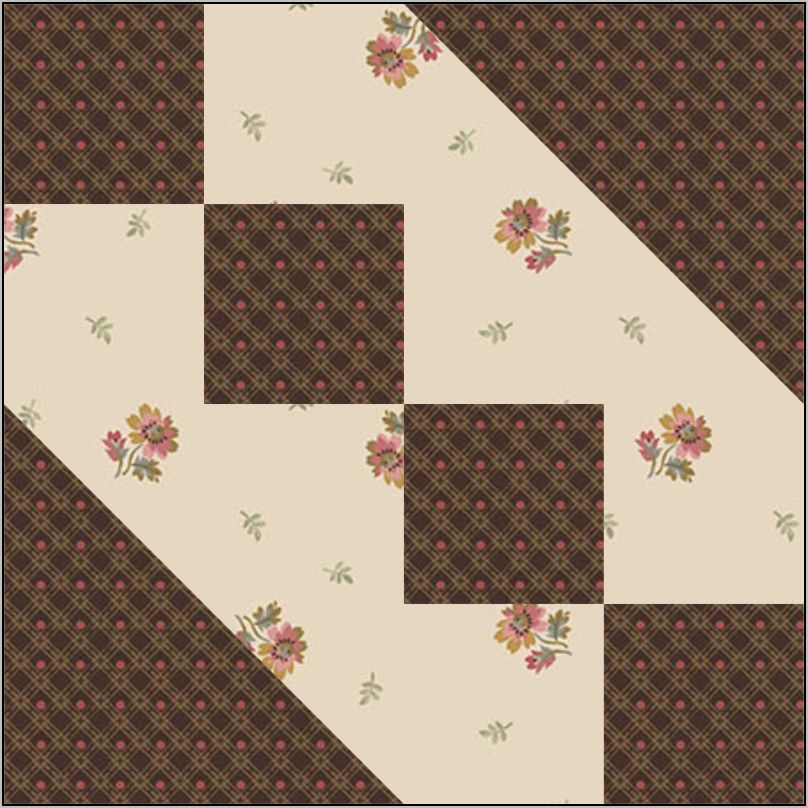
The Mary Black collection includes a quilt in the pattern I chose to call “Flyfoot,” as we don’t know what name, if any, the maker ascribed to it. I had not thought about it, but it’s possible that some reader might challenge its inclusion in my book. The quilt is from the turn of the 20th century, and I included a footnote about the later Nazi appropriation of the symbol. If this reader decided to return the book, I would expect the seller to be gracious about it. If she wanted the public library to rip out those pages, I would object. The Flyfoot is not one of the quilts from the collection currently displayed at the Mary Black Foundation office, but if the family decides to mount and frame the remaining six quilts, I would hope that this one is included. It could become controversial; it could also offer learning opportunities.
Like many of us, I experience physical revulsion at the sight of the swastika symbol, particularly when shown in the context of the Nazi movement. I don’t have that reaction when I look at Mary Black’s Flyfoot quilt, maybe because I understand its proper context; and I think that lack of reaction would probably extend to other early 20th-century quilts of the same pattern (Brackman 1130b). If I saw a swastika quilt that more closely resembled the Nazi presentation (squared up, in black, gray, and white, maybe)and if I knew it was made in the 1930s or the 1970s, I would want to ask some questions, no matter what my initial visceral reaction was. If there had been such a quilt in the collection, I would have tried to deal with the context as objectively and sensitively as possible, but I say for sure what the outcome would have been.
Gail said > I believe we have within us the power to defuse negative symbols, to diminish their power over us. We can condition our reflexes. And sometimes we need to do that to get past hatreds and fears. In America Southerners have had to deal with this need in a variety of ways.
I agree, except that instead of using the word “condition,” I would spell out an attempt to be aware of these physical reflexes, and then to decide whether I want to act on them or not. I think we have the responsibility to recognize that others might experience negative reactions, but we are not responsible for providing a negative-reaction-free environment for all potential audiences.
Too late to make a long response short, but a lot of issues are very complex when you really look at them.
Laurel Horton
PS: /Mary Black’s Family Quilts: Memory and Meaning in Everyday Life/ is now available. To order a signed copy, you can download an order form and pay by check from my rudimentary website: http://kalmiaresearch.net/Publications.htm. If you want to use a credit card, order from the publisher http://www.sc.edu/uscpress/2006/3610.html, or from your local independent bookstore.
Date: Sat, 31 Dec 2005 13:50:42 EST | From: Mitzioakes@
Just a ‘final’ comment on this Swastika item – to the best of my knowledge the Nazi symbol was never ever any color than BLACK. Colored versions of this controversial pattern do not visually effect me as Nazi related, it is just an accepted pattern. Mitzi
Date: Sat, 31 Dec 2005 13:51:19 -0500 | From: “Sharon in NC” <patchworksecrets2@>
I am wondering why you would send it to Simply Quilts when it is HGTV that decided not to purchase anymore of the segments? I agree support for Alex is great but if you want to get the show back then you need to talk to the people who are actually in control. The ad purchasers from HGTV
Sharon in NC
Date: Sat, 31 Dec 2005 11:05:57 -0800 | From: Alice Kinsler <alicek@>
Pepper, thank you for the alert about Simply Quilts. I don’t know how you heard about this, but I’m glad you did! I signed the petition, commenting that I tape each show (including also the re-runs on the DIY Network) and watch them on the weekend. Though some shows don’t resonate with my quilting tastes, I really enjoy the segments on museum displays, quilt history, and also staying in touch with the latest trends in quilting. There may be QHLers that don’t watch it, but I would encourage you to sign the petition in support of your peers who find the program useful. A rainy day in Central California, Alice Kinsler
Date: Sat, 31 Dec 2005 11:26:32 -0800 (PST) | From: Kris Driessen <krisdriessen@>
As the year ends, I can’t help but reflect on the professionalism of the members of this list. What other list could discuss this hated symbol without rancor?
Those of you in my area may remember this incident which happened in early December years and years ago. One of the southern states was engaged in a battle having to do with the confederate flag. I don’t remember the details now, but emotions were running very high and there was extensive media coverage.
One day, our local paper ran a picture of two family house which had its second story balcony decorated with the confederate X-in-a-rectangle symbol in lights. People were outraged! Even more so when they found out the renter was a local college student. Because he was in the midst of final exams and at school all the time, the paper had been unable to reach him for comment.
Finally, they were able to catch him on the way home one day and asked him how he dared put up such a racist symbol. He looked up at the lights on his balcony and said, “They’re CHRISTMAS LIGHTS!”
Sometimes a cigar is just a cigar. (Sigmund Freud)
Kris
From: “ChrisA” <
Marilyn- You are responding to pop-up ad that is so big it looks like it is the place you go to agree they send your petition. But it’s not. At the very top of that page is the place you click to say you agree. They do not ask for any personal info at all. Start over, the first note won’t be posted.
Kimberly Wulfert, PhD www.antiquequiltdating.com Email: quiltdating@
On December 31, 2005, Marilyn Withrow wrote:
From: AndreaBlackhurst@
The Stars and Bars was one of the battle flag for troops of the Confederate States of America. It was adopted as the banner of the Ku Klux Klan during Reconstruction, and still today remains one of that organization’s recognizable symbols. Today the message is unclear. When I see it displayed on a truck, I wonder if the owner is Southern proud or KKK.
………or just a fan of the Dukes of Hazzard!
Andrea, near Dayton