May 15 – 20, 1997
These restored messages come from the Quilt History List, an online forum where quilt historians, collectors, researchers, appraisers, and enthusiasts discussed antique quilts and related textiles. The archive dates from 1996 through approximately 2016 and is being restored gradually. Sign up in the form at the bottom of the page if you want to know when a new page is added. Original spelling, opinions, formatting, and inactive links may remain unchanged.
Primary topics of this QHL Digest:
- Deteriorating Vintage Buttons — Members diagnose the chemical breakdown behind smelly antique bakelite and celluloid buttons and share treatments.
- Storing Quilts and Tops Properly — A storage question kicks off a debate over plastic bags, cedar chests, and other long-term quilt care methods. (see the article on caring for antique quilts)
- A WWI Troop Quilt Discovery — A member describes finding an embroidered World War I troop quilt bearing 255 soldiers’ names.
- Training the Next Generation of Restorers — Restoration-minded members discuss teaching classes so more people can learn to conserve quilts themselves.
- Natural Plant Dyes for Fabric — Members trade book recommendations and folklore on using plant-based dyes to permanently color fabric. (see the article on natural dyes)
Date: Thu, 15 May 1997 10:52:40 -0600 | From: Elizabeth Richards
I have just returned from giving two conservation workshops in Drayton
Valley an oil town west of Edmonton. I offered to come ahead of time so if
people wanted to bring in “old” quilts I could look at them and offer
suggestions regarding care. Well I saw three truely wonderful quilts – plus
some ordinary ones.
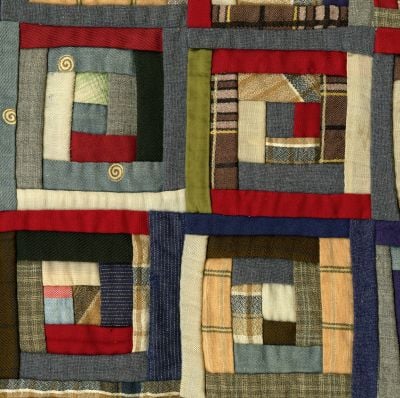
The first was a wool log cabin quilt made in the 1860 – 70’s and brought to
Canada from Indiana. It supposedly had some Civil War uniform fabrics in
it. What interested me is that there was a very limited amout of red fabric
in it – and the reds were both twill and plain weave fabrics.
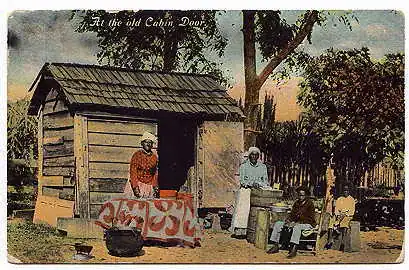
The second was a “find” from an Alberta historical perspective. It was a
quilt made by a black family before they came to settle in Breton as free
persons. There were a number of black settlements in Alberta but by now
most of the people have intermarried or moved and much of their history is
lost. It is very unusual to have an artifact and know where it came from,
for these people. The top was pieced and the top and back were cotton. The
“batting” was a grey twill weave blanket and then all sorts of other wool
fabrics to fill up the spaces at the end of the blanket. (There were lots
of holes so it was easy to see the batting.)
The third quilt was outstanding and any museum would like it in their
collection. It was a Victorian hexagon quilt, made of cotton fabrics. The
woman who made it had been “in service” all her life to a wealthy woman and
it is thought that she got the fabrics from the woman. A few of the
hexigons were of the same fabric but most were different – rather like a
charm quilt. The quilting stitch was quite small and the quilt was quilted
in a typical British pattern whereby there is an overall pattern to the
quilting but the stitching doesn’t relate to the peicing. The boarder on
the outside and the fabric at the corners was wonderful chintz fabric. The
quilter had gone especially to London to buy this fabric. It was finished
in time for Queen Victoria’s Jubilee. (I think think quilt will come to the
Conservation Service for quilting. We of course will have to see if the
chintz is able to withstand water/detergent without loosing it’s finish.)
So in addition to being with very sharing quilters who were most interesting
in conservation/restoration I saw some wonderful quilts. Even better was
that we all shared in what each other brought to the workshops.
Elizabeth A. Richards, M. S., PHEc.
Professor, Department of Human Ecology
University of Alberta
301 Printing Services
Edmonton, Alberta
Canada T6G 2N1
phone: 403 – 492-2475
fax: 403-492.4111
Date: Thu, 15 May 1997 23:56:06 -0400 (EDT) | From: AMDOODAH [at] aol [dot] com
I have also had this problem. It seems to be from deteriorated bakelite,
celluloid, or certain other “plastics”. After you have thrown those away,
check to see if you have any buttons with metal shafts attached to a button
front. There is a piece of cardboard between the two and it will hold in
moisture and odor. Those need to go too or at least be separated out.
What’s left should eventually respond to washing and/or soaking in baking
soda and airing in the shade. I separate mine by color or era or whatever
entertains me and leave them in bowls on my coffee table for my quests to
play with while we chat. Weird!
Date: Fri, 16 May 1997 06:13:34 -0400 (EDT) | From: Baglady111 [at] aol [dot] com
I am seeking the email address (or if someone will have her contact me) of
XENIA CORD..I was in a quilt shop in Indianapolis IN last week..promised them
several new quilt tools on the market..have emailed my hostess for the
name/address..but no repoly..me thinkth she isn’t too involved with
email..XENIA was at my lecture so would know the shop..I’ve tried to email
her and it bounces back..I probably have it wrong in some
way.. so I need some help..Jane
Date: Fri, 16 May 1997 06:42:23 -0400 (EDT) | From: Baglady111 [at] aol [dot] com
I don’t know if that is an open question regarding supplying the
batt/backing..when I quilted for clients, they supplied the backing UNLESS
they were unable to get the extra wise width..we always preferred NO SEAMS ON
THE BACK..my local shop carried it so I would buy it for the cleitn..ditto
the batt..too bulky to mail..you feel like you are mailing AIR..JANE
Date: Fri, 16 May 1997 07:52:18 -0400 | From: “Miklos B. Lukacs”
Thanks to Elizabeth for sharing the info on the three quilts. How
thrilling to do the work you do and get to handle the true relics and
then to aid people in preserving for the future. Connie L.
Date: Fri, 16 May 97 09:20:19 PDT | From: John & Cinda Cawley
Came home yesterday to find a big box from Kris containing fifteen
back issues of Uncoverings and the new Mormon book. What do you think
I’ll be doing this weekend (with time out to give a party for my nephew’s
fiance)? If only I didn’t have to make the house presentable before it
fills up with out-of-towners coming for the wedding next Saturday. Thanks
Kris.
Date: Fri, 16 May 1997 10:08:18 -0400 (EDT) | From: QRestore [at] aol [dot] com
QHL [at] cuenet [dot] com
. . . .in regards to your question about whether nor not I supply the
batting and backing . . .the answer is yes, however that is included in the
overall cost of the project and I recommend to the client what colors,
fabric, quilt design, batting, etc would be most appropriate for that
particular top.
Hope this helps,
Victoria 🙂
QRestore [at] aol [dot] com
Date: Fri, 16 May 1997 12:03:55 -0400 (EDT) | From: Baglady111 [at] aol [dot] com
there is a quilt exhibit in Pgh at the HEINZ HISTORY MUSEUM..running for
several months..we are getting a group together to meet/attend/have lunch in
July..if anyone is interested, email me privately..jane
Date: Fri, 16 May 1997 14:20:21 -0600 | From: Elizabeth Richards
The chemical smell coming from the bottle of buttons is most likely from the
deterioration of the nitrocellulose buttons. These buttons have been used
since 1885 and were very popular from 1930 – 1950’s. Sometimes they can
still be found on garments to-day.
The nitrocellulose (specific type of plastic) deteriorates and gives off
nitric acid, a very strong acid. This is seen as white deposits on the
buttons and the buttons will evenually crack. The nitric acid will also
cause the metal shanks of other buttons in the bottle to corrode. There is
nothing you can do to prevent the deterioration.
I have seen the seams of a modern raincoat sewn with cotton thread
deteriorte. The coat had been drycleaned and left stored in the plastic
garment bag in the fall. Come spring when the consumer took out the coat it
fell apart. The buttons were nitrocellulose and the nitric acid fumes, in
the confined space of the bag, deteriorated the cotton thread. It was quite
incredible!
When we get nitrocellulose buttons we remove them and keep them in their own
sealed glass jars – and open the lids in a fume hood ( every once in a
while). We also put litmus paper in the jars and it turns red from the acid
fumes in a few hours or overnight.
Elizabeth A. Richards, M. S., PHEc.
Professor, Department of Human Ecology
University of Alberta
301 Printing Services
Edmonton, Alberta
Canada T6G 2N1
phone: 403 – 492-2475
Date: Fri, 16 May 1997 19:07:14 -0400 | From: “Jim Twigg”
At a “general” antique shop in town (total of 3 quilts) I came across a
neat item. It’s a World War I Troop Quilt. It is 81″ x 89″ and contains
255 4″ stars. Each star is embroidered with the name of a man in the troop
eg.., Carl Cook, Claud Hiser, Elmo McConnell etc. The quilt was originally
red white and blue but now every bit of the blue has turned to a light
gray. The color is even throughout. Each star is hand appliqued in blue
thread which has retained its color.
The quilting on it is excellent. It’s a good 9 stitches per inch and there
is a lot of it. The maker quilted around each star and then there is a
three part quilting design (like three leaves coming together at the same
point) in the area available between the stars. A cable stitch goes around
each of three borders.
The background fabric is white cotton and clean. The first 2″ border is
red cotton and in very good shape. The next 2″ border is white and looks
fine. The outside border has really deteriorated a great deal. The backing
is still there in its entirety but the remaining gray fabric (formerly
blue) is in complete shreds or missing. The batt inside this border is
mostly missing.
The stars are in rows of 15 across with 17 rows going down. The backing is
in good shape with one 5″ rip which can be easily fixed. The backing is
white cotton and not stained although there is one section which is
yellowed if you look carefully. By the way, the front of the quilt has only
one very small blood-type stain near the center. Otherwise it is very
clean.
The antique dealer knows the name of the present owner. The quilt was made
by the owner’s grandmother and the owner know the details regarding its
history. I’ve asked her to let me know more information in that regard.
The bad news is that the stars are deteriorating. I would say about 1/2 of
the 255 stars are still in complete form (although gray and thinning
fabric). About 1/4 of the stars have a hole or ripped fabric. The other
1/4 of the stars are missing one point or have large enough holes so that
the white fabric underneath
is quite evident. Amazingly, I believe all the 255 embroidered names are
still in quite good shape and are readable even in the cases where the star
is 50 % missing.
Should I buy this quilt ? Is it able to be restored or too far gone ? I
have not done restoration but I could see myself getting into it
eventually. Perhaps it should be left just the way it is (although my first
instinct is to cut off that outside border and bind the quilt). I think the
current asking price is $ 125 but I’ m quite certain that is flexible. If
it is worth buying ( at least for historical purposes) what should I offer
? The quilt has been in the shop for at least one month but probably
longer. I REALLY do need advice. Thanks !
Phyllis
Date: Fri, 16 May 1997 19:11:16 -0400 (EDT) | From: JOCELYNM [at] delphi [dot] com
On 15-MAY-1997 07:18:24.4 bgarrett said to JOCELYNM
Hoffmans by the bolt. Various conversations have revieled that older
women still prefer solid colors for their personal quilts, but in any
Barb,
I enjoyed your answer. The Amish of Jamesport, MO, have two quilting
styles: one kind for themselves, which tend to be the traditional dark
quilts, and one kind for sale, which is whatever’s popular among the
English. I remember several years ago, when they were converting over
from Victorian to Southwestern. Shrewd businesswoman.
Jocelyn
Date: Fri, 16 May 1997 18:20:47 +0400 | From: Xenia Cord
Hi, all – Mary Persyn reminds me that I did not give the show hours for
Quilt America! The closer it gets the behinder I get, and I forget the
important stuff!
Anyhow, the show hours are10am to 5pm on Thursday May 29, Friday May 30,
and Saturday May 31, and 11am-4pm on Sunday June 1 That’s at the RCA
Dome/Indiana Convention Center, downtown Indianapolis (600+ quilts!)
Please copy this to any show postings or web pages with same.
Xenia
Date: Sat, 17 May 1997 00:42:39 -0400 (EDT) | From: QRestore [at] aol [dot] com
Dear Phyllis;
If you can afford it, buy it! Please, consider leaving it as is . .
.display it with the good side showing and be proud of it . . .what a find.
It’s wonderful that the names are still visible, and don’t worry about it
being perfect, it has great character.
Just one person’ s opinion . . .
Good Luck with your decision!
Victoria Montgomery
QRestore [at] aol [dot] com
Date: Sat, 17 May 1997 17:06:49 +1000 | From: Li Joo
Hi, everyone. Just wanted to say a big thank you to all those who e-mailed
back to the list, or privately, in regard to my question about what
featherweights are. I learnt a lot, as I always do, on this wonderful list.
Thanks so much again. I appreciated the time everyone took to write back.
I’ll keep my eyes opened for a FW in Melbourne.
LiJoo – Melbourne, where autumn is becoming too cold to be autumn!
Date: Sat, 17 May 1997 07:12:05 -0400 | From: Diane McGuire
I think Laura Syler has the right idea about the need for more people
to restore quilts: train them to do it themselves. It is a scary idea
to someone who cherishes a fine piece and wants it treated properly. I
didn’t get the courage to take my old, damaged quilt apart until I had
to great luck to talk to Richard Cleaveland about it.
The idea of small classes at quilt shops is great. If the national
magazines would print some articles (how about some of the experts on
this line sending some in), and maybe some of the quilt shows have
lectures and demonstrations, I think we might help a lot of people
save a lot of quilts.
Someone on this line commented that the older, more experienced
quilters now seldom buy “how to” books because they have tried all
the basics. Now they are interested in the history of quilts. As I see
more and more people become interested in quilting and more have ten
or so years of quilting behind us, I see quilt history as the growth
area in the field. Look at the popularity of the reproduction prints!
Any other ideas?
Diane in Massachusetts where I look forward to a walk on the beach
this afternoon.
Date: Sat, 17 May 1997 07:34:30 -0400 (EDT) | From: Baglady111 [at] aol [dot] com
Anyone interested in vending at THE FEEDSACK CLUB’s retreat/quilt show in
HASTINGS, MI Sept 26, 27 and 28..please email me for an application form..or
you can contact DIANE HAINES at 616 948 2044..Jane
Date: Sat, 17 May 1997 06:36:31 -0700 | From: Frank & Inge Stocklin
May 29 – June 1, “Quilts & Needlework”, Sotterley Plantation, Hollywood,
MD.
June 7 & 8, Annapolis Quilt Show, Annapolis Senior H. S., Annapolis,
MD.
Aug. 7-10 “Century of Quiltmaking”, Belle Grove Plantation, Daniel
Morgan Middle School, Winchester, VA.
More information upon request. Just e-mail me.
Come by my booth and say Hi! Love to meet all of you. Inge @ Quilt
Studio. Will you be at Belle Grove Kris!.
Date: Sat, 17 May 1997 08:05:51 -0400 (EDT) | From: Baglady111 [at] aol [dot] com
does anyone know if there were cartoon characters for children’s story book
characters by the name of PATCHES & WHISKERS?? these would hve been dogs
..one dog with a dark patch around one eye..there are two small childen..the
girl looks like a ‘sun bonnesue’ except her face shows..the boy is just a
typical boy..these characters are on a feedsack I acquired..please email me
at Jane
Date: Sat, 17 May 1997 07:14:38 -0400 | From: Ricki Maietta
Clare asked about the plastics in her buttons giving off fumes – yes,
plastics break down & release “fumes” called plasticisors (probably spelled
wrong). I know this from my DH, who is an industrial designer for a
plastics company. When you walk into the building, the smell hits you in
the face. It’s awful. I’ve always worried about long-term health effects.
They do vent the place better than they used to. Twenty years ago, when he
first started to work there, even his clothing reeked when he came home –
doesn’t seem to do it now (or are we used to it?).
Unfortunately, I have no advice for how to remove the smell. You’ve done
everything I would have thought of. I think its just something you can’t
control. Anyone else have an idea?
Ricki in PA
Date: Sat, 17 May 1997 07:14:40 -0400 | From: Ricki Maietta
Thank you, Victoria Montgomery, for telling us how you work!! I’ve been
doing restoration work for about 1 1/2 years now, & feel vindicated now that
I’m hearing how someone else goes about it. I agree, wholeheartedly, that
you cannot give an accurate estimate of price with the person standing there
with you. I usually ask to keep the quilt for at least a week to evaluate,
& then call with a price. At that point, they can say yes or come pick up
their quilt.
I also am glad to hear that others “take awhile” to do a project. I was
feeling pretty slow – but, it appears that I’m not so far off target with
projects that take several months to a year. I do many other things – teach
classes, lecture, curate shows, not to mention making quilts, both
traditional & art quilts! I prefer to do restoration work with a good
vampire movie late at night!!
A question for everyone – has anyone else had a problem of being allergic to
one of your restoration projects? I have one now (the one with the big
tear), that is really becoming a problem. The lady did want me to wash it,
but I need to finish quilting the newly repaired area first so batting,
etc., doesn’t shift around. And, if the weather would ever warm up I could
go outside in the sunlight & work – but, no – it’s cold & windy & gloomy. .
. . .
Ricki in PA, who thought the Quilt Restoration Society has a data base of
restorationist, for those of you who are asking. . . (?)
Date: Sat, 17 May 1997 09:41:49 -0400 (EDT) | From: JQuilt [at] aol [dot] com
I have the feeling that there are a small amount of members that are
…online most of the day and receive QHL messages one at a time….
These members, get the feeling that each message they receive, should be
answered by them… and so the whole membership gets inundated with a lot of
posts that should have been sent to individuals.
My primary reason for joining QHL is to receive posts about quilts,
techniques, shows, tools, books,quilting trips…
If I want to further a personal relationship with a member, who wrote
something interesting to the group…I write to her/him personally, saying
how much I liked the post or asking for further info…
The QHL digests, which I receive, are now very looooong and cluttered with a
great deal of personal stuff.
Maybe there could be a separate list called QHL Chatroom, for the members who
join for more personal reasons.
Jean Laino
jquilt [at] aol [dot] com
Date: Sat, 17 May 1997 09:47:35 -0400 (EDT) | From: Baglady111 [at] aol [dot] com
Baglady111 [at] aol [dot] com
I received my QUILTS & WOMEN of the MORMON MIGRATONS by MARY CROSS
and what a treat this will be for the weekend–history, pictures of wonderful
quilts.. SUPER TREAT!! and a must for your book shelf..Jane
Date: Sat, 17 May 1997 12:01:00 -0400 (EDT) | From: QRestore [at] aol [dot] com
Dear Phyllis;
Please permit me to expound on my previous comments about leaving the quilt
as is . . .after a good night’s sleep and a little more time to respond.
Remember also, these are suggestions and you ultimately have the decision to
make.
Because of its possible historical significance, any attempts to restore or
alter it will probably devalue it. Fortunate for you, the dealer says she
knows who made the quilt (and is presumably still alive!) and some of its
history. . . lucky you!
The first thing I would recommend to you is to purchase a small journal and
document every step you take with this quilt, where and when you bought it,
etc. Document the dealer’s version of this quilt’s history, interview the
previous owner and the grandmother who made (?) the quilt. Take pictures and
keep in the journal as well. Research the names that appear on the quilt and
if possible interview existing family members, if you can locate them, check
with your library too. Keep in mind too, many times stories that accompany a
quilt may or may not be factual.
Document the condition of the quilt when you bought it, measurements,
fabrics, colors, damage, etc . . .similar to what you have described in your
post, very detailed and with pictures. I would strongly advice against any
attempts to clean the quilt . . .if it is offensive to the nose . . .once
your documentation and research is complete, you could try airing it flat
between two clean, white sheets on a dry, lawn (untreated with fertilizers
and chemicals) in a protected area where you can keep a close eye on it.
Turn it often . . .this process could take days before you could stand to be
in the same room with it . . .some are definately worse than others.
I would also strongly, strongly recommend you have the quilt appraised by
an AQS certified appraiser, there are several here on the QHL List. . .just
ask. Don’t know what area you live in but you can contact the American
Quilters Society (AQS) for someone in your area. Most appraisers charge in
the neigborhood of $30 plus shipping (at least in my area) and you will
receive documentation about the quilt as well as its value . . .again this
becomes part of the history of the quilt. Invaluable information to have, as
these people really know their quilt history, etc.
Lastly, you probably already know this . . .keep the quilt away from light,
heat and moisture (that includes plastic bags, unless of course your shipping
it somewhere). . .wouldn’t recommend hanging the quilt, or keeping it folded
for long periods of time either. Storing a quilt properly is another long
post, for another day. Perhaps you can check with Kris (our QHL mom) and
locate the QHL archives regarding dicussions on this topic. As I recall,
there were several excellent discussions . . .
Certainly hope this didn’t sound preachy to you or others . . .thought it
only fair to explain why I recommended you maintain the quilt as is.
Again, you are the one who will make the decision, give yourself time to
decide and ask lots of questions.
Best Wishes!
Victoria Montgomery
QRestore [at] aol [dot] com
Boise, ID . . .another beautiful day here!
Date: Sat, 17 May 1997 12:06:13 -0400 (EDT) | From: HKnight453 [at] aol [dot] com
HKnight453 [at] aol [dot] com
I realize that I have used this list to gain info for myself several times,
and I really appreciate being able to tap into suggestions from so many
experts. However, this list is no place for personal chats.
Heather in sunny and almost warm RI
Date: Sat, 17 May 1997 15:00:50 -0400 (EDT) | From: JOCELYNM [at] delphi [dot] com
On 17-MAY-1997 07:24:24.7 dianemcg said to JOCELYNM
Someone on this line commented that the older, more experienced
quilters now seldom buy “how to” books because they have tried all
the basics. Now they are interested in the history of quilts. As I see
more and more people become interested in quilting and more have ten
or so years of quilting behind us, I see quilt history as the growth
area in the field. Look at the popularity of the reproduction prints!
Any other ideas?
Diane and all,
Here’s another perspective: When I was a newbie quilter, I did a LOT of
reading about quilt history, partially because I love history, but mainly
because my skills weren’t up to doing the fancy quilts in the how-to books!So while it may be that quilt history is read by people whose needs
aren’t being met by how-to books, it isn’t always because the how-to books
are too SIMPLE.
Jocelyn
Date: Sat, 17 May 1997 15:12:27 -0700 | From: Jody Bordner
Hi Laura,
I think your idea about giving classes is FANTASTIC!! We have alot of
people in this area interested in the same thing….do you ever come to
FLA to teach? We seem to have calls for someone to repair/quilt quilt
tops at almost every guild meeting. It is a real problem and you are
right, I would be glad to tackle my 1860’s Triple Irish Chain binding
repair job, if I just knew which direction to take!!! Have you ever
considered doing a nice, full color picture book/booklet on the subject??
If you ever do, let me know, I will be in line at the bookstore!
Jody
Date: Sun, 18 May 1997 15:44:10 +1000 | From: Li Joo
I would appreciate as many answers, opinions, suggestions as possible,
because I want to look after my quilts / tops properly. Considering all that
talk about posting personal stuff to the list, please use your own
discretion as to whether to e-mail me privately or to the list.
I want to know what’s wrong with storing quilts / quilt tops in plastic
bags. And also how often I should re-fold my quilts (new & antique). Thanks
in advance!
LiJoo – where I’m thankful as long as it doesn’t rain or fall below 10
degrees Celsius – autumn in Melbourne, Australia.
Date: Sun, 18 May 1997 08:51:36 -0500
From: LAURA SYLER <texas_quilt.co [at] airmail [dot] net
Jody Bordner wrote:
Hi Laura,
I think your idea about giving classes is FANTASTIC!! We have alot of
people in this area interested in the same thing….do you ever come to
FLA to teach? We seem to have calls for someone to repair/quilt quilt
tops at almost every guild meeting. It is a real problem and you are
right, I would be glad to tackle my 1860’s Triple Irish Chain binding
repair job, if I just knew which direction to take!!! Have you ever
considered doing a nice, full color picture book/booklet on the subject??
If you ever do, let me know, I will be in line at the bookstore!Jody
Jody: I do travel and lecture/workshops on restoration are one thing
that I really do love to do because so many wonderful things come out of
hiding. I’d love to come to Fl!! I’s one of my favorite places!!! Send
me your snail mail and I’ll send you a list of all my classes and
workshops. Maybe we could even see about getting several guilds in the
area scheduled to help disburse travel costs. (I have programs/workshops
chair for the Dallas guild & I am always looking for ways to “share”
expenses when ever possible.) Although since your post I’ve had several
offers privately for managers & chauffers!!Thanks Lisa & Jane!
Date: Sun, 18 May 1997 08:31:12 +0400 | From: Xenia Cord
LiJoo asked about storage/care for quilts, which seems an appropriate
topic for sharing to the list. While we all have opinions on proper
storage, some rules are generally accepted:
- Plastic is an excellent moisture barrier; unfortunately, it can seal
moisture in as well as out. Minute amounts of moisture (such as
average humidity) can create an atmosphere in which molds and mildew
flourish, and once these have “bloomed” on fabric, removal is difficult
if not impossible. The other major drawback to plastic is the chemical
composition of the material itself, and its possible long-term effect on
fabric. Cotton sheets or pillowcases are much better storage
containers. Use plastic when shipping, however. - When untreated/unsealed wood (unpainted closet shelves, cedar
chests) comes in contact with cotton fabric, the result is browning of
the fabric that actually signals acidic breakdown of the fabric. In
extreme cases the fabric becomes so brittle that it shatters. Quilts do
not belong in cedar chests, which are intended to exude cedar oils to
deter fiber-eating critters, since most quilts are not made of fibers on
the critter lunch menu. - Occasional refolding of stored fabric items helps prevent fiber
breakdown along the folds. Acid-free tissue can be used to pad the
folds, as can rolls of clean cotton sheeting, or cotton batting. Better
storage, if you have room, is to roll the textile on a cardboard tube
(well wrapped in cotton sheeting first, of course). Lay the item on a
second sheet with one end of the sheet folded over the edge from which
you will begin to roll. As you roll the item onto the padded tube, the
backing sheet will keep the layers of quilt separated. The entire roll
can then be wrapped loosely in a second sheet and gently tied with
strips of sheeting; store under a bed or other place out of the way. (I
find cotton sheets by the boxful at auction, very cheaply, because no
one seems to want sheets that are not permanent-press.)
Sorry for the long post, but perhaps some will find topics for comment
here.
Xenia, in Indiana
Date: Sun, 18 May 1997 09:29:44 -0500 | From: LAURA SYLER
Li Joo wrote:
>
because I want to look after my quilts / tops properly.
I want to know what’s wrong with storing quilts / quilt tops in plastic
bags. And also how often I should re-fold my quilts (new & antique). Thanks
in advance!LiJoo – where I’m thankful as long as it doesn’t rain or fall below 10
degrees Celsius – autumn in Melbourne, Australia.
LiJoo:
Here is my usual reply:
The cotton industry in the U.S. has spent millions of dollars on ad
campaigns boasting of the “breathability” of cotton, “how it absorbs
moisture and wicks it away from your skin..” Quilts made from cotton,
and wool for that matter, do have an absorbstion factor.
The best
example for anyone is as follows: Say you’ve decided to take you
favorite antique quilt to town to show off at guild meeting. You place
it in a plastic bag, put it in the trunk of the car and off you go.
Several hours later you open the bag and as you unfold the quilt it
feels slightly damp. You have indeed trapped the moisture in the bag and
are hydrating the quilt.
Now, this can cause 2 problems. If your quilt
happens to be one that has never been laundered, the dyes may not be
totally fast. Just this small amount of moisture, and heat can cause the
dyes to rehydrate and bleed onto another part of the quilt. ( I’ve had
more than my fair share of restoration clients with this problem.)
Secondly, if the quilt is allowed to remain in the plastic for “safe
keeping” after this trip it can be a wonderful breeding gound for mold &
mildew. Quilts do breath. Cotton batting does, over a long period of
time build up acids and these acids coupled with moisture can ultimately
be the kiss of death for your cherished textiles.
In the first issue of
the QRS newsletter, Camille wrote of Hemicellulose, something that
“resembled flaking croissant layers” often caused by attic storage of
quilts & “decades of extreme swings in temperature & subsequent shifts
in humidity” breaking down the fiber strength over & over again. “This
is why the old fold marks of wuilts self-destruct, because they are
exposed in storage.” (Camilles article is fairly short, but I wont spend
the time to quote it all here. If you want more info on this topic let
me know.)
Even if you are storing your quilts in a climate controlled
environment,constant folding and stacking of your quilts can cause the
fold lines to be come permenant, especially with poly batting. I
recommend that about every 6 months you lay your quilts out flat on a
spare bed ( or dining room table if necessary) for at least 24 hours
(you can stack them) and then refold in a different pattern than
previoulsy.
Cushioning the folds with well washed sheets or strips of
muslin is also very helpful to elliminate future fold lines.
I hope this helps you out.
Laura
Texas Quilt Co.
texas_quilt.co [at] airmail [dot] net
In Dallas, where we had Spring earlier this week and now it’s summer ’97
AGAIN!
Date: Sun, 18 May 1997 12:01:30 -0400 (EDT) | From: CToczek [at] aol [dot] com
I can speak highly for Moda’s new line of reproduction fabrics by Sharon
Newman, called Twenties Treasures. The vintage colors and patterns are
perfect and the texture of the fabric is fabulous. As nice as her 1900
reproduction line. Wish I could get some of all of it!
Carla
Date: Sun, 18 May 1997 16:18:18 -0400 (EDT) | From: AJSNGS [at] aol [dot] com
Hi all,
Have any of you heard of a quilt pattern called a “baseball quilt”? I saw
this term somewhere–in a book just this past week–can’t for the life of me
remember where though! Anyway, the pattern was circles made up of triangles
with the back side rounded. The points came together in the middle of the
circle, and the rounded backs of the triangles formed the perimeter of the
circle. Each quarter of the circle was made of a different calico.
The reason I am so curious about this is because I recently bought a quilt
top the size of a pillow made out of a feedsack, and this pattern is on the
front. It’s really neat!
Hopefully you can understand my description, and if you know anything about
this pattern I would like to know. E-mail me privately if you feel that
would be more appropriate!
Thanks, Nancy Sentipal in Virginia (where it’s 86 degrees!)
Date: Sun, 18 May 1997 17:28:30 -0400 (EDT) | From: AJSNGS [at] aol [dot] com
Hi,
I have a couple of questions regarding polyester. Was this ever used widely
in quilts? I know I have seen some in quilts but wondered when this would
have started? 50s or 60s?
Thanks in advance for your answers. You can e-mail me directly at
AJSNGS [at] aol [dot] com.
Nancy in Virginia
Date: Sun, 18 May 1997 20:47:42 -0500 | From: LAURA SYLER
Nancy: are you refering to batting or fabrics used?
Laura
Date: Mon, 19 May 1997 07:54:20 -0400 (EDT)
From: MiamiQuilt [at] aol [dot] com
Excellent advice on the WWI quilt care and preservation from Victoria
Montgomery. I too restore and teach restoration so I can agree with her
precautions. If you need a list of AQS appraisers, the number is
1-800-626-5420. Good luck with your wonderful piece. Pam
Date: Mon, 19 May 1997 09:44:08 -0400 | From: “Barb Burke”
Hi Gals!
Last week I had a terrific two days with Faith Ringgold. She is such
an interesting and strong woman. On the two hour drive from Columbus OH to
Portsmouth OH, we talked of many things and even had a very quick picnic at
a roadside park. Her artistic message is, * If you feel you gotta do it,
(no matter what the it is), then you better do it.* She repeated that
message many times with respect to lots of different situations.
Her presentation to a rather large group of children at our city
library was well received. She read Tar Beach and answered
questions…some pretty good questions from this group of pre-K to second
graders, I might add. I drove her to the motel and then picked her up for
dinner at our museum. It was a nice affair…again I got to talk with her
since I sat at the head table. After dinner we traveled to Shawnee State
University Library for a slide presentation. That was definately the icing
on the cake!!
Faith took us on a journey from her first story quilt to her in the making series of story quilts. This is her American Collection and it will be ready for presentation and travel exhibition by late summer.
Faith explained how she paints on her canvas and how she sews it
together. Her trick is to use very thin layers of paint and good quality
canvas. Once the story quilts are together, she has a very dear friend do
the actual quilting. After her slide presentation she answered more
questions and signed books. I took her back to her hotel and then headed
home because we were to meet again at 5:15am for the drive back to Columbus
for an early flight to California.
The two days were so much fun and it is always wonderful to be in the
presence of an artist, quilter, and story teller of her level and depth. We
have read some of the same books and have traveled down some of the same
paths. I am not African American but I so love and appreciate the ways of
African American women. They have a strength which I admire. The memory
of these two days will stay with me forever!
Peace,Piece,
Barb
Date: Mon, 19 May 1997 13:58:48 -0400 (EDT) | From: QuiltAlive [at] aol [dot] com
Surf’s up! This morning’s Lawrence Journal-World, Monday, May 19, has a
very nice article about Terry Thompson’s bouncing back from the fire.
And right alongside is an article about my big summer project, bringing
the Artrain to Lawrence, and my sweetheart’s organizing a mobile art
parade in conjunction with the Artrain’s visit. He’s calling the
parade, Art Tougeau. I think you can read the articles by accessing the
archives at ljworld.com. Don’t miss the great picture of Terry! Carol
Date: Mon, 19 May 1997 16:30:52 -0400 | From: “Barb Burke”
Hi Gals,
Which plants offer berries and/or roots which have been used to
permanantly dye fabric? Do any of you know of a good book on this topic?
E-mail me privately, thanks.
Peace,Piece,
Barb
Date: Mon, 19 May 1997 21:34:10 -0400 (EDT) | From: JOCELYNM [at] delphi [dot] com
The Kansas Troubles blocks are now with Terrie!
I just got back from the quilt guild meeting. Not only was Terrie moved to
tears, so were several other women! Terrie kept stroking the fabrics
reverently and said, several times, ‘Look at that piecing! I wish I could
piece like that.”
I have no idea how many blocks there were….perhaps 50? Several people sent
fabric and checks along with their squares. Terrie was thrilled with the
Japanese fabric: ‘I could never afford this.’ But even more was the thought
that people all over the world had taken time to make her a quilt block:
‘And I don’t even know these people!’
It was a night for donations: the quilt guild presented her with a very
sizeable check from the local fundraising efforts. Apparently, the guild’s
donation to her was that they helped her salvage her quilts and fabrics that
survived the fire (no fire damage, but smoke and filthy water and roofing
asphalt damage).
I think Terrie was overwhelmed at the idea of a stranger showing up with a
big gift-wrapped box for r, because at first she didn’t even ‘get’ the
pattern-Kansas Troubles.
Anyway, she is tremendously appreciative, and I’m sure that she’ll spend the
next few days unpacking the box (keeping the names and addresses straight!)
and savoring the gift. One ofhe women in the guild volunteered to set them
together into a top for her.
I told her there may still be more blocks to come, and she said that they
will wait awhile before choosing a layout, just in case. If you are
still working on yours, you can mail it directly to Terrie at her studio:
803 1/2 Massachusetts
Lawrence KS 66044
If it’s already in the mail to me, I’ll drop it off at the studio myself.
The piecing on the blocks was exquisite, and the fabrics of a wonderful
variety. I’m sure Terrie will love it, and I’m looking forward to seeing
what it becomes. Maybe someone has a web page that they would be willing to
put a photo of the finished quilt on?
Terrie said she might be joining us here later…..
Thanks to everyone who made this possible, particularly Merry May.
Jocelyn
HL [at] cuenet [dot] com
Subject: Re: QHL: Perm. dyes from plants
Message-ID: <970520033327_-631206089 [at] emout06 [dot] mail [dot] aol [dot] com>
In my family we used the Poke Salad Plant’s berries to produce a purple that
was great. It has a red-purple if picked just as the berrys are about to
fall. Also, My aunt would take the quilt back to the woods, find a good red
clay back (not hard to do in Georgia). She would dig a hole, place the
fabric in it and pour boiling water into it and then shovel more clay over
it. In a couple of days she would return and have a pink piece of fabric.
Once dyed this way I was taught to soak the fabric in salty water before
laundrying it to set the colors and then laundry it. (Please excuse
spelling.)
Of the few books I have read on this I have not seen these two done.
Date: Tue, 20 May 1997 07:59:20 -0500 | From: gridgees [at] algorithms [dot] com (Merry May)
Thanks, Jocelyn, for delivering the goodie box to Terrie for us. Wish I
could have been there to see it all happening. And thanks again to
everyone who contributed to this special moment.
Merry
gridgees [at] algorithms [dot] com
Date: Tue, 20 May 1997 08:58:44 -0400 (EDT) | From: KBoxmeyer [at] aol [dot] com
Hello All!
Back on Saturday, May 10, my Dear Sweet Husband took me and Tweetybabe to
an auction. He didn’t tell me ahead of time where we were going, but
left enough clues that I guessed the activity of the day.
He got his scooter and I got my feedsacks (about 10)! Two of the sacks I
got are medium blue with a geometric pattern in great condition, the rest
are “white” or at least used to be. Some have a different feel to them;
they’re a bit coarser than what I’ve seen. Here’s my question: Since
most women bleached these sacks originally, would I be committing a
mortal sin to bleach these used-to-be-white sacks to bring back the
brightness? Some do have age and mildew stains on them.
I also became the new owner of some other bed type linens that I can’t
seem to identify. In one of the boxes I got, were what I think are
pillow cases. They are unusually long though. And one was long enough
for two/three pillows and has no side seams and is open on both ends (a
woven tube). What would these have been for? I am relatively young (31)
and haven’t seen anything like these.
One more item I have a question on. I found in yet another box of stuff,
11 large used-to-be-white squares with the same fading and unstitched
stamped cross-stitch design on each of them. Is anyone interested in
these?
Grateful for this “Quilting Bee”:
Kimberly in humid Bristol
Date: Tue, 20 May 1997 10:26:15 -0400 (EDT) | From: KBoxmeyer [at] aol [dot] com
Re: QHL: Perm. dyes from plants and other QHL posts:
If it is quilt related, please, Please, PLEASE POST TO LIST!
I have posted quilt related questions in the past and received some
WONDERFUL responses in my personal box but saw little response in the
digest. If the quilt related information one requests is only shared
personally behind the scenes, those who “lurk” in silence miss out on all
that GREAT knowledge and information you all have learned and
experienced! I like to read the reponses to any quilt and textile
related questions. That’s what I subscribed for! I joined this list to
learn! This list has opened my eyes to many topics that I didn’t
consider before joining, such as natural dyes.
Re: QHL: NQ-Shame & Ponder . . .HEAR! HEAR! AND CHEERS! Victoria!
Thank you for your well thought out and well worded post!
Though I realize not all have time for chit-chat, I personally don’t mind
because I like the relaxed feeling it lends to the serv. I subscribe to
only the digest (as opposed to the daily list) when an over aboundance of
mail build up is not desired. Because of my personal schedule of caring
for a 20mo old and running a chocolate business, I don’t get to a quilt
guild or bee. THIS is my guild / bee!
Carla also said it well when she wrote:
A little personal chitchat now and then helps to bring people in,
encourages them to participate. . . .I would submit, in agreement with Kris, that personal commentary is
acceptable when offered in some relation to quilting. Let’s keep the
personalities, if not the personal chitchat.
And when Victoria wrote:
Futhermore, perhaps we ought to let Kris (our QHL mom/moderator) blow the
whistle should we go astray too much . . .and try to be more tolerant and
patient with each other. (?) Enough said.
Please, let’s keep the peace and remember that our personal tastes range
all over the spectrum.
Thank you for listening and posting!
Sincerely,
Kimberly, who spent the weekend shivering in the mountains of central PA
(40(deg) or cooler nights) and Monday sweating in Bristol.
Date: Tue, 20 May 1997 10:37:31 -0500 | From: ShirleySpencer
I really got into natural dyeing a couple of years ago.
The book I started with was: Colors from Nature: Growing, Collecting &
Using Natural Dyes by Bobbi A. McRae,. ISBN 0-88266-806-4 (hc).
This got me off to a good start and has a Basic Dyeplant Chart which
will tell you at a glance what plants will dye cotton and which wool. Be
advised that cotton is much harder to dye than wool. I did OK with this,
but soon wanted more specific info.
The “Bible” of natural dyeing was written my James N. Liles, Universtiy
of Tennessee ISBN 0-87049-669-7 (hc): The Art and Craft of Natural
Dyeing: Traditional Recipes for Modern Use. This is the one I prefer
for better results.
Both of these books are available in paperback. Hope this is useful to
you.
Shirley Spencer in Rockford, IL
ShirleySpencer [at] Prodigy [dot] net
Date: Tue, 20 May 97 16:30:51 PDT | From: John & Cinda Cawley
At the risk of bringing the wrath of the Quilt-talk only purists
down on my head I want to reccommend Undaunted Courage: Merriwether Lewis,
Thomas Jefferson, and the Opening of the American West by Stephen E. Ambrose
(ISBN 0-684-81107-3). It paints a vivid picture of America becoming itself.
“There were giants on the earth in those days.”
I was hooked on history for ages before I became interested in
quilts. We cannot appreciate our quilt heritage without understanding our
American heritage.
Cinda in Scranton
Date: Tue, 20 May 1997 18:06:13 -0400 | From: “Jim Twigg”
Those of you within traveling distance to southern Maryland might be
interested in the Sotterley Plantation Quilt and Needlework Show being held
May 29 to June 1 from 10:00 am to 4:00 p.m. daily.Sotterly Plantation is a
Tidewater manor house overlooking the Patuxent River and dates back to the
early 18th Century. Quilts and needlecrafts will be on display throughout
the house and the original outbuildings, including the one-room
schoolhouse. There will be judged quilts, needlework demonstrations,
vendors, food, and an exquisitely appliqued raffle quilt. I drove down
last Saturday to drop off a couple of my quilts for the show and the site
was so lovely this time of year – a real Spring treat.
Take Route 235 to Route 245 North and folow the signs to Sotterly.
Phyllis
Date: Tue, 20 May 1997 15:43:17 -0700 | From: The Waites
To add to what Jane posted about this exhibit….The NW Pennsylvania
Quilt Documentation Project will present “Threads of Tradition:
Northwest Pennsylvania Quilts”, quilts made prior to 1940 in the
counties of Clarion, Crawford, Erie, Forest, Mercer, Venango and
Warren. The exhibition will be held in two locations:
Sept 9 to Oct 7 in the Bowman, Penelec and Megahan
Galleries at Allegheny College, Meadville, PA
Oct 11 to Dec 17 at the Erie Art Museum, Erie, PA
The Allegheny exhibition will open with a speaker, two films on quilt
making: “Hearts and Hands” will be shown on Sept 10 and 17, and “Quilts
in Women’s Lives” will be shown on Sept 24 and Oct 1. Showings will be
in the Walker Room of Allegheny’s Campus Center.
Project Director is Marianne Woods. You may contact her for further
information at (814) 724-8198 or by sending a SASE to 587 Center Street,
Meadville, PA 16335.
Wish I could attend. Audrey Waite (awquiltr [at] sedona [dot] net)