May 13 – 15, 1997
These restored messages come from the Quilt History List, an online forum where quilt historians, collectors, researchers, appraisers, and enthusiasts discussed antique quilts and related textiles. The archive dates from 1996 through approximately 2016 and is being restored gradually. Sign up in the form at the bottom of the page if you want to know when a new page is added. Original spelling, opinions, formatting, and inactive links may remain unchanged.
Primary topics of this QHL Digest:
- Religion and quilting, continued — the list wraps up its discussion of Mormon, Quaker, and Amish quiltmaking with a call for tolerance and careful documentation.
- Quilt America! show announcement — an invitation to the 8th annual Quilt America! show in Indiana, with over 600 quilts on display.
- American Quilt Study Group’s new contact info — AQSG shares its new e-mail address along with details on its 1997 seminar in Lawrence, Kansas. (see the article on quilt study groups)
- A call for restoration professionals — a member compiles a list of quilt restorers “for hire” after a wave of interest from fellow members. (see the article on quilt restoration)
- The rainbarrel quilt-tops discovery, revisited — continued interest in the cache of vintage quilt tops found stored in rainbarrels, first mentioned earlier in the month.
- Personalizing quilts with writing — a member describes writing directly on the fabric of quilts she’s made, and fields interest from a documentation project.
- Marseilles-work quilts — a request for book recommendations on this specific whole-cloth corded quilting style.
- Practical restoration tips — advice on cleaning vintage buttons and washing an antique churn-dash top with Orvus and Snowy Bleach.
Date: Tue, 13 May 1997 17:21:22 -0400 (EDT) | From: CToczek [at] aol [dot] com
Dear Jane, aka Baglady,
I’m sorry, I can’t remember your email address. Could you email me privately in regards to some questions I have about identifying some feedsack patterns? I’m on shaky ground with this subject.
Thanks,
Carla CToczek [at] aol [dot] com
Date: Tue, 13 May 1997 18:36:42 -0400 (EDT) | From: Quilting Heritage ListServ <qrs [at] mail [dot] albany [dot] net>
Alan and all,
I am really confused. I never saw a post that talked about a book club and I never saw the post that included the whole digest, although I did see the apology for it. Very strange.
But, Alan, I think Joan is referencing the amount of fraud that is “out there”. She is saying that just because a quilt is Amish, doesn’t mean it is well done. (Although it probably is, let’s be honest.) For that matter, just because a quilt is represented as Amish, doesn’t mean that it is! Barbara Brown made much the same points in her speech – not all quilts made of garish fabric with mismatched points and snakes as religous symbols are African American quilts. I am working on a post summarizing her speech and, hopefully, will push the “send” button later tonight.
>Point in fact – if an Amish person should actually own a car, they will paint >out the chrome trim! It is considered vain to have such a thing decorating >their car. It’s also a good bet that the car will be black – like their >buggies. >
Do the Amish really drive cars? I thought that was Mennonite. Or am I confusing the two?
Kris
>
Date: Tue, 13 May 1997 18:57:33 +0400 | From: Xenia Cord <xecord [at] netusa1 [dot] net>
Hi, all: On behalf of Quilt America! I would like to invite anyone in the vicinity of Indiana to attend the 8th annual Quilt America! show, May 29-June 1, at the RCA Dome (where the Colts play football!)and Indiana Convention Center, 100 S. Capitol, Indianapolis. The show is actually on the floor of the Dome.
This is a great show (no disclaimers – I organize it)! We will have over 600 quilts on display, some in competition and some just exhibited. Among them are challenges from both coasts and around the country, from cyberspace and from Korea. There is a wonderful exhibit of red and green quilts from the mid-1800s to about 1890, and an equally wonderful exhibit of Victorian fashions (1837-1901), plus antique quilts from Mountain Mist and American Patchwork & Quilting magazine. There are some funky things like “Great Sox!” and a Teapot challenge,and an exhibit called Playing Without a Full Deck. Attendees can meet our two featured artists and see their works: Ann Fahl of Racine, WI, and Jane Holihan of Walworth, NY.
Quilt America is also the originator and proud sponsor of the “Yes Mam!”� Mammogram Challenge, where quilters raise funds for free mammograms, and Saturday night there is an auction of donated quilts, blocks, tops, and quilt-related stuff – and the proceeds go for free mammograms. And if that’s not enough, there is also a great merchant mall, with vendors of antique quilts and related stuff, vendors of Featherweights, vendors selling custom-made sewing room cabinetry, quilting supplies, fabric, books, machines – you name it, it’s there!
Hope you can make it – it will be a great weekend or a great day trip!
Date: Tue, 13 May 1997 20:51:55 -0400 (EDT) | From: Baglady111 [at] aol [dot] com
I wish I had saved the picture..the boat people sitting on the front porch of an Amish home, QUILTING, and being sold as AMISH QUILTS..or the Amish quilts sold in an Amish community near me that when asked if THEY quilted them..the reply was NO, we have English who quilt for us..we being the English..these are my generalizations…Jane
Date: Tue, 13 May 1997 22:02:07 -0400 (EDT) | From: QRestore [at] aol [dot] com
Lost most of my first post (?) No doubt something I didn’t do correctly. Sorry . . .re-sending again.
Hi All;
Yep . . .I’m still around. Just busy . . .restoration work and working in my English garden (when I can) . . .wanted to put in my .02 about this topic . .
Date: Tue, 13 May 1997 23:51:23 -0400 (EDT) | From: aqsg [at] juno [dot] com (American Quilt Study Group) (by way of Quilting Heritage ListServ <qrs [at] mail [dot] albany [dot] net>)
Please note that American Quilt Study Group’s new e-mail address is aqsg [at] juno [dot] com
Please contact us regarding membership, publications, our 1997 Seminar in Lawrence, Kansas, and other programs to uncover the untold stories of quilts and their makers. We look forward to hearing from you!
Date: Wed, 14 May 1997 09:00:05 -0400 (EDT) | From: JQuilt [at] aol [dot] com
Please let’s all try to refrain from judgements and or statements about any quilts related to a sect or religion… Until we have lived our lives as part of a persecuted group…we have no idea what this kind of life brings about.. in the way of expressing that persecution..or bringing members of the group even closer together..
Let’s all try to keep this list free of intolerance of any kind…Let’s just try to judge( I really dislike that word), each quilt, on whether it pleases our eyes… Jean Laino jquilt [at] aol [dot] com
Date: Wed, 14 May 1997 09:34:25 -0500 (CDT) | From: Lisa Erlandson <erland [at] cooke [dot] net>
Just a note since I have seen several more requests for pricing information since I first posted my request. My request is for research purposes only and I really don’t need names – I am only interested in prices for piecing, quilting, applique and/or any other handwork and the region of the country these prices are found in. Thanks to those of you who have responded! Maybe one of us will get enough info to pass on to the rest of you!! Lisa in Texas
Date: Wed, 14 May 1997 12:04:21 EDT | From: LIZ SWARTZ <swartze [at] clpgh [dot] org>
I spoke with Jennie Smith, Assistant Curator for the quilt exhibit at the Western Pennsyvania History Center in Pittsburgh and got the low down on their upcoming exhibit. The dates are June 20 – November 30 and they are displaying 21 quilts from their permanent collection. All the quilts are from western Pennsylvania and date from 1835 – 1940, with one contemporary quilt from 1972. The exhibit will be divided into 6 sections – fads (crazies, etc.), community (quilting bees, etc.), tools, and so forth. They are looking for voluneer quilters to spend a couple of hours working on their own projects at a demonstration area. She has created a mock-up of one of the display quilts that shows the layers and how they are put together that visitors can touch. You can contact her directly if you have any questions or would like to volunteer at (412)454-6375.
Date: Wed, 14 May 1997 10:46:23 -0700 | From: Sharon Harleman Tandy <harleman [at] micron [dot] net>
Dear Fellow QHLers,
It’s so sad to see us pick a “fight” over a thread which, I felt, was slightly injudiciously worded. However, it’s is also uplifting to see how quickly we dive in to alter perceptions, rectify wordings, and continue to educate. May I offer a different angle to the discussion?
Many groups (not always differed by religious boundaries; sometimes ethnic, racial, national, etc.) have evolved specific styles of design. And we’re not just talking quilts; this can be anything in/on which designs are used. I am married to a Native American, Spokane Tribe, who has worked with many of the tribes around the US. He was a forester for the Bureau of Indian Affairs for thirty-five years. About the time he retired, I had begun to learn Seminole piecing methods. The Seminole Tribe presented my husband with one of their beautiful jackets upon his retirement. Comparing the piecing I had done with theirs I realized that I could not make something Seminole; I could only make something “Seminole-style.” Around that same time a quilt was displayed locally with the information that the maker had created a Native American design. My thoughts were that she could not, not being a Native American. (I know the maker personally.)
Some time ago I found an article in an old quilt magazine about either Bets Ramsey or Bettina Havig (my apologies to both; I cannot put my hands on the magazine right now as my filing system is known as “junk pile.”) In the article BR or BH was quoted as saying (I’m quoting from memory) “Not being Amish, I cannot make an Amish quilt; I can only make an Amish-style quilt.”
My point is that while we can continue to be vigilant in identifying inauthentic quilts, we can do so without creating more dissention. Do we all remember the hoo-hah over the Smithsonian quilt reproducing project? At that same time the market was (and continues to be) inundated with imported “traditional American” quilts, cheaply made and sold. Aren’t we upset by that? Don’t we usually boycott those “reproductions?” Don’t we believe the Amish, or any other design-specific group, are upset by imitations? We cannot enforce correct labeling in unscrupulous businesses but we surely can support carefull labeling. I believe we must all label our own work accordingly. I have done several projects with Seminole-style piecing in them, so labeled. I also wear my husband’s Seminole jacket whenever possible, especially among quilters. When comments are made, I assure the inquirer that the jacket is authentic.
There…that’s my soapbox for today. Sorry it is so long. Sharon in Boise. PS, I recommend Mary Bywater Cross’s book on Mormon quilts for it’s views on a specific group of quilters, even though their quilts are not design-specific.
Date: Wed, 14 May 1997 14:03:50 -0400 (EDT) | From: Calicot [at] aol [dot] com
For Beth in la la land: congratulations on completing your first week of work. While the job doesn’t sound hard, it will be hard to do the mundane tasks with a head full of quilts. I hope to get there in June or July. Hope your weather improves.
Date: Wed, 14 May 1997 12:07:01 -0700 | From: Sharon Harleman Tandy <harleman [at] micron [dot] net>
Looks like my computer and I had a fight. It kept telling me the message had not been sent, I kept telling it to send it. You got it three times. I apologize. See Jane, “Flashfinger” is not your name, it is a disease, it’s contagious and spreading fast! Sharon in Boise.
Date: Wed, 14 May 1997 15:21:59 -0400 (EDT) | From: QRestore [at] aol [dot] com
Hi, all;
Ever have one of those days when simple little tasks, like responding to e-mail, become unusually complicated? Tried to post twice regarding this topic and when it finally does post . . .most of it is missing. (?) Just recently changed computer systems . . .so, here goes again (I re-typed the whole thing over). . .
Yep . . .I’m still around. Just busy . . .restoration work and working in my English garden (when I can) . . .wanted to put in my .02 about this topic . .
Date: Wed, 14 May 1997 16:06:02 -0400 (EDT) | From: QRestore [at] aol [dot] com
Okay, guys . . .this is absolutely it . . .not funny . . .if this post doesn’t go through entirely . . .I will just forget it . . .I’m telling you, it’s computer gremlins!
Hi, all;
This is in response to Laura Syler’s comments about people being too busy to respond to surveys, etc . . .
Bingo! . . .you hit the nail on the head . . .not enough time . . .too many jobs waiting to be done . . .the present restoration job I’m working on now, a Victorian silk Log Cabin, is entering into it’s 7 month. I expect to have it completed sometime next month, so my original estimate of 6-8 months wasn’t too far off. For me, my future plans include R&R for approximately 1 year, to work on my own projects that have been ignored too long. It’s not that I’m *burnt out* rather, I’m becoming more selfish with my personal quilt time the older I get. Most of my work, both personal and professional, is entirely hand done . . .so unless I clone myself . . .?
Inherently, . . .restorers face long, tedious, labor intensive projects . . .and I’ve unfortunately had to turn away more work that than I’d like. I get refferrals from our local quilt shops and ld members, pleading for help . . .there simply aren’t enough restorers to go around and one restorer can only do so much. I do restoration work because I love working with textiles, restoration, preservation, a connection with the original quiltmaker, etc., not for profit . . .there are too many projects and I find it wise (for me) not to advertise too much.
Don’t think I’m the only restorer with this dilemma . . .perhaps the reasoning behind the few responses. (?)
Victoria Montgomery QRestore [at] aol [dot] com . . .in warm, approx 89 degrees again today, Boise, ID
Date: Wed, 14 May 1997 15:25:10 -0500 | From: ShirleySpencer <ShirleySpencer [at] prodigy [dot] net>
I am very interested in your project. I have made four quilts on which I have actually written on the fabric. After the third one, I realized I was writing on all my quilts. 😉 The first was a mourning quilt for my mother, although I didn’t realize it when I started. The second was about a local Indian, Blackhawk, in his own words. The third was a challange using “Tools of the Trade” and my interpretation included blocks for eight men and women who have contributed to our sewing/quilting history. The last is a block for a swap about the 1940’s which listed old radio shows. Actually the first two were also challange quilts.
I don’t know if this is the kind of thing you are interested in, but if so, email me if you would like more information.
Shirley Spencer in Rockford, Illinois ShirleySpencer [at] Prodigy [dot] net
Date: Wed, 14 May 1997 14:22:29 -0700 | From: Sharon Harleman Tandy <harleman [at] micron [dot] net>
To all QHLers,
1. Could anyone refer me to a suitable book for information on “Marseilles-work” quilts? I do *not* mean Berensen’s book _Quilts of Provence_; I’m looking for a reference work on the manufactured quilts that were made to look like “Marseilles-work.” Must include good photos for identification purposes.
2. Is there anyone out there who can tell me where to find/purchase _A Century of Quilts_ by the Quilters’ Guild of North Dakota, mentioned on page 9, issue #46, of AQSG’s “Blanket Statements” last fall?
TIA from Sharon in Boise.
Date: Wed, 14 May 97 17:42:15 +0100 | From: “Bob Mills” <decision [at] tigger [dot] jvnc [dot] net>
Alan: I am exceedingly jealous of your opportunity re the rain barrel quilt tops. I also would be willing to purchase several tops, if you can swing a deal. The thought of 250 tops is amazing and while I am sure they are not all quality or in great condition, it is a reasonable bet that there are some beauties. Please keep me in mind.
Re Featherweights: I have several and have faithfully read the FWFanatics newsgroup every day for a year and a half. The general consensus seems to be that the FW will heat up too much-or maybe its footpedal and wiring, when run for the extended amount of time required for machine quilting. Singer 301’s and 201’s are the workhorses recommended for machine quilting-or a non-antique machine. I save my machine quilting for my Bernina, as I don’t have a walking foot for my 201. While my FW’s were cheap and my Bernina a fortune, it is easier to buy a Bernina and harder to find the FW should I ruin the FW.
Someone wrote to ask how to get restoration work and suggested re-imbursement. Please post to the list as I would be interested also. Or please send me copies of your responses.
Love this group. Thanks to all and Kris.
Jan Drechsler in Princeton, NJ
Date: Wed, 14 May 1997 18:21:19 -0400 (EDT) | From: CToczek [at] aol [dot] com
Hi everyone,
It was suggested that my feedsack questions might be of interest to more people on the list, so here’s a brief version of the conversation I’ve been having with Jane.
I purchased 30 10″ pinwheel blocks c. 1930, all made of prints…not 4 print triangles and 4 solid triangles…ALL PRINTS. I had in mind taking them apart and adding solids to double the number of blocks. Turns out most of the prints are feedsacks or flour sacks. I recognized many of the florals, but was confused over the many bold geometrics. And now we get to the point of my questions to Jane. I was curious about the range of patterns from the feedsack genre…wondered how the geometrics fit in. Any other input or discussion would be welcome.
By the way, I’m not so sure I want to undertake this project afterall, so if anyone is interested in these blocks, purchase or trade, let me know by private email.
Carla, waiting for the evening West Texas storms
Date: Wed, 14 May 1997 18:22:09 -0400 (EDT) | From: Baglady111 [at] aol [dot] com
In a message dated 97-05-14 15:32:26 EDT, you write:
<< >> ok, we got YEP..I’M STILL AROUND..PLUS a little more..and then you go blankl..don’t begin with that portion again..don’t explain..just get to the meaty part..(I LOVE A MYSTERY). that way, we are closer to our 2 cents worth..aynonomous..or is it anonymous??
Date: Wed, 14 May 1997 17:31:03 -0500 | From: LAURA SYLER <texas_quilt.co [at] airmail [dot] net>
CONGRATS VICTORIA!!!!Finally got your .02, and you sound just like me. I’ve currently got about 20 quilts from clients waiting. (My trusted associate’s husband upped and moved her about 3 hours away…Hear that Marta!! and I’m looking for people to apprentice with me) One quilt has taken me almost a year. ( It’s only cotton, and I suggested we just replicate the lovely thing, but it was the last thing that her MIL made &…you know the rest!!)
One thing that I have started doing is offering a class on home quilt repair at the quilt shop that I as associated with. Often my clients DO know which end of the needle to thread but are just afraid of tackling GGM’s cherished quilt. I take only 5 students per class and we spend a lot of time “what iffing..” and discussing “of like and kind”. Many of them will bring fabrics that they have collected to repair the quilt and once they get there they realize they are not appropriate fabrics at all. We also discuss the difference between repair, restoration and conservation, cleaning, storage etc, etc. It has saved me lots of time and keeps me from spending more valuable time replacing bindings and sewing on casings.
As far as the previous question to Alan as to how do you get restoration jobs, I am listed on the Dallas Guild’s resource list and have some flyers at the quilt shop. I get an average of 3 calls a day, but they don’t all turn into jobs, some are just looking for information.
The Quilt Restoration Society has been working on compiling information on pricing. Contact Camille Cognac or Nancy Kirk to find out the status of that project.
Lastly…the national listing that was suggested (I believe) is in reference to those that do quilting and piecing, etc for hire, not restorers. As Alan stated, The Quilt Restoration Society is the place for that.
I think someone just wanted to know what was for supper???? Laura
Date: Wed, 14 May 1997 20:10:40 -0400 (EDT) | From: Baglady111 [at] aol [dot] com
ATTA GAL..WELL DONE..IT CAME THRU JUST FINE..anonymous (incase the control board is patrolling)
Date: Wed, 14 May 1997 21:04:46 -0400 (EDT) | From: Baglady111 [at] aol [dot] com
THE FEEDSACK CLUB is holding their first quilt show/retreat in HASTINGS, MI Sept 26, 27, and 28..we would like to contact quilt shops/quilt businesses to have them place our flyers/announcements in their shops, and also let their customers know that we are inviting them to attend, exhibit their quilts, and vendors are welcome as well..please email my your business address..jane <baglady111 [at] aol [dot] com>
Date: Wed, 14 May 1997 21:35:15 -0400 (EDT) | From: JOCELYNM [at] delphi [dot] com
On 11-MAY-1997 09:05:35.1 JOCELYNM said to JOCELYNM > I think that quilt guild this month is on the 20th, so if you could get > the block to me by that date, it can be included in the box that’s >delivered to Terrie.
Confirmed: The meetings of the guild are the 19th and the 20th. Jocelyn
Subject: QHL: Chinese Made Quilts Message-ID: <337A8316.538E [at] sedona [dot] net> Content-Type: text/plain; charset=us-ascii Content-Transfer-Encoding: 7bit
Sharon of Boise reminded me of the controversy over the importing of quilts made in China. I made a trip to Branson, MO last October and was shocked at the number of imported quilts being sold there and represented as made in the Ozarks. What’s being done about getting these imported quilts permanently labeled so the consumer will know what they’re getting?
I made a complaint to the Missouri Attorney General but didn’t get much sympathy – just a lot of paperwork. Maybe if more of you complained we could get some action. One company has a mail order catalog and the origin of the quilts is in very fine print on the order form where you wouldn’t notice it unless you were looking for it. A vendor at the entrance to the IMAX Theater insisted her quilts were made in the Ozarks….for $19.95 – SURE.
If you want to join my crusade the address is:
Honorable Jeremiah W. (Jay) Nixon
Missouri Attorney General
Supreme Court Building
207 West High Street
Jefferson City, MO 65101
Thanks. Audrey Waite in Sedona, AZ (awquiltr [at] sedona [dot] net)
Date: Wed, 14 May 1997 23:41:50 -0400 (EDT) | From: JOCELYNM [at] delphi [dot] com
On 13-MAY-1997 18:38:05.2 qrs said to JOCELYNM > Do the Amish really drive cars? I thought that was Mennonite. Or am I > confusing the two?
Kris, Different parts of the country, different rules. I knew an Amish woman who went to medical school. She wore dresses of plain, but bright, colors. So I would guess the quilting tradition of HER group (Western Kansas) would include using pastels. In Eastern Kansas, we have Dunkards (aka German Baptists; from their baptism by ‘dunking’). Traditionally, women wore dark colors, but plaids were acceptable. Lately, I’ve been seeing the women my age wearing lots of calicos, which I’m sure are working their way into quilts, too. Jocelyn
Date: Thu, 15 May 1997 07:16:48 +0000 | From: “The Garretts” <bgarrett [at] fast [dot] net>
On 13-MAY-1997 18:38:05.2 you said – > Do the Amish really drive cars? I thought that was Mennonite. Or am I > confusing the two.
Kris and others – Different Amish communities have different rules. Quiltwise, traditional Lancaster County quilts are machine pieced, heavily hand quilted wools in darker solids. In Mifflin County Pa, they are nine patches with a lot of brown which isn’t found in Lancaster ones, and they included a lot of rayon because of the availability of factory cutaways in the area. Midwest quilts — Ohio, Indiana — are more similar to the quilts made by non Amish women. They are in patterns popular at the time – fan, double wedding ring, stars of various types, baskets, etc – and they are cotton. But they are made from solids and where we would have a white or muslin background they use a dark fabric, often dark blue. The pastels of the 1930s were used in their quilts. Pink and yellow are allowed/not allowed in different communities, but I don’t remember the exact ruling on those. The bishop for each district sets the rulings by which the community will live, so therefore there are differences.
In quilting today, the Amish of Lancaster County are the only ones I can talk about from a personal experience. I have spoken to several in their shops and they use the full gamet of cotton fabrics available, both for tourist sale quilts and for their personal quilting. I have stood in line behind Amish women at Sauders buying Hoffmans by the bolt. Various conversations have revieled that older women still prefer solid colors for their personal quilts, but in any of the available patterns. Younger women and girls have prints in their quilts. They see no problem mixing cotton and cotton/poly fabrics and in fact like the colors available in the blends. One lady (about 45) said the solid colors are crisper for their traditional styled quilts, and the customers like the way they look. I do volunteer work at a Mennonite Thrift Store and one day I was working with a lady (black car) who works for an Amish lady doing quilting. The Amish lady has a big business evidently, and supplies this woman with the fabric and pattern to make the tops she needs for her business. The tops are then quilted by another lady.
Concerning cars — My husband grew up medium Conservative Mennonite which is black car. Last week I went to a lecture about the Conservative Mennonites of Lancaster County by an author that writes numerous books about the plainer sects for Good Books and he said that the black bumpers are a thing of the past. My husband said he remembers them from his youth (1950s). According to this author/researcher the black bumpers are only occasionally found on ministers cars now, but we have a lot of black cars, mini vans and trucks driving around Lancaster County.
The Amish of Lancaster County do allow their teenage boys to own cars. All three Ana-Baptist faiths – Amish, Mennonite and Brethren – believe in adult baptism. A major difference is that children raised in Mennonite and Brethren church families generally join church somewhere between 7th and 10th grades, when they make a personal decision to join. At that time they are baptized, in the Brethren Church by trine emersion which is why they are sometimes refered to as Dunkards. In the Amish community they don’t join the church until a later age, often right before they are married – in their twenties. Since as teenagers they are not members of the church, they are not governed by the same rules and it is not considered inappropriate for them to own cars at that time, but must give them up when they join the church. A technicality. But, the Amish ride in cars and vans all the time. I have a friend whose Amish neighbor preferred going to Shady Maple Grocery with her rather than in her buggy. And I have been to flea market/swap meets where the Amish ladies arrive in vans, not buggies. They will ride in them, but not own them.
I know, this was more than you wanted to know when you asked your innocent question. Hope it was interesting though.
Barb in southeastern PA <bgarrett [at] fast [dot] net>
Date: Thu, 15 May 97 05:22:27 -0700 | From: beth_novak [at] om [dot] cv [dot] hp [dot] com
Item Subject: cc:Mail Text
I too am interested in purchasing one of these tops. The weather is getting nice and its time to set up the quilt frame in the back yard! I don’t know who posted that they got a hold of these tops because the name of the post originater is never passed on to me. Please contact me! Beth_Novak [at] om [dot] cv [dot] hp [dot] com
Date: Thu, 15 May 1997 08:14:52 -0500 | From: gridgees [at] algorithms [dot] com (Merry May)
Someone asked a couple of days ago whether it’s too late to send a friendship block for Terry Thompson. The answer is, “no,” it’s not too late. However, Jocelyn (from this list) is intending to deliver the blocks to Terry at a guild meeting on May 20th. (Jocelyn already has the blocks which were sent to me.) So it you’d still like to make a block, please e-mail Jocelyn at: JOCELYN [at] delphi [dot] com to request her snail mail address. Even if it’s after the 20th, she’ll still make sure Terry gets your block.
Thanks once again for all of the wonderful blocks, fabrics, notes of encouragement, and checks which were sent by QHL members – and friends of QHL members! – for Terry. I believe the current count is up around 45 blocks.
Merry May in southern N.J. gridgees [at] algorithms [dot] com
Date: Thu, 15 May 1997 09:18:55 -0400 (EDT) | From: ef693 [at] cleveland [dot] Freenet [dot] Edu (Clare Smith Long)
I recently purchased a lovely top – a churn dash variation with alternating plain blocks. I’m guessing that the top was stored folded for many years. My guess at dating is 1890-1900. It seems that the folding has caused an imprint of some of the red fabrics to transfer to the plain blocks.
I’ve washed it with Orvus and Snowy Bleach and it does look brighter.
I’m tempted to try using Synthrapol to see if I could float the red imprints out of the plain fabric.
Has anyone tried Synthrapol on vintage fabrics? I’ve used it successfully with modern/new fabrics but I’m wondering if Synthrapol is a bad idea with older (in this case, very old) fabrics.
I think if I used it, I would take out the plain blocks and treat them rather than doing the whole top.
On another not quite quilt related note —- I also recently purchased a jar of vintage buttons. When I got them home they had the most horrible smell – something like a gas or chemical smell rather than just old musty smell. I seem to think it might be coming from some of the plastic buttons in the bunch. Could the plastic be deteriorating and giving off fumes? Any ideas? I’ve washed them 3 times in a lingerie bag, sat them outside in the sun and dumped baking soda on them and they are still smelly.
— Clare Long Bay Village, Ohio ef693 [at] cleveland [dot] freenet [dot] edu
Date: Thu, 15 May 1997 08:56:57 -0700 (PDT) | From: Mary Cross <mbcquilt [at] web-ster [dot] com>
Greetings: Being fairly new at this communication, I need some help or suggestions. I’m about to leave for two weeks where I won’t have access to my mail. I find that every night when I check my mail there are up to twenty-nine messages in my box. Many of these are personal communications or quick notes from one person to another that really don’t relate to the rest of us. It reminds me of the telephone party line I grew up where we all can listen in on each other’s conversations. I would suggest that communication that is sent to the main address be kept that of a general nature. Personal notes or remarks be addressed to the specific person’s address. I’m a little overwhelmed with the thought of 200 plus messges to be downloaded. Comments? Thanks, Mary
Date: Thu, 15 May 1997 12:29:22 -0400 (EDT) | From: QRestore [at] aol [dot] com
Dear QHLers;
Thought I’d post this to the group as others may also be interested . . . though the request for this info was posted to me . . .
I”d like to make it clear that my comments are mine and in no way should they be viewed as speaking on behalf of other quilt restorers . . .I’m a quilter first, a restorer second . . .quilting some 27 years prior to restoring quilts . . .and for those of you who are trying to guess my age, <vbg> I started young, in 4-H, Grange, school, etc.
When I started doing work for other people, it was for friends, family, etc. When I decided to restoration work and operate as a legitmate business, I first contacted our state and found out what I needed to do to start . . .in our state, I’m not required to be licensed but need a seller’s permit for tax purposes, etc (no cost for that) and if you want to have a business name (which I did) you needed to file a DBA (Doing Business As) form with our local county office (cost $3). It also insures your business name doesn’t belong to someone else and others can’t use your business name after you file. Aside from sending in a monthly state tax form declaring any income you’ve made there is no other requirement (in my state) to operate.
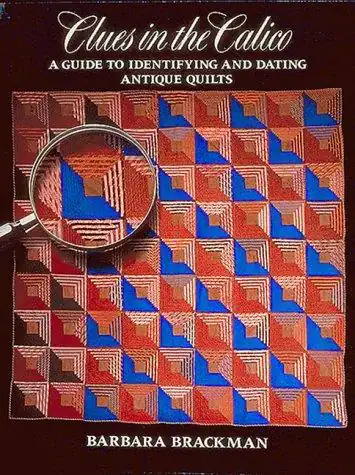
When a client calls me, we set an appointment to bring the item to my home. I will not give an estimated cost without first seeing the item . . .I will answer general questions and get a general idea of what they have. I explain in advance, during that first call, I must keep the item for at least 24 hours, so I can evaluate it closely. I prepare a form similar to the Worksheet in the back of Barbara Brackman’s book Clues in The Calico, and give one to the client and keep one for my files. I take photos, before, during and after the project. I let the client know I will prepare an invoice (all on my computer these days) and should we agree on costs involved, time involved, etc., I require 1/2 of the total cost down and the remainder 1/2 upon completion and pickup.
The evaluation process, to me is *most crucial*, you cannot adequately examine a item with a client standing over you waiting to leave and come up with an appropriate price and estimated completion time, etc . . .my advice, just don’t do it.
. . .Evaluation for me is divided into two parts. . . Part 1 – a) First I determine the percentage of damage to the item?; b) Is the item worth restoring?; c) Should it be left as is? (definately if you should happen to stumble upon something of historical significance); d) What does the client intend to do with the item?(sell it, keep it in the family, etc. If a client wants to sell the item, I advice against restoration, it can decrease the value, give them names of AQS Certified Appraisers in our area – cost – approx $30); e) Determine how much time will be involved? (I break down a project into segments . . .ie; A quilt with x number of blocks, realisticaly how many blocks can I complete each day?) f) Cost of materials and labor? (If I under-estimate a project, then I live with it . . .with experience this becomes easier to judge.)
Part 2 – Research the item, a) Determine the approximate time period the item was most likely made. (You really must study quilt history and have some good reference books on hand) b) Determine the type and style of textiles used in the item? (are vintage textiles available to you, will you have to find them, will you use reproduction textiles instead, how much will it cost you?) c) Recommend to the client what should and shoudn’t be done. Most clients rely on your expertise and knowledge( I will not change an item into something it wasn’t meant to be, no matter the client’s insistence. . .this is where I draw the line.)
Lastly, I don’t have a standard price for doing a project . . .I believe it has to be done on a case by case basis . . .every project is different. I try to keep in mind the amount of time to complete a project and not under bid myself. I will only accept 2-4 projects at a time, depending upon what and how detailed it is. If I hand quilt a top (with no restoration), I require $500 for an small to average size quilt with a simple quilt design (grid, in-the-ditch, etc). The cost goes up for a larger quilt or more detailed design (feathers, echo, trapunto, stippling, etc), as much as in the thousands. I’m a very good hand quilter and I know it . . .pat, pat, pat on my back! <vbg>.
I do keep track of my hours but this is only for my own personal record (helps in future evaluations) and I do not charge by the hour (no one could afford it). After a careful evaluation, I determine the cost for that particular project. I suppose you could set a standard cost for things like replacing a binding, etc . . .most of my work involves more than that.
I’m sure there are things I wished I’d added later , , ,and I apologize for making this post so long. I realize this topic is a difficult one to define and especially frustrating for those who are interested in beginning. Laura Syler posted an excellent idea . . .she holds classes/workshops in her area to help others begin . . .this sort of work is something anyone with basic sewing skills can do . . .it really comes down to how much time you have to commit, and whether you have the motivation.
Best Wishes!
Victoria Montgomery QRestore [at] aol [dot] com Boise, ID . . .where in my English garden the delphiniums, mountain bluett, lupines, antique/Enlish/tea roses, clematis, lady’s mantle, etc, etc, etc are starting to bloom and the Evening Grosbeaks, Robins, Red-Winged Blackbirds, Goldfinches, Hummingbirds, Song Sparrows, Western Tanagers (migrating), Doves, etc are happily feeding, bathing and nesting. . .my heaven on earth!
Date: Thu, 15 May 1997 13:37:12 -0400 | From: “Miklos B. Lukacs” <mlukacs [at] webbernet [dot] net>
I think I would have to agree with the message which Mary of QHL sent regarding personal messages between people being sent to the general list. Sometimes I feel as though I have missed messages, whereas it is merely one person replying to a personal message. I’m sure it is a mistake, but it surly does “clutter” up the list. I can’t stand to not read every message, because I enjoy these two lists so very much. I have left every other list I had signed up for in favor of these. Great people. Connie L.
Date: Thu, 15 May 1997 17:21:16 -0400 | From: Diane McGuire <dianemcg [at] ici [dot] net>
Clare Long mentioned some vintage buttons she had acquired that had a bad smell. I also got some smelly buttons last summer, a huge box full. I did the exact same thing, washed them in a lingerie bag. I soaked them for a while, washed, soaked, washed. After a while they were only a little smelly and I just threw them in the washing machine with anything I was washing that was not sensitive like scatter rugs, cleaning rags, etc. Eventually they stopped smelling. It took quite a few washes. Maybe you could examine the buttons and remove any fabric covered ones or others that might retain the smell.
Good luck.Don’t you love vintage buttons!
I would like to hear from anyone about ideas for using them on projects or decorating.
Diane McGuire in Massachusetts where the crab apple trees are dressed for a party.