Telltale Textiles: Yo-Yo Quilts
Every quilt carries clues about when it was made, if you know where to look. Telltale Textiles is an ongoing series digging into the fabrics, dyes, prints, and construction details that help pin down a quilt’s age. This entry: yo-yo quilts, those cheerful clusters of gathered fabric circles that, strictly speaking, aren’t quilts at all.
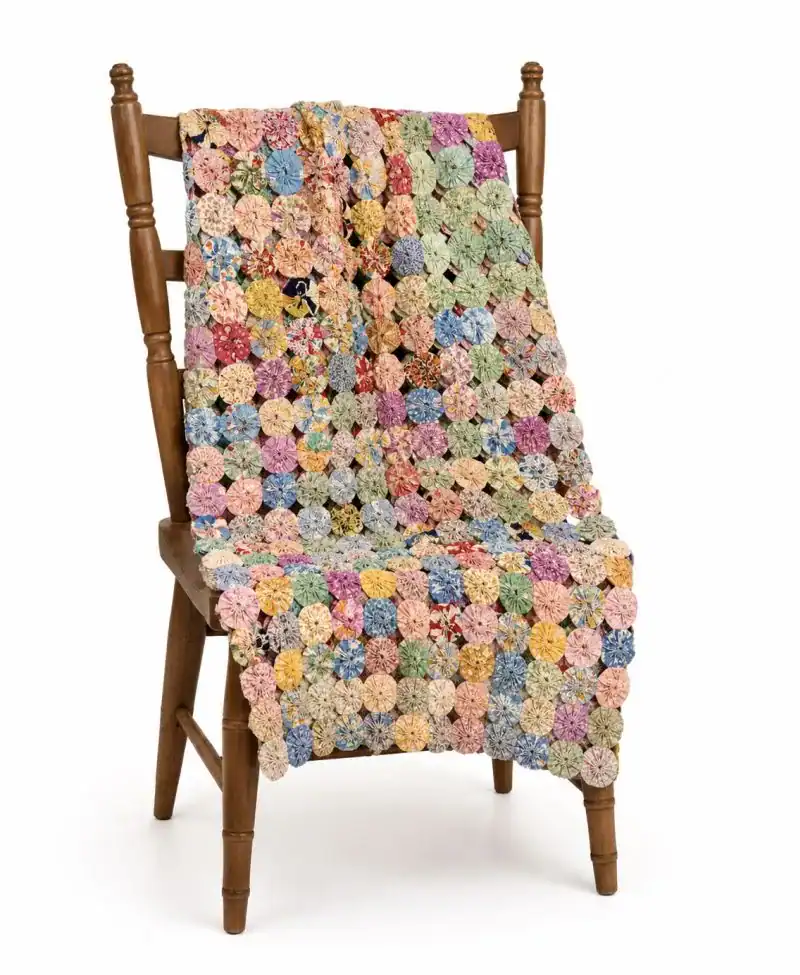
Not a Quilt, But Don’t Tell Grandma That
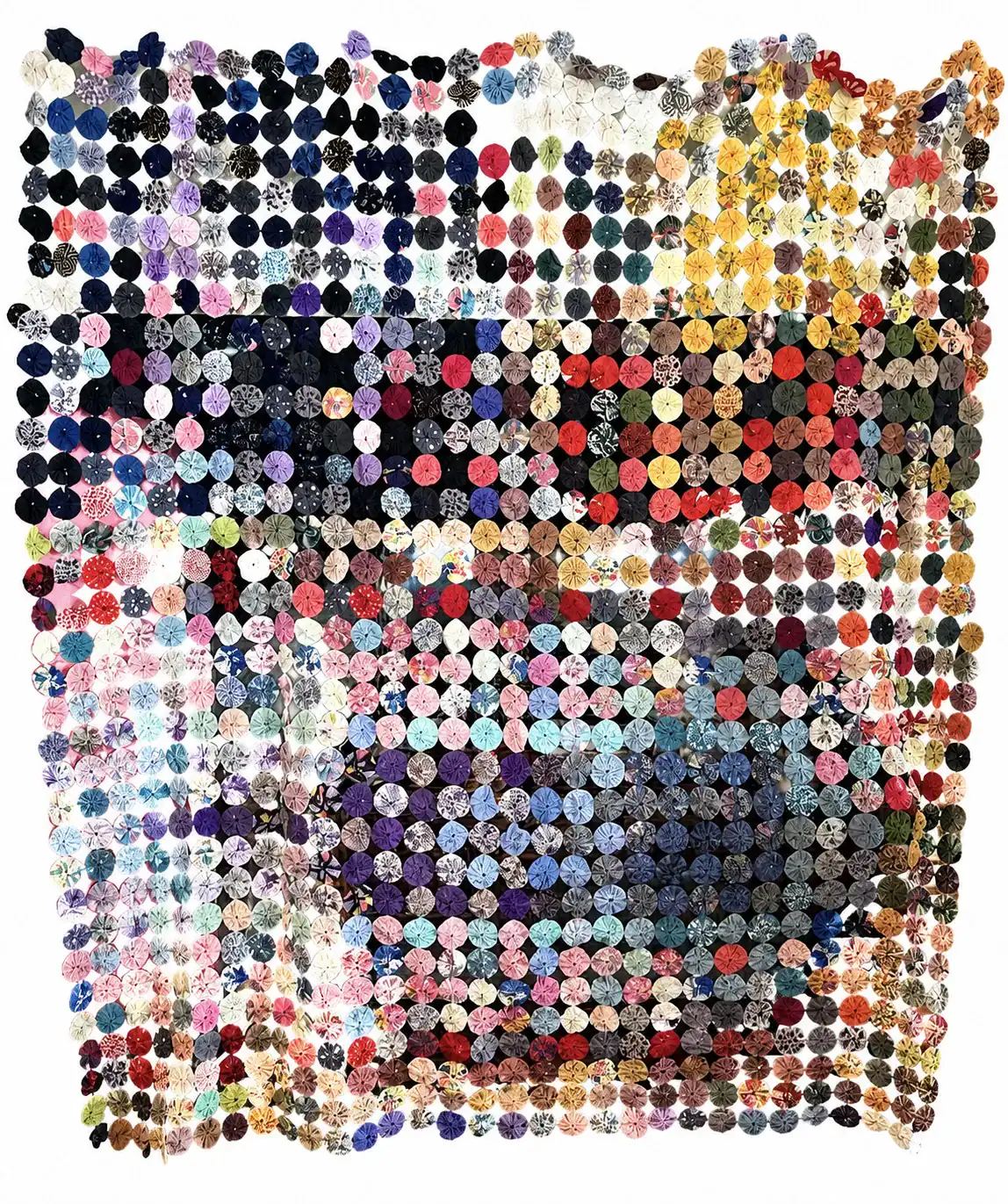
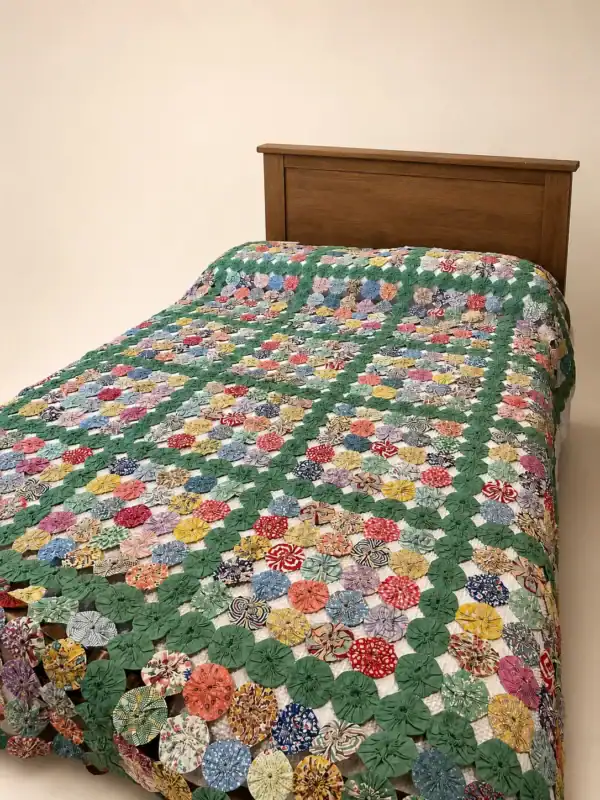
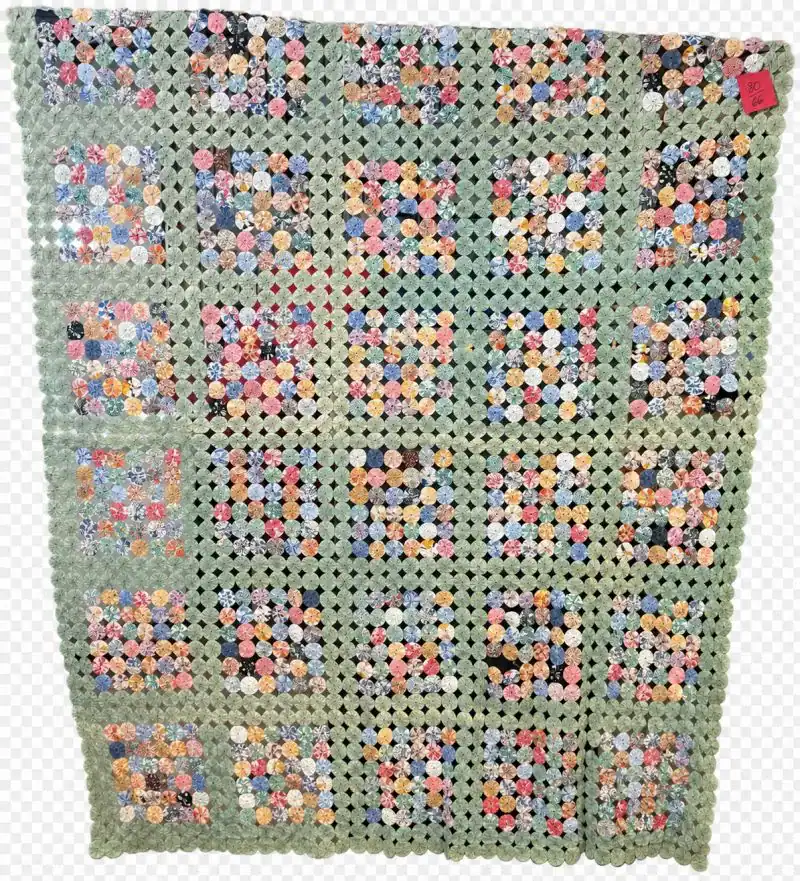
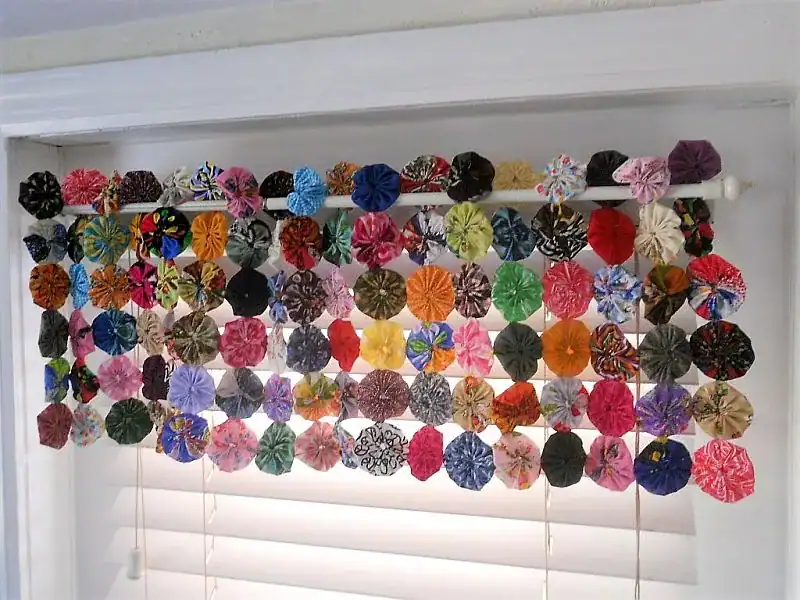
Here’s the twist right up front. A true yo-yo “quilt” skips the whole three-layer sandwich. No batting, no backing, no quilting stitches. Instead, a maker cut fabric circles, turned the edges under, ran a gathering stitch around each one, and pulled it tight like a tiny drawstring bag. The result is a puffy little rosette with a flat side and a puckered side. Whipstitch a few hundred of these together at the edges and you’ve got a coverlet with more texture than warmth. If you’ve ever wondered why an old yo-yo piece feels more like a lace tablecloth than a bed quilt, that’s your answer.
There is always an exception to every quilt rule: sometimes they were attached to a backing for warmth or to emphasize the design.
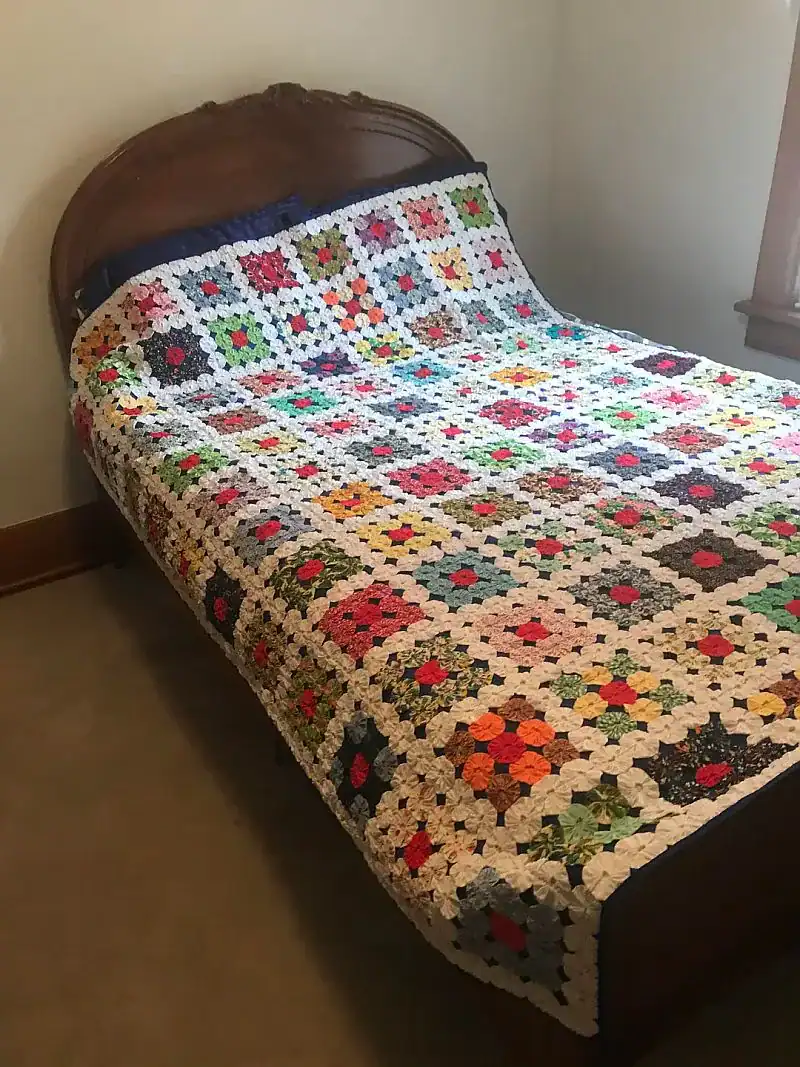
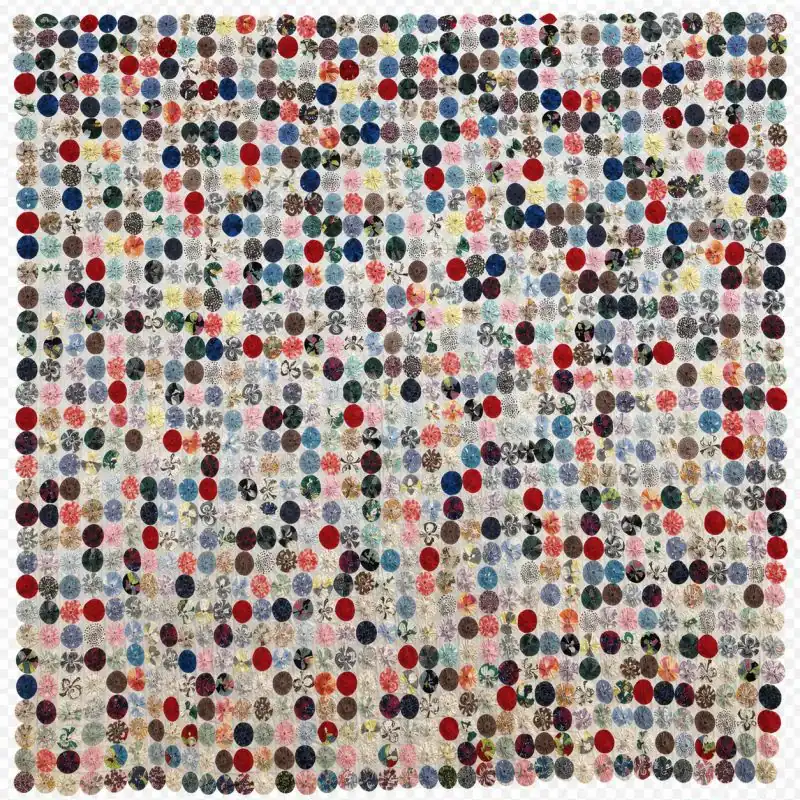
The name itself does some of the dating work. Americans call them yo-yos, after the toy. The British call the same shape a Suffolk puff or a Yorkshire daisy. In Brazil it’s a fuxico. If a piece comes with old family paperwork using one of those other names, that’s a clue about where it traveled from, not just when it was made.
From Mending Basket to Toy Craze
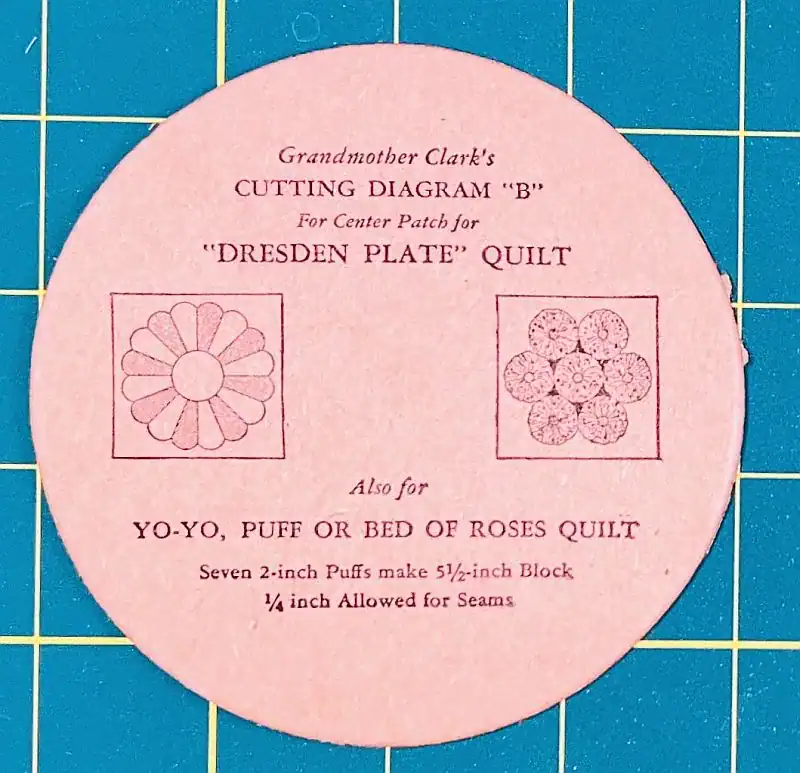
The gathered-circle technique has a long history in Britain, where the pieces became known as Suffolk puffs or Yorkshire daisies. By the Victorian era, gathered fabric rosettes appeared on bonnets, gowns, pincushions, and other items.
But the yo-yo quilt as we picture it today, the big scrappy bedcover, is a 20th century thing. In 1928, Filipino immigrant Pedro Flores helped launch a tremendous yo-yo toy craze in California. Within a few years, toy yo-yos were being manufactured and promoted across the country. Not long after, the country slid into the Great Depression, and suddenly everyone had a reason to use every scrap of fabric they owned and no money to spend on batting. Women’s magazines started running patterns for “Yo-yo” or “Yosoy” coverlets. The style became especially popular during the 1930s and remained fashionable into the 1940s.
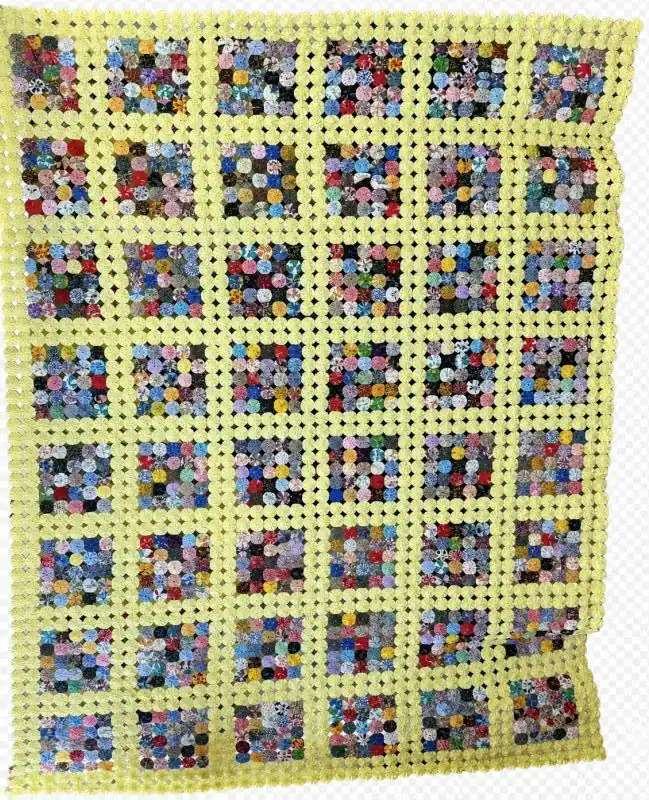
So if you’re holding a yo-yo quilt, the toy craze and the Depression thrift both point the same direction: it might be a piece from the 1930s, give or take. That guess gets stronger if the circles themselves are cut from feed sack prints or dressmaking scraps, since those materials line up neatly with the 1920s through 1940s heyday.
Scraps, Sure, But Not Always Random
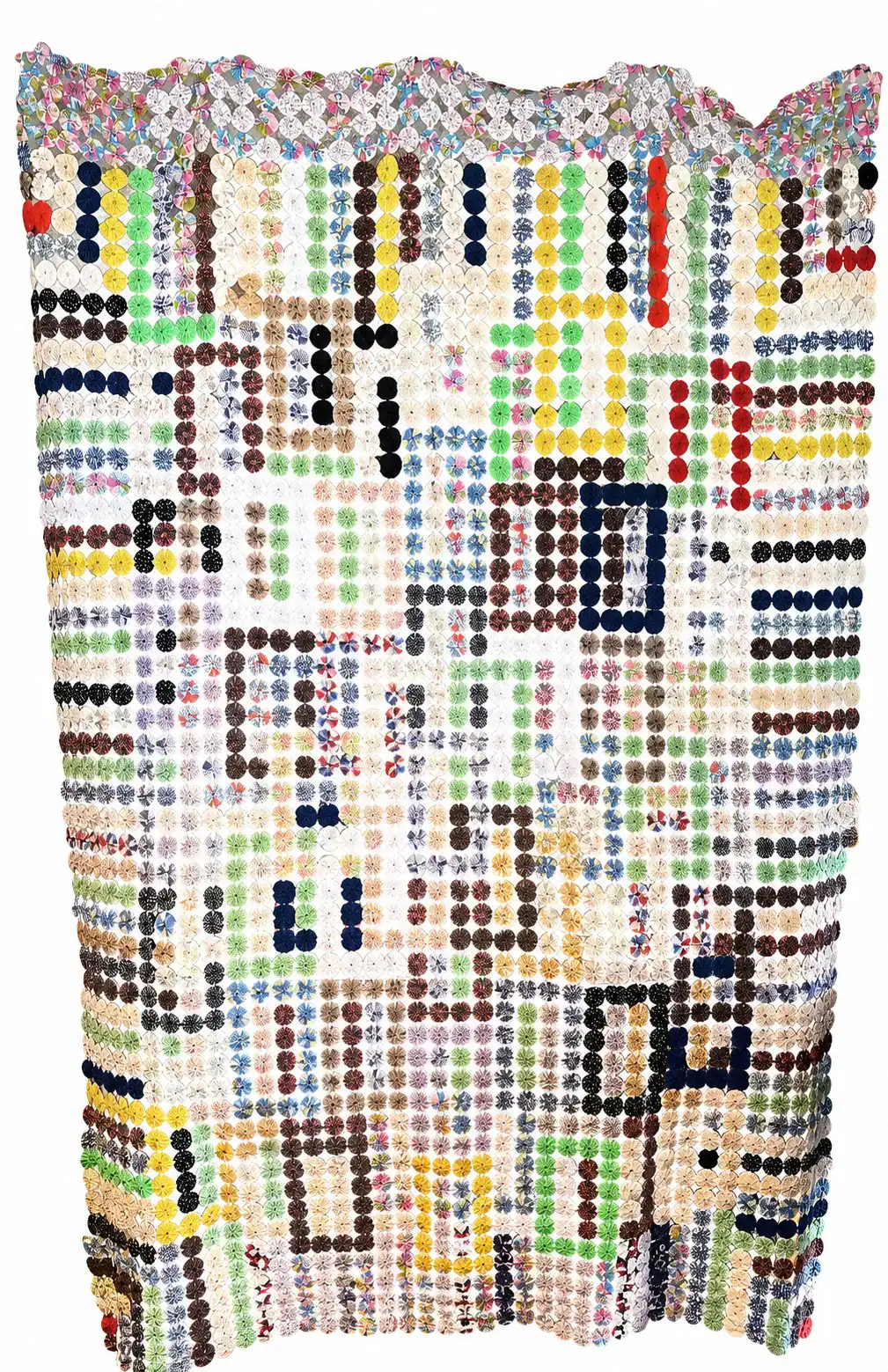
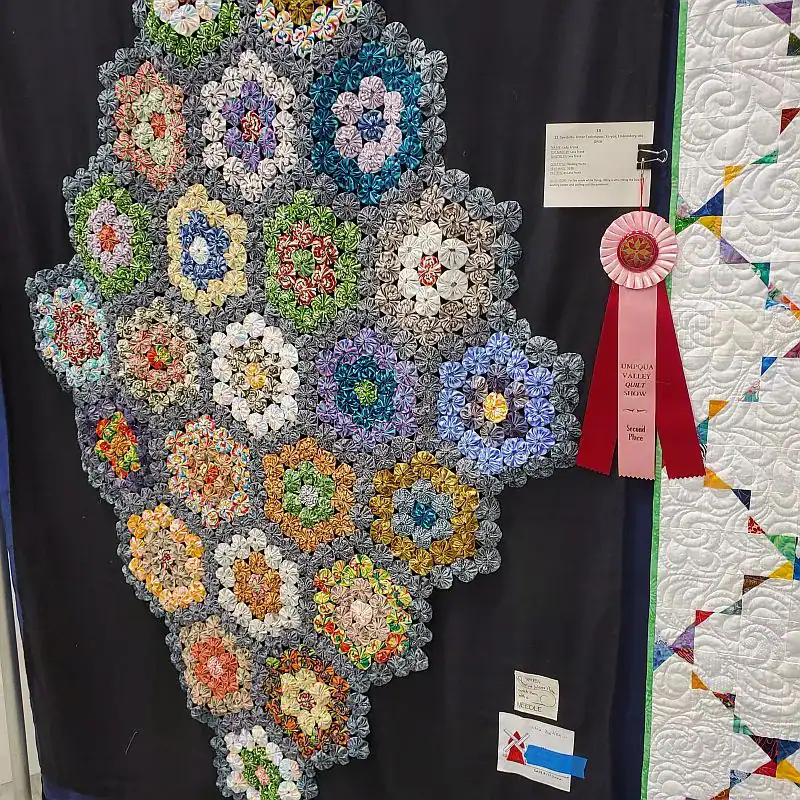
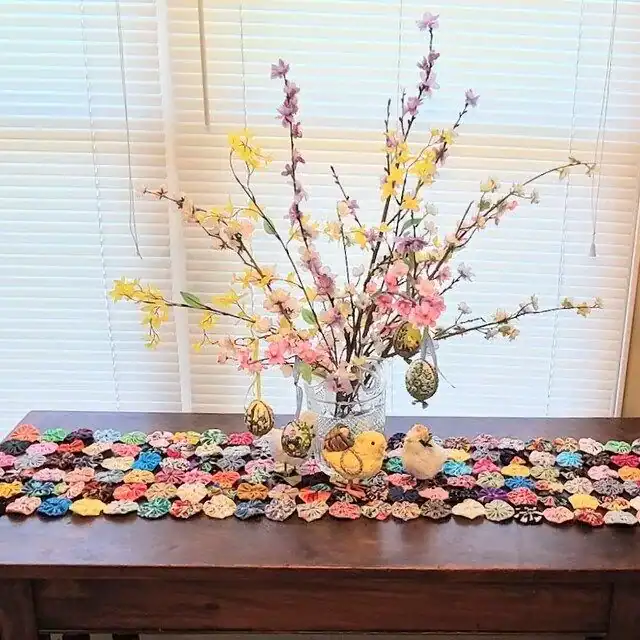
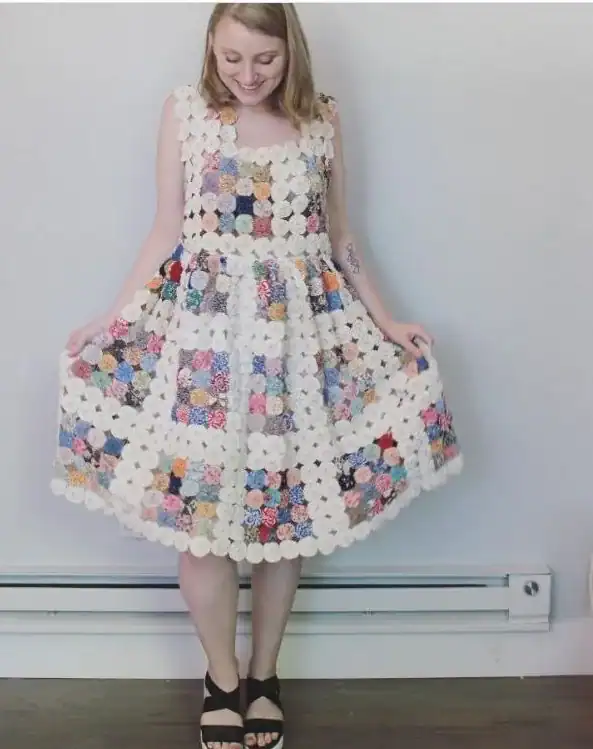
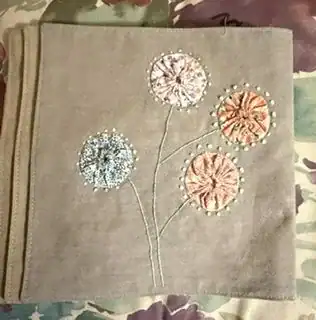
It’s tempting to assume every yo-yo quilt is just a grab bag of whatever fabric was on hand, and a lot of them were. Dressmaking leftovers, feed sack cotton, calico scraps, all perfect for a technique that only needs small circles. But don’t let the “make-do” reputation fool you into thinking there was no plan involved. Plenty of makers arranged their yo-yos deliberately, working out light and dark placement or even borrowing layouts more familiar from pieced quilts, like Sunshine and Shadow or Barn Raising, just built out of circles instead of squares. Some yo-yos got shaped into flowers, medallions, or borders, and the style wasn’t limited to bed coverings either. Table runners, pillows, and decorative hangings all got the yo-yo treatment. There were even kits sold in the 1930s with the fabric and instructions bundled together, so “scrappy and improvised” isn’t the whole story.
When the Fad Faded, and Came Back
After World War II, synthetics and changing tastes in home decor sent yo-yo quilts up into the attic trunk. It wasn’t a hard stop so much as a slow fade as fashions moved on. The technique never fully disappeared, though. It resurfaced in the 1970s craft revival, and it’s back again now as a favorite scrap-buster and slow-stitching project, complete with its own corner of Instagram.
One More Thing
Yo-yo quilts are a good reminder that “not technically a quilt” doesn’t mean “not worth keeping.” If you’ve inherited one, treat it gently. Those whipstitches between circles are the weakest point, and a hundred years of gathered fabric puckers has already put plenty of strain on the thread. Skip the washing machine, skip the hanger, and store it flat if you can. Whether yours turns out to be a 1930s Depression-era scrap project or a fresh one somebody stitched up last week, the technique itself has been quietly popping up in sewing baskets for four hundred years, and it isn’t done yet.
Learn More
Designed to Quilt — “How to Make Not-Your-Grandma’s Yoyo Quilt”
Goldsboro Museum — “Yo-Yo Quilt“
Historic White Springs, “Yo-Yo Quilts”
Library of Congress, “Quilter Mollie Lentz and her daughter” — an archival photograph identified with a yo-yo pattern
Library of Congress — Chronicling America newspaper page
Molly and Mama — “Make a Fabric Yo Yo or Suffolk Puff”
The Plain Needlewoman, “Yo-Yo Quilts” — a concise historical overview, noting early known examples in the 1920s and 1930s publication patterns.
