July 24 – 27, 2003
These restored messages come from the Quilt History List, an online forum where quilt historians, collectors, researchers, appraisers, and enthusiasts discussed antique quilts and related textiles. The archive dates from 1996 through approximately 2016 and is being restored gradually. Sign up in the form at the bottom of the page if you want to know when a new page is added. Original spelling, opinions, formatting, and inactive links may remain unchanged.
Primary topics of this QHL Digest:
- Courtesy Cottons Fabric History — Members try to trace the manufacturer and dating of a fabric line labeled “Courtesy Cottons” that one member carried in her quilt shop starting in 1977.
- Minnesota Historical Society Quilt Images — A member reports that the Minnesota Historical Society has posted images of quilts from its collection online.
- Sewing Machine Manufacturer History — An extended, many-voiced thread on early sewing-machine manufacturers, badge names, cabinet makers, and reference books like Charles Law’s “Encyclopedia of Antique Sewing Machines” and the ISMACS collectors’ society.
- Fabric Mill Mark Dating — A member asks when fabric bearing a “Cortley Fabrics / Cone Mills Inc.” selvedge mark was milled, prompting responses about Cone Mills’ history. (see the article on dating quilts)
- New Quilt & Textile Museum Position — A member announces a new position as Coordinator of the Quilt & Textile Museum in Lititz, PA. (see the article on quilt museums)
- Fabric Damage Repair Advice — Members discuss using fray check or careful stitching to stabilize small holes in a fragile fabric. (see the article on quilt restoration)
Date: Fri, 25 Jul 2003 07:52:54 -0400 | From: Joan Kiplinger
Jill – It appears what you are describing is carding equipment for specialty manufacturing. Industrial carding machines are huge machines and the process is so sophisticated today that often combing is not required to achieve the same effect and smoothness. But I’m working backwards here. Carding is one of the earliest operations in preparing yarn for spinning, a smoothing and cleansing of fibers to remove debris and other waste. For better quality strains that will have a finer end use, combing is the next step which further cleans, smooths and lays fibers side by side so that as they are spun, ends will mesh with each other to form long, smooth yarns. Once can usually tell combed goods by the touch, smooth and somewhat silky. Obviously this extra operation adds more cost to manufacturing operations. This is not to imply that carded goods aren’t worthy — ironically as one of my books points out, the more that is done to enhance cloth, the more the fibers are weakened. Thus, to get maximum wear and performance from work or sportswear or utility items, they are seldom combed. Hope this explains where I was coming from.
Barb — you’ve solved part of the mystery about Courtesy cloth. I also checked internet and my glossaries without any luck. However, being on a bolt could mean fabric might be a sub-brand, much like the names you find on Joanne’s bolts, for instance, good quality grey cloth that a converter finishes into seasonal fashion colors and designs at a lower cost; however, it could still mean that the name could be an umbrella label for a mill’s ongoing overruns or manufacturer’s surplus
JG Kane wrote:
> Joan said in her reply that much cotton fabric “while of lesser > quality is still good quality cotton > strain, often only a difference of carded vs combed. “, which made > my ears prick up.(eyes open ?<G>). > Could you please elaborate on this for a dim Brit? > > I had the great fortune to have a private tour of the oldest privately > owned card clothing mill last week – James
Date: Fri, 25 Jul 2003 08:05:41 EDT | From: Edwaquilt@
I have a copy of the original pattern sheet for this pattern. There was also a quilt in the Gettysburg quilt show last year that looked like it may have been of the same time period as the pattern. There have been some reworking of this pattern in recent years and published by another company – notably a shop in California, but the look and technique is the same. Based on what I know, I would put the date of this pattern sometime in the 1930’s
Holice
Date: Fri, 25 Jul 2003 09:02:57 -0400 | From:
I am just back from “Gay Paris” and scanning my emails. It will take me a few days to sort through everything, and, YES, I will tell you about Oberkampf’s Toile Museum in Jouy en Josas. HEAVEN!!! First, I must address the new book that Judy has recommended to the group. I purchased this book at the Renwick Gallery in D.C. in June. I thought that it would be a wonderful addition to my library with patterns from all cultures and time periods. As I flipped through the book, I found 7 scans directly from our Connecticut documentation book, “Quilts and Quiltmakers Covering Connecticut.” Over 100 or better than 10% of “1000 Patterns” were scanned directly from books published by our publisher, Schiffer. The Amish and Pennsylvania German quilts may have been scanned from one of your books out there in QHL land. I hesitate to say more at this point in time. This book was supposed to be pulled from the shelves but obviously it is still available. Needless to say, this matter is not yet settled as we explore the fine lines of copyright infringement. So if you do purchase the book, I would much appreciate knowing just where you found it. A little jet-lagged, sue reich
—– Original Message —– From: “judygrow” <judygrow@> To: “Quilt History List” <qhl@> Sent: Saturday, July 19, 2003 9:03 AM Subject: [qhl] good new book
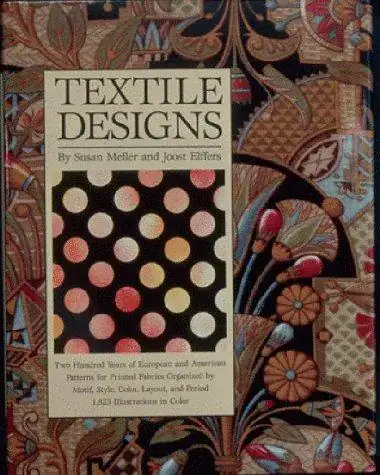
> I just happened to be in my local Barnes and Noble asking about the upcoming > Quilt desk calendar,(they didn’t have it yet) and of course browsed the > entire the store. I especially like to look in the art section, and in > graphic arts I found a new book that interested me enough to bring it home. > > It is much like the book “Textile Design” by Meller and Joost (Harry > Abrams), but separates the chapters by period and style of historic design. > I’d say 90% of the 1000 illustrations are from textile design. It is easy > to trace the evolution of any design, naturalistic or geometric. The book > is a feast for the eye, with many designs taken by scanning the source, and > others from 19th century pattern books. > > The captions are very informative.(;-) I especially like the one for an > Indonesian batik sarong pattern.”Designed and produced for the local market, > this batik sarong was made in Java in 1937 by Lies van Zuylen. The motifs > on cloths of this type and character had little or no significance, other > than to suggest that the wearer was delicate and refined.” > > Or, on the preceeding page,”The way the hand-drawn wax resist was > painstakingly spaced so that it filled the available ground made it > expensive to produce. The high price and the use of late summer flowers > within the motifs tells us that this cloth was designed to be worn by a > prosperous middle-aged Indo-European woman.” Where is it written that we > fading flowers can only wear late summer flowers? Can’t we wear tulips and > daffodils and lilacs? Gosh, I’ve been breaking all the rules. > > Look for “1000 patterns: Design Through the Centuries” by Drusilla Cole, > Chronicle Books, San Francisco, 2003. ISBN-8118-3979-6. A quality > papaerback. $29.95. > > Judy in Ringoes, NJ > judygrow@ > > > — > You are currently subscribed to qhl as: mreich@. > To unsubscribe send a blank email to leave-qhl-1442039E@
Date: Fri, 25 Jul 2003 08:30:34 -0500 | From: Bettina Havig
When I opened my quilt shop in 1977 I carried Courtesy Cottons. They were bolt goods, 36 inches wide and very nice quality and priced at under $1.50 retail! They were among the few fabrics available at the time in 100% cotton. I was able to carry both print and solid Courtesy Cottons. By today’s standards quiltmakers would gasp at the prints but remember what was out there in the 1960’s and 70’s. Within a couple of years companies like V.I.P. and Springs began to make 45″ 100% cotton prints…reluctantly as they thought this quilting thing was just a passing fad. Many of the companies producing cottons today for the quilt maker didn’t want to bother with them in the late 1970’s.
Bettina Havig
Date: Fri, 25 Jul 2003 09:48:18 -0400 | From: Joan Kiplinger
Bettina — do you remember who your supplier was and from which manufacturer cloth was obtained? Anything to narrow the field.
Bettina Havig wrote:
>When I opened my quilt shop in 1977 I carried Courtesy Cottons. They were >bolt goods, 36 inches wide and very nice quality and priced at under $1.50 >retail! They were among the few fabrics available at the time in 100% >cotton. I was able to carry both print and solid Courtesy Cottons. By >today’s standards quiltmakers would gasp at the prints but remember what was >out there in the 1960’s and 70’s. Within a couple of years companies like >V.I.P. and Springs began to make 45″ 100% cotton prints…reluctantly as >they thought this quilting thing was just a passing fad. Many of the >companies producing cottons today for the quilt maker didn’t want to bother >with them in the late 1970’s. > >B > >
Date: Fri, 25 Jul 2003 09:19:23 -0500 | From: “McShannock, Linda”
Lynn, since you ask, I guess I’ll stop lurking and report that the Minnesota Historical Society has images of quilts from the collection online. The home page for the website is www.mnhs.org <http://www.mnhs.org> and the direct link to the quilts is www.mnhs.org/quilts. We have a collection of about 240 quilts dating from the late 18th century to the present. 187 of the images are online. There is also a Visual Resources database online, which can be searched for images of many subjects including “quilts”; “quilting”, etc. This is found on the Society’s home page.
19 of these quilts are currently on exhibit at the James J. Hill House in St. Paul, one of the Society’s historic sites. Another 7-8 quilts are on display in the History Center galleries.
Linda McShannock curator, museum collections
Date: Fri, 25 Jul 2003 09:55:42 -0500 | From: Marilyn Woodin
McShannock, Linda wrote:
> Lynn, since you ask, I guess I’ll stop lurking and report that the >Minnesota Historical Society has images of quilts from the collection >online. The home page for the website is www.mnhs.org <http://www.mnhs.org> >and the direct link to the quilts is www.mnhs.org/quilts. We have a >collection of about 240 quilts dating from the late 18th century to the >present. 187 of the images are online. There is also a Visual Resources >database online, which can be searched for images of many subjects including >”quilts”; “quilting”, etc. This is found on the Society’s home page. > >19 of these quilts are currently on exhibit at the James J. Hill House in >St. Paul, one of the Society’s historic sites. Another 7-8 quilts are on >display in the History Center galleries. > >Linda McShannock >curator, museum collections > > > > > > > >— >You are currently subscribed to qhl as: woodin@. >To unsubscribe send a blank email to leave-qhl-1442708O@ > > >
Date: Fri, 25 Jul 2003 11:06:40 -0400 | From: “Cinda Cawley”
Neat stuff about Singer. In the early days (1850-80) were there many competing sewing machines as in the early automobile industry? By what date would a sewing machine have been considered an indispensible piece of household equipment? Cinda on the Eastern Shore
Date: Fri, 25 Jul 2003 11:35:30 EDT | From: Midnitelaptop@
anyone know when fabric with CORTLEY FABRICS CONE MILLS INC. printed in the selvedge was milled? jeanL
Date: Fri, 25 Jul 2003 10:57:00 -0600 | From: Xenia Cord
During the last 35 years of the 19th century, especially, as this country was enjoying commercial and industrial prosperity (except for a downward blip in the early 1890s), there were probably hundreds of sewing machine manufacturers. Some remained obscure or went out of business, but Singer, Wheeler & Wilson, Grover & Baker, Howe, Wilcox & Gibbs, Remington, American, and Domestic were among the frontrunners. In 1867, for instance, Singer produced 43,053 machines; in 1876, 262,316, and Singer was consistently the largest manufacturer.
Singer’s marketing of their machines, particularly the placement of machines in the homes of ministers, where acceptance of the device carried a lot of community weight, was a brilliant one. Singer knew women, sociologically and in the biblical sense (his history is interesting, if scandalous). Certainly by immediately after the Civil War, especially in the north, the sewing machine must have been considered indispensable (most, if not all, where made in the industrial northeast). Obviously the war would have limited production, and machines in existence were turned toward war production, but after the war the pace of production increased dramatically.
This information interpreted from appendices in Carter Bays, The Encyclopedia of Early American Sewing Machines (1993).
Xenia
Date: Fri, 25 Jul 2003 09:44:53 -0700 | From: “Laurette Carroll”
Hello Cinda and QHL, According to Charles Law’s book, “The Encyclopedia of Antique Sewing Machines”, up until 1877, The Sewing Machine Combination, a monopoly formed by the 3 big sewing machine companies, (Singer, Wheeler and Wilson, Grover and Baker) and Elias Howe, had kept sewing machine prices high and out of reach of many households. After it’s demise in 1877, small companies began competing to gain a share of the sewing machine sales and there was a slow but steady reduction in sewing machine prices. “By the turn of the century, a basic sewing machine was within reach of most every family in the United States.”
Laurette Carroll Southern California
Look to the Future With Hope
> Neat stuff about Singer. In the early days (1850-80) were there many > competing sewing machines as in the early automobile industry? By what date > would a sewing machine have been considered an indispensible piece of > household equipment? > Cinda on the Eastern Shore
Date: Fri, 25 Jul 2003 12:54:53 EDT | From: TrueCat66@
I don’t know if this is the right one or not:
Cone Mills Corporation 3101 North Elm Street Greensboro, NC, 27408 Tel: 910-379-6165 Fax: 910-379-6187 <A HREF=”http://www.cone.com/”>http://www.cone.com</A>
Betty truecat66@
Date: Fri, 25 Jul 2003 13:04:18 -0400 | From: Joan Kiplinger
aurette and all — add to that that according to a commercial textile survey, the 1940s-50s saw the peak of domestic sewing; 2 out of 3 households had a machine. After that, sewing declined slowly.
Laurette Carroll wrote:
>Hello Cinda and QHL, >According to Charles Law’s book, “The Encyclopedia of Antique Sewing >Machines”, up until 1877, The Sewing Machine Combination, a monopoly formed >by the 3 big sewing machine companies, (Singer, Wheeler and Wilson, Grover >and Baker) and Elias Howe, had kept sewing machine prices high and out of >reach of many households. After it’s demise in 1877, small companies began >competing to gain a share of the sewing machine sales and there was a slow >but steady reduction in sewing machine prices. “By the turn of the century, >a basic sewing machine was within reach of most every family in the United >States.” > > > > >
Date: Fri, 25 Jul 2003 13:35:31 EDT | From: RAGLADY@
Relatively new subscriber here. So would someone please post the URL for the QuiltHistory E-board, please. Thanks..
Gloria raglady@ jeancarlton@ writes: > have posted the ‘rainbow’ bias tape quilt under quilts on the E-board. >
<HTML><FONT FACE=3Darial,helvetica><FONT SIZE=3D2 FAMILY=3D”SANSSERIF” FACE= =3D”Arial” LANG=3D”0″>Relatively new subscriber here. So would someone please post the URL for the QuiltHistory E-board, please. Thank s..<BR> <BR> Gloria<BR> raglady@<BR> jeancarlton@ writes:<BR> <BLOCKQUOTE TYPE=3DCITE style=3D”BORDER-LEFT: #0000ff 2px solid; MARGIN-LEFT : 5px; MARGIN-RIGHT: 0px; PADDING-LEFT: 5px”>have posted the ‘rainbow’ bias tape quilt under quilts on the E-board.<BR> </BLOCKQUOTE><BR> <BR> </FONT></HTML> –part1_106.25ae9b57.2c52c463_boundary–
Date: Fri, 25 Jul 2003 10:56:33 -0700 | From:
The Sears 1900 fall consumers Guide sells three machines: Edgemere for 12.75, Burdick for14. 95 and 16.90 in a full cabinet, and Minnesota Machines, ranging from 11.75- 27.45. They state they “lead the world in sewing machines.” They state they have very little competition because they could make such a large quantity, their price was less then all the others.
Edgemere would send the household a machine for 1.00 to be examined it at the depot. If she decided to try it, she sent the remaining cost plus shipping. Then she had another 3 months of using it and if not totally satisfied, could the money back in full including shipping. The cabinet for the Edgemere is one I see often in antique stores, more than any other style. It has an Arts & Crafts look, straight lines carved on the front and drawers, with dangling circle pull handles-look like miniature towel holders. I have not seen the name Edgemere on the sewing machine in it, which makes me wonder if the cabinets were shared among the manufacturers.
None of the major brands listed were listed in this guide.
Kim Wulfert www.antiquequiltdating.com
Date: Fri, 25 Jul 2003 15:03:18 -0400 | From: Joan Kiplinger
Kim — If I remember the experts’ past dicussions on ISMACS list, these are badge names for Singer and several other major manufacturers but made according to Sears specifications, just as some of Sears Kenmore appliances are made by Whirpool or Fridgedaire today.
chrisa@ wrote:
>The Sears 1900 fall consumers Guide sells three machines: Edgemere for >12.75, Burdick for14. 95 and 16.90 in a full cabinet, and Minnesota >Machines, ranging from 11.75- 27.45. They state they “lead the world in >sewing machines.” They state they have very little competition because they >could make such a large quantity, their price was less then all the others. > > > > >
Date: Fri, 25 Jul 2003 14:03:46 -0500 | From: “Marcia Kaylakie”
One this topic, There is a Wheeler and Wilson treadle machine down in San Marcos, TX in an antiques mall that has 1852 cast into the iron parts as the date! It’s a neat thing to look at but I just have NO place to put this thing anywhere! Marcia
Date: Fri, 25 Jul 2003 12:17:06 -0700 | From:
Joan-
I’ve heard that before too. Two of these treadle machines have the Sears name and logo on the foot pedal, the lower priced Burdick and the Edgemere. The Minnesota has no picture, but the 20 year warranty they picture, has Sears name on it.
Kim
Kim — If I remember the experts’ past dicussions on ISMACS list, these are badge names for Singer and several other major manufacturers but made according to Sears specifications, just as some of Sears Kenmore appliances are made by Whirpool or Fridgedaire today.
Date: Fri, 25 Jul 2003 12:27:24 -0700 | From: “Laurette Carroll”
Hello, There were about 20 major manufacturers of sewing machines in the US, plus another 2 dozen or so from other countries. But there are over 5000 badged machines identified and documented to date, meaning machines made by a major company but carrying another name. These machines were usually sold by department stores or retailers with their own name.
The Edgemere and Burdick machines were made by The National Sewing Machine Co. and sold by Sears. The Minnesota was made by the Goodrich Sewing Machine Co. and also sold by Sears.
Dates on sewing machines and or parts, are often patent dates. It’s the serial number that can give a closer date of manufacture.
Laurette Carroll Southern California
> The Sears 1900 fall consumers Guide sells three machines: Edgemere for > 12.75, Burdick for14. 95 and 16.90 in a full cabinet, and Minnesota > Machines, ranging from 11.75- 27.45. They state they “lead the world in > sewing machines.” They state they have very little competition because they > could make such a large quantity, their price was less then all the others. I have not seen the name Edgemere on the sewing machine in it, > which makes me wonder if the cabinets were shared among the manufacturers. > None of the major brands listed were listed in this guide. Kim Wulfert
Date: Fri, 25 Jul 2003 15:47:10 -0400 | From:
The three big sewing machine companies of Howe, Wheeler & Wilson and Singer produced thousands of machines that were in homes much earlier than the end of the century. In 1862, Singer, alone, had sold 12,489 sewing machines and by 1872 their sales had jumped to 219,758. It is important to know that the Singer Company was a late-comer to the market place. Singer gets all of the hype in the history of sewing machines but in reality they did not achieve real success until they merged with Wheeler Wilson at the end of the century. Howe and W&W definitely had the lead in sales before that. The Wheeler Wilson company was much better at marketing and sales strategy. Singer sold almost exclusively door-to-door. The others had showrooms and sold the dealers in dry goods shops. Often the backs of trade cards reveal more history then the fronts. These Connecticut-based companies sold all over the east coast and mid-west and foreign countries. By the end of the century, they were even marketing to the ever-increasing immigrants and their homelands. How do I know all of this? These three companies including Weed (Hartford) Sewing Machine, are all Connecticut based. I have been studying the textile sewing industry in Connecticut for years. Also, if any of you are coming to AQSG, I am doing a round table on sewing trade cards. Sewing machine history will be a big part of that. There were incredible sewing machine wars in the mid-century. It finally all got sorted out by the courts and then the industry took off. Here in Connecticut, there were large adds in local newspapers from the late 1850s on. Why we don’t see more machine piecing and quilting is beyond me. There were quilting foots by the third quarter of the century. I, also, have many accounts of quiltmakers trying to make these machines work. None of the journals mention brand names but they certainly express frustration using their machines. sue reich
Date: Fri, 25 Jul 2003 15:40:45 -0400 | From: Joan Kiplinger
Kim — I believe Laurette just answered our questions. 🙂 She has probably the best sewing machine reference available, if I’m not mistaken.
chrisa@ wrote:
>Joan- > >I’ve heard that before too. Two of these treadle machines have the Sears >name and logo on the foot pedal, the lower priced Burdick and the Edgemere. >The Minnesota has no picture, but the 20 year warranty they picture, has >Sears name on it. > > >
Date: Fri, 25 Jul 2003 15:42:40 -0400 | From: Joan Kiplinger
Laurette — thanx for coming to the resuce. Were Goodrich and National Sewing later bought by Singer or other major player??
Laurette Carroll wrote:
>Hello, >There were about 20 major manufacturers of sewing machines in the US, plus >another 2 dozen or so from other countries. But there are over 5000 badged >machines identified and documented to date, meaning machines made by a major >company but carrying another name. These machines were usually sold by >department stores or retailers with their own name. > >The Edgemere and Burdick machines were made by The National Sewing Machine >Co. and sold by Sears. The Minnesota was made by the Goodrich Sewing Machine >Co. and also sold by Sears. > > > > >
Date: Fri, 25 Jul 2003 16:24:42 -0400 | From: “Newbie Richardson”
Dear list, Whenever anyone questions how quickly the sewing machine took over = home sewing, I just remind us all just how fast we all bought (and now = can not live without)our microwave ovens! My best friend’s mom got one = in 1970 for Christmas – a neighborhood marvel which cost $1800. Mine = came as a wedding present in 1979 – cost $800 ( my bachelor brother had money to burn). I just replaced the one at = our beach house last month – for $64.00 Human nature does not change: women appreciate labor saving devices! Newbie Richardson
Date: Fri, 25 Jul 2003 21:38:07 +0100 | From: “Sally Ward”
> aurette and all — add to that that according to a > commercial textile survey, the 1940s-50s saw the peak of domestic > sewing; 2 out of 3 households had a machine. After that, sewing declined > slowly.
Don’t give up on it yet… Our fabric shops may have closed, our schools may no longer ‘do’ sewing, and yes, I’ve been rueing the death of the craft amongst the young for years. And yet this week I was in a sewing machine shop where the owner told me he had sold 14 machines on Saturday, all to young women from the local college. The flag still flies <G>
Sally W
Date: Fri, 25 Jul 2003 13:46:00 -0700 | From:
Thanks for this info Laurette. What does your book say about the cabinets? Were they made by the same manuf. as the sewing machine and therefore different named machines are in the same wood frame?
Kim Wulfert
The Edgemere and Burdick machines were made by The National Sewing Machine Co. and sold by Sears. The Minnesota was made by the Goodrich Sewing Machine Co. and also sold by Sears.
Laurette Carroll Southern California
Date: Fri, 25 Jul 2003 15:02:22 -0700 | From: “Laurette Carroll”
Hello again, Joan, yes the Charles Law book is possibly the best reference on sewing machines. Also the book Xenia mentioned by Carter Bays is very well respected.
As I’m reading more about the Sears brand of machine named “Minnesota” I see that it was manufactured by more than one company and Davis was another maker of this badged or stenciled machine. Evidently Sears Roebuck liked this name because the founder Richard Sears was previously from North Redwood, Minnesota.
The Goodrich company apparently stopped making machines about 1910. The National Co. merged with The New Home Co. which was absorbed by Janome in 1957.
According to Law by the late 1870’s the Singer Sewing Machine Co. had established itself as the foremost seller of sewing machines. Singer never made badged machines but sold only in their branch offices and authorized dealers. In 1905 Singer acquired the Wheeler & Wilson Manufacturing Co. but machines continued to be made under that name. In 1929 Singer expanded with the amalgamation of the Standard Sewing machine Co.
The Amasa D. Howe Sewing Machine company was founded in 1853, not by Elias but by his brother . It was found that the E. Howe machine which he had patented did not sew without incorporating features of other manufacturers. The Howe company did not begin large scale manufacturing of sewing machines until after the Civil War, when the old Howe patent expired. The Howe Co. was bought out by the Stockwell brothers in 1873. Stockwell continued to manufacture machines with the Howe name until 1886.
Kim, I’ll continue looking in my books for information on the cabinets. I know the first Singer machine came in a wooden shipping box that was to be used as the cabinet or table!
Laurette Carroll Southern California
I believe Laurette just answered our questions. 🙂 > She has probably the best sewing machine reference available, if I’m not > mistaken. Were Goodrich and National Sewing later bought by Singer or other major player??
>
Date: Fri, 25 Jul 2003 15:36:02 -0700 | From: “Christine Thresh”
The best quick place to get information on the history of sewing machines is ISMACS — International Sewing Machine Collectors Society — at: http://www.ismacs.net/
Some of the information being passed around on QHL is not quite right, but I’m no expert.
Christine Thresh on an island in the California Delta http://www.winnowing.com
Date: Fri, 25 Jul 2003 16:13:11 -0700 | From: “Laurette Carroll”
Besides the ISMACS site, this is also a good resource on sewing machines. It has many articles and photos of antique sewing machines.
http://www./Heartland/Plains/3081/
Date: Fri, 25 Jul 2003 16:52:23 -0700 | From: “Wanda”
Karen…I think I would put some fray check on the holes and maybe iron or stitch something on the wrong side of the fabric to reinforce then with hopes of stoping the tearing….just my thought.
Hope it helps Wanda in very hot Texas
Date: Fri, 25 Jul 2003 18:22:26 -0700 (PDT) | From: Donald Beld
Okay, so I can e-mail them, but don’t know how to get them onto the chat line. If you would like to see them, send me a private e-mail and I will send them to you. (it only took me one hour and repeated attempts to figure out how to e-mail them.) It’s hell getting old and not knowing the latest technology. don Beld
Date: Fri, 25 Jul 2003 21:59:47 EDT | From: Wmstories@
Don, I would love to see your quilt. Congrats on all your incredible work. Jacqueline
QHL Digest for Saturday, July 26, 2003.
- Hazzard Civil War Quilt 2. Re: a few little holes 3. sewing machines 4. Re: qhl digest: July 25, 2003
Date: Sat, 26 Jul 2003 07:44:18 -0400 | From: “Judy Kelius”
I have some exciting news! I have a new job . . . Coordinator of the Quilt & Textile Museum in Lititz, PA. This is a privately owned museum that began with a group of fabulous quilts which all came from one Lancaster County family. I will be doing a little of everything, with my first priority being to find new pieces for our collection. We want to have primarily Pennsylvania quilts and are trying to bring some back to their home state, so if you know of any good PA quilts that may be for sale, please contact me at judysue@. The museum’s web site is www.lititzjunction.com (one of my jobs is also to redo this web site when I find time), and the current issue of Country Collectibles magazine has an excellent feature article about the quilt museum. The complex the museum is located in is closed this month for some renovations and reorganization, so it would be good to call ahead if you want to visit. We are open 10-4 Tuesday through Saturday, 717-626-5512. I’ll be happy to schedule groups and arrange personal tours. The family owned a general store so we also have lots of swatch cards from the late 19th century and other pieces of ephemera.
Although we want to concentrate on quilts from Pennsylvania, this week we just acquired an important Michigan quilt through a local dealer. I wanted to share this with the QHL list and also ask for some ideas on how to display it! Pictures are on our eBoard at http://vintagepictures.eboard.com. I can post all the blocks if the group is interested.
This remarkable quilt was passed down through the family of Philetus Hazzard of Bainbridge Township, Berrien County, Michigan until it was sold an Illinois auction earlier this year. The history saved with it tells the story that Margaret Hazzard, Philetus’ wife, gave the quilt to him when he left home at the age of 35 to enlist in the 12th Michigan Infantry of the Union Army in February 1864. About two months later, he became ill and died in Little Rock, Arkansas, where he was buried, and the quilt was returned to his family. The quilt survived in good condition, and had been professionally cleaned with some minor restoration before we acquired it. Such family histories can often be incorrect and this one sounded too good to be true, but so far everything checks out. (With the exception that the oral history identified Margaret as his mother.)
The quilt depicts buildings near his home that Philetus would have been familiar with and may also show buildings in New York State, where he was born and lived before moving west with his parents around 1840. Many of the blocks show people waving from the quilt! Most are residences, but there is a large church (which may be in New York), two schoolhouses, a log cabin, barn, and what looks like a town hall. One house is shown twice on both sides of the quilt (see below) – I suspect this was Philetus’s own home. We have already identified the largest house as the Bainbridge Township home of Nathaniel Brant, husband of Philetus’ sister Martha. There is an etching of this house in an 1880 history of that area, and the local historical society tells me it was probably there at least as early as 1860. The quilt block was probably drawn from the etching (which is not dated).
The blocks are reversed in the middle of the quilt so this is not a good candidate for hanging straight. (Or maybe I can make a package deal with a local chiropractor <GR>!) This is where I would like the group’s ideas. My best thought so far is to build a V-shaped (like a roof) display board where we can lay the quilt and put it where visitors can walk around both sides to view it. Since this would expose the quilt’s surface to dust, I am also going to recommend we have glass or acrylic panels protecting its surface. Does anyone else have another idea?
Judy Kelius Coordinator, PA Quilt & Textile Museum 55 North Water Street Lititz, PA 17543
Date: Sat, 26 Jul 2003 08:37:07 -0400 | From: 3forks@
Quoting Wanda <fattyoldkid@>:
> Karen…I think I would put some fray check on the holes and maybe iron or > stitch something on the wrong side of the fabric to reinforce then with > hopes of stoping the tearing….just my thought. > > Hope it helps > Wanda in very hot Texas > > Yes, that is what I do also. Stitch-witchery, on the roll, is my favorite. You can even seal another piece of fabric to the top that way.
Joan of the South, in Texas > > — > You are currently subscribed to qhl as: 3forks@. > To unsubscribe send a blank email to > leave-qhl-1466471O@ >
Date: Sat, 26 Jul 2003 08:31:47 -0700 | From: “Laurette Carroll”
Hello, Kim, more on cabinets. As I said before Edgemere machine that Sears sold was made by the National Sewing Machine Co. and it was a large company that offered several sewing machine models (with different names). Looking at the information on National, I see they offered several treadle cabinets ranging in price from $20 – $75. Indicating that the machine heads could be used in any of several cabinets. The cabinet you see so often was probably a popular style.
National also made machines for Montgomery Ward & Co. One ad shows a basic machine and cabinet sold for $19.50.
National offered a money back guarantee. Machines were shipped subject to a trial in the home and if the customer was not satisfied they received a refund for the machine and shipping both ways. No questions asked!
The above taken from “The Encyclopedia of Antique Sewing Machines” by Charles Law.
Laurette Carroll Southern California
Look to the Future With Hope
> The Sears 1900 fall consumers Guide sells three machines: Edgemere for > 12.75, Burdick for14. 95 and 16.90 in a full cabinet, and Minnesota > Machines, ranging from 11.75- 27.45. They state they “lead the world in > sewing machines.” They state they have very little competition because they > could make such a large quantity, their price was less then all the others. I have not seen the name Edgemere on the sewing machine in it, > which makes me wonder if the cabinets were shared among the manufacturers. > None of the major brands listed were listed in this guide. Kim Wulfert
Date: Sun, 27 Jul 2003 06:51:29 EDT | From: QuilterB@
What a wonderful quilt, no matter what the family story was! I would be slightly concerned with the weight of the quilt being supported on a “v” in the middle and would prefer to see it on a flat surface maybe raised in an enclosed space. It should certainly be refolded (or rolled) differently though as I see very heavy fold lines on it lying down. I have seen a lot of damage from quilts that have lain folded in the same way for long periods of time. There are certainly lots of people with conservation experience who could tell you better — that is a quilt worth conserving!
Beth Brandkamp