January 25 – 29, 2004
These restored messages come from the Quilt History List, an online forum where quilt historians, collectors, researchers, appraisers, and enthusiasts discussed antique quilts and related textiles. The archive dates from 1996 through approximately 2016 and is being restored gradually. Sign up in the form at the bottom of the page if you want to know when a new page is added. Original spelling, opinions, formatting, and inactive links may remain unchanged.
Primary topics of this QHL Digest:
- Log Cabin’s Name Origins — A member floats a folk-etymology theory for why the Log Cabin block got its name, sparking discussion.
- Copake Textile Auction Preview — Members compare notes on the online preview and price estimates ahead of the February 14 sale.
- Why 19th-Century Silk Shatters — A long-running thread traces the chemical weighting process used on Victorian silks and why it later caused the fabric to shred.
- A New Column Debuts: Quilt Poetry and Prose — Sue Reich launches a recurring feature of historic newspaper excerpts and poems tied to quilt and textile history.
- Identifying a Mystery Quilt Book — A member spots an unfamiliar title in an antique store and the list helps confirm it’s William Dunton’s Old Quilts.
- How Much of Today’s Antique Look Is Imported? — A debate over how much of the current supply of old-looking quilts is actually new fabric imported to mimic antiques.
Date: Mon, 26 Jan 2004 | From: “Jocelyn” <jocelynm@>
> ordinary names, but in the paper this morning in the comic strip “Get > Fuzzy” (I know all of you don’t get that strip) there was a cat named > Chubby Huggs. He was fat and hugged everybody. I just love that name!
Judy, FWIW, the dog and cat in Get Fuzzy are named after two Negro League ballplayers for Kansas City, Satchel Paige and Buck O’Neill. 🙂
From: “Jocelyn”
> It seems that by 1865, Miss Flora McFlimsey grew-up! This change was > precipitated by the purchase of a Willcox and Gibbs sewing
As this downloaded, I was scanning through my new Connecticut quilt registry book, and in it is a postcard advertisement for Wheeler and Wilson, ‘the only perfect sewing mechanism for family use’. Imagine what Miss Flora could have accomplished with a perfect sewing machine!<G>
Date: Mon, 26 Jan 2004 23:30:01 -0600 | From: “Jocelyn” <jocelynm@>
RE:shattered silk
Shattering may be an excellent clue to the age of the silk, but a misleading one as to the age of a quilt. A quilt might be made in 1900 out of the dresses Grandma hoarded from her youth.:)
I’ve got fabric in quilts I’ve made that is older than I am.:)
Date: Mon, 26 Jan 2004 21:42:58 -0800 (PST) | From: Donald Beld <donbeld@>
Hi, so none of you commented on my wild speculation about Log Cabin being a “easy” hexagon. But my source for the 1820’s date was THE ULTIMATE QUILTING BOOK by Maggi McCormick Gordon, page 31: “Jean Dubois has traced a very early example from the 1820;s to Mary Margan, an Englishwoman who later emigrated to the American South. Berhaps her Barn Raising design provided the inspiration for all that followed.”
Maggi does not footnote, so I don’t know where she got her information from. Don
P.S. Thanks for the Puss in the Corner comment. I also like the Shoofly idea, as well; but Antique Roadshow recently had an 18th Century Shoofly rocker on the program and sure enough it was a child’s rocker with (actually) animal head arms. Don
From: “Sally Ward” <sallytatters@>
<…it is a style of quilt that uses a Medallion center, and then several borders surrounding them of a specific pattern,
The recognisable feature of many English Medallion is their construction, which has been likened to a series of ‘frames’ surrounding the central feature (which might have been a printed panel, piecework or applique). Although there were patterns which were commonly found in the borders, it doesn’t have to be a specific pattern and there were many variations in pattern and width of borders. Many English medallion quilts are now categorised as a ‘Frame’ quilt …the definition having been publicly adopted by the Quilters Guild of the British Isles during their quilt documentation in 1994/5.
‘Quilts…..created by the placing of patched rames uniformly around a square centre – appeared often enough to call for some type of description of generic classification. They were quite unlike the American version of a ‘medallion’ quilt – one usually designed with a …square on point… centre and repeating blocks – or, for that matter, the all-over single pattern British mosaic quilt with or without a centre. In addition to the frame method of construction……the centre square was usually sited straight-on, as opposed to being turned on point to become a diamond. Given these distinguishing characteristics, the word ‘frame’ was adopted to describe this uniquely British method of assembling a pieced quilt’
‘In the Frame’. Chapter 2 of ‘Quilt Treasures’, written by Jan Rae, pub. Quilters Guild of the British Isles1995
<Is there are history of these being imported into America recently. Or would these more likely to have arrived in the 19th century.
What is ‘recently’ and what do you mean by imported? We know a lot of these quilts travelled with emigrants and that more have been exported in recent years by dealers but I don’t think anyone has been making them here for export as a trade during the last century. (that’s only an educated guess, mind <G)
Sally W
From: Daniele Seyrig <d.seyrig@>
Hi Delurking quickly to let all the out of USA QHLers know that the catalog from the Deerfield Museum can be sent to them for the price of the catalog + $7.95 .You can order online .Mine got here today and I ordered it on Wenesday I think .WONDERFUL !!!!! Daniele near Paris
Daniele Seyrig Les theories passent , la grenouille reste (Jean Rostand )
Date: Tue, 27 | From: “Marcia Kaylakie” <marciark@>
Couldnt’t resist. In an antique mall in San Marcos, Tx, I came acorss a Wheeler and Wilson sewing machine, with parts on it dated (in cast iron) 1852. It did not seem to be in working order and was missing some small pieces, but I was sorely tempted, nontheless (untill I saw the price!) Marcia Kaylakie, Austin, TX
Date: Tue, | From: Laura Robins-Morris <lrobinsfhcrc.org>
What do they mean by “estimate” ? Each item has something like “Estimate 100-150”. Is that the number of bids they think they’ll get? (I know nothing about auctions.) Wonderful site. Laura in Seattle
From: “Candace Perry” <candaceschwenkfelder.com>
I was looking at the recent issue of Vogue and I see that the marvelous Brit designer, Alexander McQueen, has done a coat for spring in grandmother’s flower garden/mosaic/hexagon patchwork. It’s truly wonderful…no price given, which means, I am sure, astronomical. I hope it’s not made of old quilts, it didn’t say in the blurb. Candace Perry (who can’t wear or afford anything in Vogue but lusts after it nonetheless)
From: Dana Balsamo
Hi Laura, That’s what they estimate the item will sell for…sometimes it goes for less…sometimes more. I use it as a guide as to what I think I can afford to bid on so I don’t my time and theirs on the phone. My best, Dana
Laura Robins-Morris <lrobinsfhcrc.org> wrote: What do they mean by “estimate” ? Each item has something like “Estimate 100-150”. Is that the number of bids they think they’ll get? (I know nothing about auctions.) Wonderful site. Laura in Seattle
>Hello all, >Copake Auctions in Copake, NY is having their annual Textile Auction >February 14th. Their preview is online and there are 20 pages of superb >quilts, paisley shawls, linens, samplers, coverlets, rugs, and >more…mostly quilts, though. > >Their site is http://www.copakeauction.com/index.html > > > >
Date: Tue, 27 Jan | From: Joan Kiplinger <jkip@>
I’ve learned so much about the underground railroad from this group that I thought this might be of further interest to this list.. An excellent summation of a recent slide lecture at the New Hampshire Historical Society by Pat Cummings. http://www.quiltersmuse.com See Symbolism in Quilts. Much thoughtful reading here and it makes me realize how much I learn from you all.
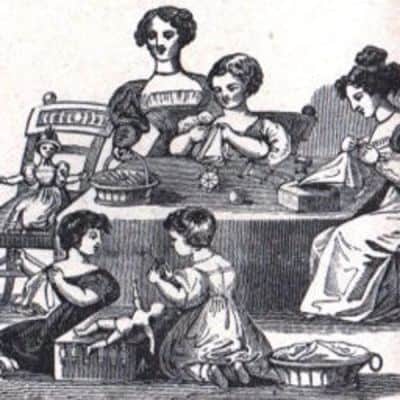
This account in an 1859 newspaper about sitting in church refers to Miss Flora McFlimsey. She had quite the reputation in her day. This is not necessarily quilt related but it provides some great insights into mid nineteenth-century life church going life and crinoline petticoats. sue
Central City Daily Courier Syracuse, New York February 14, 1859
Sitting in Church, —— An American writes from London that in the churches there, whoever come first, whether gentlemen or lady, whoever the further seat in the slip, and those that follow fill up the remaining seats, and thus prevent the awkward disturbances which occurs in our churches here, in the process of filing out and in by men in order to isolate women at the further end of the pew. It is said the habit so universal among us originated with the early settlers, who sat near the doors of the pews so that in case of an attack by the Indians they mighty be ready for action. In many instances this marching out and in like a parcel of soldiers is a perfect nuisance, and the custom might well be changed. There is another abominable practice, still more annoying than the above, that we would like to see abated; we refer to the one of getting up out of the pew and walking into the aisle, so as to give a lady the inside seat. This is the very worst sort of a nuisance. It not only disturbs and distracts the congregation, but subjects a modest man (like ourself, for instance,) to mortification. The idea that three or four men occupying a seat, must arise, pick up their hats, trundle and clatter into the aisle for the purpose of giving Miss Crinoline, who has belated herself on purpose so that she can exhibit her contour to an admiring congregation, the inside of the seat, is extremely ridiculous. If such persons cannot come in season to church, that is before the services begin, we think they should be satisfied to take the first seat vacant under the circumstance, and the gentlemen, instead of jumping up and leaving the seat to allow Miss Flora McFlimsey room to pass, would better conform to the decency and decorum peculiar to the house of God, by simply moving over, to make the necessary room for the fashionable worshipper. We don’t expect that our efforts in this direction will succeed in abating this troublesome practice, but if the pastors of the several Churches would take the subject up the thing could be done. After all, the old custom of appropriating one side of the edifice exclusively to the women and the other to the men, worked about as well, and gave as good satisfaction as the modern inovation.
From: Sue Reich
This account in an 1859 newspaper about sitting in church refers to Miss Flora McFlimsey. She had quite the reputation in her day. This is not necessarily quilt related but it provides some great insights into mid nineteenth-century life church going life and crinoline petticoats. sue
Central City Daily Courier Syracuse, New York February 14, 1859
Sitting in Church, —— An American writes from London that in the churches there, whoever come first, whether gentlemen or lady, whoever the further seat in the slip, and those that follow fill up the remaining seats, and thus prevent the awkward disturbances which occurs in our churches here, in the process of filing out and in by men in order to isolate women at the further end of the pew. It is said the habit so universal among us originated with the early settlers, who sat near the doors of the pews so that in case of an attack by the Indians they mighty be ready for action. In many instances this marching out and in like a parcel of soldiers is a perfect nuisance, and the custom might well be changed. There is another abominable practice, still more annoying than the above, that we would like to see abated; we refer to the one of getting up out of the pew and walking into the aisle, so as to give a lady the inside seat. This is the very worst sort of a nuisance. It not only disturbs and distracts the congregation, but subjects a modest man (like ourself, for instance,) to mortification. The idea that three or four men occupying a seat, must arise, pick up their hats, trundle and clatter into the aisle for the purpose of giving Miss Crinoline, who has belated herself on purpose so that she can exhibit her contour to an admiring congregation, the inside of the seat, is extremely ridiculous. If such persons cannot come in season to church, that is before the services begin, we think they should be satisfied to take the first seat vacant under the circumstance, and the gentlemen, instead of jumping up and leaving the seat to allow Miss Flora McFlimsey room to pass, would better conform to the decency and decorum peculiar to the house of God, by simply moving over, to make the necessary room for the fashionable worshipper. We don’t expect that our efforts in this direction will succeed in abating this troublesome practice, but if the pastors of the several Churches would take the subject up the thing could be done. After all, the old custom of appropriating one side of the edifice exclusively to the women and the other to the men, worked about as well, and gave as good satisfaction as the modern inovation.
Date: Tue, 27 Jan 2004 | From: seater@
> Subject: Re: Silk > From: Anne Copeland <anneappraiser1@> > Date: Sun, 25 Jan 2004 08:04:30 -0800 > X-Message-Number: 5
>… 1) not ALL silk merchants were unscrupulous
Dear Anne & List, I’ve been told that the metal salts that later shattered the silks in crazy quilts were added to make silk skirts rustle enticingly; that the customers wanted that property in their silk in late 19th century. I recall hearing that silks from before that fashion period are still intact.
Is this correct? What are the relevant dates?
Susan, housebound since Sunday from ice in Raleigh NC
Date: Tue, 27 Jan 2004 | From: Joan Kiplinger <jkip@>
Susan — tin weighting began in the late 1890s by a German firm. It is the most damaging type. By 1920s and into 30s weighting was at its worst. Manufacturers gave in to consumer demands for more rustle to taffeta but mostly as a way to recoup loss of serin, a natural wax, during silk manufacturing. Weighting added any body weight lost and therefore would sell for higher price per lb.. American textiles, particularly silk, during the 1920s had such a bad reputation that finally legislation was passed in the latter 30s regulating amount of weighting and its labeling. After WWII resin for the most part was used for weighting and was not as damaging. Somewhere I have specific notes on this if you need to know more.
seater@ wrote:
>Dear Anne & List, >I’ve been told that the metal salts that later shattered >the silks in crazy quilts were added to make silk skirts >rustle enticingly; that the customers wanted that >property in their silk in late 19th century. I recall >hearing that silks from before that fashion period are >still intact. > >Is this correct? What are the relevant dates? > > > >
From: “Sally Ward”
Sorry, this isn’t directly quilt related, but there is a slim chance that it is something that maybe re-enactors amongst you might recognise from your background reading. On the radio some time ago I caught part of a seriaKarention of a book chronicling the experiences of a couple who were early settlers in either America or Canada. In the episode I heard, they had evidently settled and built a cabin in an area which locals advised them against. Not knowing the country, they went to bed one night vaguely thinking ‘something was odd’ but not knowing what. They woke the next morning to find the cabin under deep snow, their door impossible to open and their cow frozen to death against the house.
That’s all I have, except that I think the title of the book was very short, maybe one word. That snatch of narrative has been haunting me for a while, thinking about how it must have been to arive in a place you know so little of you don’t even know its seasons. Now I’ve just started reading ‘Quilts and Women of the Mormon Migrations’ and it has brought it back to me, so I’d love to track it down.
Any ideas…best mail me privately
Sally W SallyTatters@
From: “Jocelyn” <jocelynm@>
> I am concerned that with the number of American quilts now being imported > into Australia ( including by me) that eventually no one will know where > they originated and our quilt history will be globalised.
Suzy, I’ve been informally collecting quilts (by which I mean, I buy what I like and what I can afford, not according to some intelligent plan!) and aside from the state of the seller, I really know nothing about the history of any of them! Until I started writing this note, it didn’t occur to me to ask the vendors where THEY got the quilts- and I’ve forgotten who sold some of them to me. I’ve read some debates about the importation/exportation of quilts, and my thoughts on it are: if we want to reserve art to its country of origin, then American museums would only display American art. How sad that would be, if nowhere outside of France could one see a Monet, or a Rodin, or a Degas! The problem, IMO, is not that works of art leave their country of origin, but that their histories are lost- which happens even within their county of origin, let alone state or country! 🙂
From: “Quiltstuff”
Sally wrote > > What is ‘recently’ and what do you mean by imported? We know a lot of these > quilts travelled with emigrants and that more have been exported in recent > years by dealers but I don’t think anyone has been making them here for > export as a trade during the last century. (that’s only an educated guess, > mind <G)
I should have been more specific . Sorry. I didn’t really mean ‘imported’ as in a business. or certainly not as making quilts and exporting them for sale. I was querying the import of antique quilts. So to clarify…. Here is Australia we have early 19th century quilts that were made in Britain but ‘immigrated’ with their families. We even have quilts of that vintage that came out later.. EG 1900 as the families immigrated and brought their grandmothers’ quilts with them.. Australia has a national Quilt register where we have been trying to catalogue early ( pre 1960) quilts and you will see stories like that over and over.
But with the increased interest in vintage quilts, currently there are many US and British quilts being brought into the country for resale. And of course, there are those who buy them from EBay. This is not unlike the flourishing antique trade that has been happening for decades. But when I was an antique dealer and looked at a piece of furniture, I could usually tell its origin from the timber and style.
What I was interested in is this….. I wondered if the quilts in the auction were of British origin and whether it was more likely that they came to the US with their families when they immigrated….. or in fact whether there are a lot of British quilts that came to America as part of the antiques trade. Certainly English and Irish furniture has been sent across in container loads both to the US and Australia. Particularly during the 1980s
Now I know there is probably no way to tell, if the provenance has been lost. But the whole issue intrigues me as I can really see that in 20 something years , here is Australia we may have a very confused quilt history if people don’t realise the quilts come from other countries. It certainly makes for a global village. I bought a quilt from the US, wrote it up as a project for an Aussie magazine and I then had a lovely email from a quilter in Norway who was making one. Go figure. VBG
BTW, if you haven’t seen it, the National register has a nice quilt tree’ which allows you to search styles of quilts. they have used the term ‘frame’ quilts as well adopted from the book Sally was talking about. http://amol.org.au/nqr/
Suzy Atkins
From: Dana Balsamo
Hi Suzy, I understand what you mean. I have an aquaintance who is an antiques dealer. He goes to England 2 -3 times a years, purchases containers of antique furniture, restores then and resells them for a HUGE profit. He does mark his price tags “From England”, etc. And he takes lots of before and after pictures. Stunning work! Did you contact Copkake…the least they can tell you is if they come from the same seller. My best, Dana
Quiltstuff <quiltstuffoptusnet.com.au> wrote: Sally wrote > > What is ‘recently’ and what do you mean by imported? We know a lot of these > quilts travelled with emigrants and that more have been exported in recent > years by dealers but I don’t think anyone has been making them here for > export as a trade during the last century. (that’s only an educated guess, > mind I should have been more specific . Sorry. I didn’t really mean ‘imported’ as in a business. or certainly not as making quilts and exporting them for sale. I was querying the import of antique quilts. So to clarify…. Here is Australia we have early 19th century quilts that were made in Britain but ‘immigrated’ with their families. We even have quilts of that vintage that came out later.. EG 1900 as the families immigrated and brought their grandmothers’ quilts with them.. Australia has a national Quilt register where we have been trying to catalogue early ( pre 1960) quilts and you will see stories like that over and over.
But with the increased interest in vintage quilts, currently there are many US and British quilts being brought into the country for resale. And of course, there are those who buy them from EBay. This is not unlike the flourishing antique trade that has been happening for decades. But when I was an antique dealer and looked at a piece of furniture, I could usually tell its origin from the timber and style.
What I was interested in is this….. I wondered if the quilts in the auction were of British origin and whether it was more likely that they came to the US with their families when they immigrated….. or in fact whether there are a lot of British quilts that came to America as part of the antiques trade. Certainly English and Irish furniture has been sent across in container loads both to the US and Australia. Particularly during the 1980s
Now I know there is probably no way to tell, if the provenance has been lost. But the whole issue intrigues me as I can really see that in 20 something years , here is Australia we may have a very confused quilt history if people don’t realise the quilts come from other countries. It certainly makes for a global village. I bought a quilt from the US, wrote it up as a project for an Aussie magazine and I then had a lovely email from a quilter in Norway who was making one. Go figure. VBG
BTW, if you haven’t seen it, the National register has a nice quilt tree’ which allows you to search styles of quilts. they have used the term ‘frame’ quilts as well adopted from the book Sally was talking about. http://amol.org.au/nqr/
Suzy Atkins
From: Joan Kiplinger <jkip@>
Suzanne [sp??] and all — found reference to origins of chemical weighting with tin. Information is from a website about the Hellwig Silk Dye Co. founded in Wissinoming PA in 1876. It was one of its directors, Jacob Knup, who had studied in Switzerland [I had said Germany before] with Prof. Hans Wolf who had patented a new process in 1887 for weighting silk with tetrachloride of tin in combination with tungstate of soda. At Wolf’s suggestion, Knup introduced the process to America around 1905. Information from other textbooks — Previously silk had been weighted with non-chemcials such as clay and barium which were nearly harmless additives. This is why earlier silks are found more intact. However, tin was the magic ingredient which put body and rustle into silk and which the public demanded more of. Ethical companies such as Hellwig were cautious about the amount of weighting at time of dyeing. Many greedy companies weighted much more than 25% lost in sericin, totally limiting the life of their silk fabrics. In 1938 the U.S. Federal Trade Commission decreed that all products labeled silk, pure silk or pure dye silk must contain silk and no other ingredient except necessary dyeing and finishing materials not to exceed 10% of finished weight [15% for black]. Presence of silk noil, noil silk, silk waste or waste silk must be indicated on label. For weighted silk the presence of metallics must be indicated on label by percentage [ no more than 25%], by weight, to total weight of finished silk; use of silk rayon or silk linen prohibited. Weighting is an accepted practice today in the silk industry provided it meets government standards. The site which I found Hellwig information has been deleted. However, I’ll give it hoping that somebody might want to play around to locate it. It is an excellent history of the dyeing process in this country. http://home.@/~waltstock2/hellwig.htm
Date: Tue, | From: “Laurette Carroll” <rl.carroll@>
A couple of years ago there was a similar discussion about the weighting of silks on the vintage fabrics list. I quizzed a friend with a background in Costume, about the silks used in 19th Century silk garments, and she sent me information on a study done by the University of Wisconsin. I found the study very interesting and feel that it is helpful in understanding this manufacturing practice, which is, sadly, so evident in silk show quilts and crazy quilts of the 19th. Century. This is the information I posted at that time.
There was a study done by the University of Wisconsin on the historic industrial weighting of silk fabric. Samples were taken from 40 historic silk garments dating from 1850-1930, donated by the Costume Society of America and various institutions. The samples were analyzed with 2 techniques, Scanning Electron Microscope (SEM) with Engery Dispersive X-Ray Spectrometer (EDS) and Neutron Activated Analysis (NAA).
The SED photographed the silk fibers up to a magnification of 2000. All the silks showed damage even when the garment itself might appear in fairly good condition.
The X-Ray equipment (EDS) analyzed the elements present on the surface of the silk. As expected tin silicate and iron were found in quantities up to 75% of the weight of the fabric. The tin-silicate was the weighting used on light and colored silks and iron found on the black silks.
The NAA irradiated the samples in the neutron reactor and the results were that the historic silks contained large quantities of tin and iron up to 600,000 parts per million. The other finding was that all the samples contained arsenic, possibly from lead arsenic a known weighting agent. Over half the silks contained significant amounts up to 10,000 ppm.
Patents for weighting agents from 1883-1930 showed a great variety of weighting agents and practices. Metallic salts and especially tin salts were the most common weighting agents for silk. Interestingly this damage to silk was noted and in 1906 a subcategory of patents was developed specifically for the purpose of protecting weighted silk. All these patents contained sulfur and/or nitrogen which work as a reducing agent or antioxidant protecting silk from oxidation.
This information taken from a paper written by Merrill Horswill in the Annual Journal of the Costume Society of America 1988, who was the recipient of the Stella Blum Research Award for this project.
Laurette Carroll
Date: Tue, 27 Jan | From: Joan Kiplinger <jkip@>
Laurette — that was a good, lengthy discussion we had. I remember your contributing your friend’s study. There are also several excellent reports on weighting studies in the Journal of the American Institute for Conservation that might be of interest to those wanting to know more about this era in silk manufacturing. http://aic.stanford.edu/jaic/articles Speaking of arsenic, there have been reports of women experiencing effects of poisoning from their weighted silk dresses ranging from fainting to rashes to respiratory to death.
Laurette Carroll wrote:
>There was a study done by the University of Wisconsin on the historic >industrial weighting of silk fabric. Samples were taken from 40 historic >silk garments dating from 1850-1930, donated by the Costume Society of >America and various institutions. The samples were analyzed with 2 >techniques, Scanning Electron Microscope (SEM) with Engery Dispersive >X-Ray Spectrometer (EDS) and Neutron Activated Analysis (NAA). > > > >
From: “Jean Carlton” <jeancarlton@>
Hi all, I was in an antique store today and saw a quilt book – the title was so simple I thought I’d remember it…I think it was 2 words and “quilt” was in there somewhere…..The author was a male name – last name Dunn I think. It was a withdrawn library book – bound in that plain orange heavy stuff like vinyl – with the check out card still in it…..I believe it was published in the 40’s…….I’ve been scouring the internet and various other book sources and not seen it. If anyone knows what it might be from the info I have please email me. It was about the size of the Finley book – and the Romance…..Kretsinger. ( I will stop and make a note from now on! I can’t rely on my memory I guess) Jean
From: Dana Balsamo
Hi Jean Might it have been “On Quilting” by WIlliam Dunton, Jr? I have been searching for a first edition copy myself…it gets pretty pricey. So run back and pick it up!! If not for yourself…for me!! My best, Dana
Jean Carlton <jeancarlton@> wrote: Hi all, I was in an antique store today and saw a quilt book – the title was so simple I thought I’d remember it…I think it was 2 words and “quilt” was in there somewhere…..The author was a male name – last name Dunn I think. It was a withdrawn library book – bound in that plain orange heavy stuff like vinyl – with the check out card still in it…..I believe it was published in the 40’s…….I’ve been scouring the internet and various other book sources and not seen it. If anyone knows what it might be from the info I have please email me. It was about the size of the Finley book – and the Romance…..Kretsinger. ( I will stop and make a note from now on! I can’t rely on my memory I guess) Jean
From: Patricia L Cummings
Dear Joan:
Thanks for posting information about my latest website article. For the record, the lecture was presented by L’Merchie Frazier. While I have indeed presented programs and taught many classes in quilting and other subjects, in this case, I was wearing the hat of a “reporter”.
I enjoyed the opportunity to hear L’Merchie’s talk. Members of the audience were exposed to many ideas, new to them.
Quilters and those who love quilts are the best people on the face of the earth. I am lucky to be able to call many of them friends.
Pat Cummings
Joan wrote:
I’ve learned so much about the underground railroad from this group that I thought this might be of further interest to this list.. An excellent summation of a recent slide lecture at the New Hampshire Historical Society by Pat Cummings. http://www.quiltersmuse.com See Symbolism in Quilts.
From: “Judy Kelius (judysue)”
Sounds like Dunton’s Old Quilts. Grab it! I have seen a copy sell for as much as $600! Even rebound, it is worth a good bit.
At 10:31 PM 1/27/04, you wrote: >Hi all, >I was in an antique store today and saw a quilt book – the title was so >simple I thought I’d remember it…I think it was 2 words and “quilt” was in >there somewhere…..The author was a male name – last name Dunn I think. It >was a withdrawn library book – bound in that plain orange heavy stuff like >vinyl – with the check out card still in it…..I believe it was published >in the 40’s…….I’ve been scouring the internet and various other book >sources and not seen it. If anyone knows what it might be from the info I >have please email me. It was about the size of the Finley book – and the >Romance…..Kretsinger. ( I will stop and make a note from now on! I can’t >rely on my memory I guess) >Jean > > >— >
Date: Wed, 28 Jan 2004 | From: Margareta.Faustcec.eu.int
Hm – what about Mammie’s rustling petticoat in Gone with the Wind? That’s surely before the 1890’s? Another costume anachronism? (By the way, thanks to the person who posted the info on the catalogue ‘Hollywood and history’. I got it from abebooks – very interesting reading!) Margareta
Date: Wed, 28 Jan 2004 | From: Joan Kiplinger <jkip@>
Margareta — silks were weighted non-chemically prior to chemical processes, mostly with clays and starches to provide rustle. Also, some silks, particularly wild silks, were not degummed so did not need weighting. And other silks were combined with cotton, usually cotton warp to save on cost, which contributed to body weight and scroop [rustle].
Margareta.Faustcec.eu.int wrote:
>Hm – what about Mammie’s rustling petticoat in Gone with the Wind? That’s >surely before the 1890’s? Another costume anachronism? (By the way, thanks >to the person who posted the info on the catalogue ‘Hollywood and history’. >I got it from abebooks – very interesting reading!) > > > >
From: “Newbie Richardson” <pastcrafts@>
As a vet of the bridal business in the 1980’s and ’90’s I can attest to the fact that silk satin is still being “weighted”. Many of the manufactures now use lots of starch in finishing the fabric. I cannot tell you how many times I have seen a luxuryous silk satin dress return from being wet cleaned looking just like a silk charmeuse nightgown from the 1930s! If you are not sure of the quality of the fabric, then be sure the cleaner uses drycleaning fluid, which will not remove the starch finishing. Newbie Richardson The Costume and Textile Specialists Appraisals, Conservation, & Exhibition Alexandria and Richmond, VA
Date: Wed, 28 Jan | From: Joan Kiplinger <jkip@>
Newbie [or anyone] — as you are around clothing much of the time, have you heard of a new steam cleaning process — that is garment is put on form, steam released, presto cleaned. Eliminates drycleaning fluids. I happened to catch the tail end of a show on HGTV, maybe even one of Martha’s programs, about drycleaning business and new innovations, and this operation was being shown so I have no more knowledge about it. Narrator said this was the perfect process for delicate and designer fabrics. Sure would like to know more. I agree with you about limp satins and to be specific and particular when having garments cleaned.
Newbie Richardson wrote:
> As a vet of the bridal business in the 1980’s and ’90’s I can attest to >the fact that silk satin is still being “weighted”. Many of the manufactures >now use lots of starch in finishing the fabric. I cannot tell you how many >times I have seen a luxuryous silk satin dress return from being wet cleaned >looking just like a silk charmeuse nightgown from the 1930s! If you are not >sure of the quality of the fabric, then be sure the cleaner uses drycleaning >fluid, which will not remove the starch finishing. >Newbie Richardson > > >
Date: Wed, 28 Jan 2004 | From: Gary Parrett <gparret1@>
Hello,
Yesterday, I was looking at an unfinished quilt piece made of silk diamonds. The diamond shapes, tip-to-tip, measured 1″ by 2″, paper-pieced, basting stitches still holding in the papers. The center star was 6-pointed and radiated outward, with each row thereafter a different color. Care was taken to “fussy-cut” the pieces on some of the rows. The diamonds were sewn together with an overcast stitch, approx. 22 extremely tiny stitches per inch. The thread was a three-ply, which can be seen in B. Brackman’s book, Clues in the Calico. My question is, how long was this type of thread used? The book states when it was made and in use (after 1800) but not how long it was in common usage, or when it was no longer in production. Does anyone have further information on this? I have looked for sewing thread history on the web, found a few places with a bit of information, but nothing significant.
Thanks for your help, Karen
Date: Wed, 28 Jan 2004 | From: Joan Kiplinger <jkip@>
Gary — 3 ply or 3 cord is size #50, the most common sewing thread for medium to light-heavy weight machine and hand sewing projects. You will see it printed on label as 50/3 on many brands; #60 would be 60/2, indicating 2 ply for lighter fabrics. Hope this helps you.
Gary Parrett wrote:
>Hello, > >YMy question is, >how long was this type of thread used? The book states >when it was made and in use (after 1800) but not how >long it was in common usage, or when it was no longer >in production. Does anyone have further information >on this? > >
Date: Wed, 28 Jan | From: Xenia Cord <xenia@>
in the 1998 volume of Uncoverings (vol. 19 of the Research Papers of the american Quilt Study Group, Jenny Yearous wrote an article on threads called “Stitches in Time: The Development of Sewing Thread in the Nineteenth Century and Beyond (155-178). Three ply thread was available by 1800; 3 ply silk “machine twist” came on the market in 1852. Three ply cotton was still available on wooden spools from J. and P. Coats until sometime in the mid-20th century, at least.
Yearous’s article is a detailed look at thread production, and I just skimmed it to create this answer; the article is worth a thorough read.
Xenia
From: Donald Beld <donbeld@>
Hi everyone, I promised several people that I would post photos of my great-great-grandmother, Perthina (love the name) Bailey, Garfield Monument on the picture site and I have done so. (for those of you who don’t know how to get there, type in vintagepictures.eboard.com on your internet search).
I also posted photos of a quilt top sent to me by one of the chat line ladies from Alaska that is an 1880’s Log Cabin Barn Raising top. I love the fabric in it. It is foundation pieces as was the custom in the 19th century and I included a photo of the back as well.
Finally, I posted a second Stonewall Jackson reproduction fabric quilt that I finished in December that is a tribute quilt to my wife and son who died of cancer and AIDS, respectively, in late 1991 and early 1992. I call it Job’s Crown, based upon Job 19, which is the Bible’s answer to the age old question of “why do bad things happen to good people.” Hope you enjoy it. Don Beld
Date: Wed, | From: “Laurette Carroll” <rl.carroll@>
This is the URL for the Vintage Textiles/QHL eboard. Keep this email handy and just click on the URL, below, when you want to go to the eboard to see photos.
www.vintagepictures.eboard.com/
If you want to post photos, the direction are there, and the password is “vintage”.
Date: Wed, 28 Jan 2004 | From: pkeirstead@
Hi, Suzy Atkins in Australia. On Jan. 28 you posted a message to this list describing a quilt tree published by the national register, but I couldn’t access the Web site. This is the URL you sent: http://amol.org.au/nqr/ Is it possible it should be something else?
Thank you.
Peggy Keirstead Richardson, TX
Date: Thu, 29 Jan 2004 13:49:33 +1000
Peggy wrote On Jan. 28 you posted a message to this list describing a quilt tree published by the national register, but I couldn’t access the Web site. This is the URL you sent: http://amol.org.au/nqr/ Is it possible it should be something else?
I just checked and it was the correct address. It should open the Home Page of the National Quilt register.. and you will see a link there for the quilt tree. if it isn’t working for you, try doing a google search on ‘Australia National quilt register’
Suzy
From: “Jocelyn”
> morning to find the cabin under deep snow, their door impossible > to open and > their cow frozen to death against the house. >
Sally, Sounds like an interesting book- I hope someone recognizes it. FWIW, the door situation can still be a problem. I had a friend who was traveling on I-70 between Topeka and Denver, and had to take refuge in a motel because the highway was closed. The next day, when he attempted to leave his room, he found that the snow was drifted chest-high against the door! One good reason for building doors that open IN, in snow country. 🙂
From: Loretta Woodard
I was interested to see on the second page of textiles to be auctioned=
(http://www.copakeauction.com/2004-02-14/p02.html) a “Hawaiian Quilt.”=
It is listed as item “#30. Quilt: Hawaiian appliqu=E9, purple and white,=
c.1930’s. Estimate 200-250.” Many of you will recognize it as Mountain=
Mist pattern #59 Friendship Plume although with modified borders. This=
applique quilt style, most often dating from the 1840s-1860s, frequently appears on eBay (and in auction houses, I guess), mistakenly=
labeled as “Hawaiian.” In fact, the block style only evolved in Hawaii=
with the advent of pillow patterns as part of the second 20th century quilt revival. —– Laurie Woodard Hawaiian Quilt Research Project http://openstudio.hawaii.edu/HQRP/index.htm=
–Apple-Mail-1-419798567 Content-Transfer-Encoding: quoted-printable Content-Type: text/enriched; charset=ISO-8859-1
I was interested to see on the second page of textiles to be auctioned (http://www.copakeauction.com/2004-02-14/p02.html) a “Hawaiian Quilt.” It is listed as item “#<x-tad-bigger>30. Quilt: Hawaiian appliqu=E9, purple and white, c.1930’s. Estimate 200-250.” Many of you will recognize it as Mountain Mist pattern #59 Friendship Plume although with modified borders. This applique quilt style, most often dating from the 1840s-1860s, frequently appears on eBay (and in auction houses, I guess), mistakenly labeled as “Hawaiian.” In fact, the block style only evolved in Hawaii with the advent of pillow patterns as part of the second 20th century quilt revival.</x-tad-bigger>
Laurie Woodard
Hawaiian Quilt Research Project
From: “Jean Carlton” <jeancarlton@>
Thanks everyone who wrote me and advised getting this book. I went back to the store today – hoping no one else had bought it – and was relieved to see it was still there. I am not interested in turning around and selling it but it’s nice to get a ‘deal’ – and this WAS from what many of you have told me. On the back side of the title page it says it’s No. 356 of the first 2000 printed – and it was published in the year I was born! I also got A Handweaver’s Pattern Book by Marguerite Davison (revised edition of 1977). I was amazed and intrigued at the information on all the woven patterns – I figured someone might be looking for this. It has a green cloth cover with gold print – perfect condition. Email me privately if interested. Also got 2 yds of a nice navy print that I will photograph and put on the eboard in a day or two with a better description. I’m interested in knowing if there is a way to determine if it is a natural indigo or not. jean carlton
From: “Newbie Richardson”
This is NQR – but interesting never the less. The Hand Weavers Pattern Book was compiled by a colonial revial weaver in the early 20th c. She spent years combing antique shops and flea markets and attics looking for early handwoven domestic textiles. She then analysed the patterns and published the drafts. She also taaught classes, etc. She was part of the back to the “old ways” that included the quilt revival of the 1920s/30’s. Her entire collection of 18th and early 19th c textiles was donated to Winterthur about 5 years ago. I did the appraisal – what a great learning curve! That was when I realized how lucky we are to have Linda Eaton as curator of textiles at Winterthur. She is a true textile history junkie and a trained conservator. The right gal to be in charge of that amazing collection. Not many people realize what Mr. DuPont and Mrs Montgomery amassed in their long association. At first they concentrated on the decorative textiles, but later, they went back to the beginnings of American textile manufacture. They bought lots of early “home weavings”. The collection of Pennsylvannia Show Towels is extensive! Mrs Davison’s collection complimented what was already there. Of course there was the dark side of the early collectors. Winterthur has a great costume collection : all bodices… as the skirts were used to reupholster the period furnishings. I don’t even want to count the number of whole clothe quilts and petticoats that were cut up for upholstery in the 1920’s and 30’s …sigh. We have come a very long way in our scholarship! Candace, if you do your textile show, call Linda for some loans, there is a lot there. As the focus of Winterthur is decorative, I bet they would be happy to loan out the “less glamorous” PA textiles. Newbie Richardson
From: “Newbie Richardson”
This sounds like one of a trilogy of novels written about the Swedish mmigrant experience in the late 19th c in the American upper Midwest. There was a mini-series/movies? done maybe 10/12 years ago on PBS? I know that one was called The Emmigrants. In one episode the father gets caught in a blizzard and is forced to gore his ox and place his son in the carcass to keep from freezing. As I recall, they were very “dark” novels! Newbie
—–Original Message—– From: Jocelyn Sent: Thursday, January 29, 2004 1:02 AM To: Quilt History List Subject: [qhl] RE: Can anyone help me find a book…
> morning to find the cabin under deep snow, their door impossible > to open and > their cow frozen to death against the house. >
Sally, Sounds like an interesting book- I hope someone recognizes it. FWIW, the door situation can still be a problem. I had a friend who was traveling on I-70 between Topeka and Denver, and had to take refuge in a motel because the highway was closed. The next day, when he attempted to leave his room, he found that the snow was drifted chest-high against the door! One good reason for building doors that open IN, in snow country. 🙂
Date: January 26, 2004 | From: “Sally Ward” <sallytatters@>
<…it is a style of quilt that uses a Medallion center, and then several borders surrounding them of a specific pattern,
The recognisable feature of many English Medallion is their construction, which has been likened to a series of ‘frames’ surrounding the central feature (which might have been a printed panel, piecework or applique). Although there were patterns which were commonly found in the borders, it doesn’t have to be a specific pattern and there were many variations in pattern and width of borders. Many English medallion quilts are now categorised as a ‘Frame’ quilt …the definition having been publicly adopted by the Quilters Guild of the British Isles during their quilt documentation in 1994/5.
‘Quilts…..created by the placing of patched rames uniformly around a square centre – appeared often enough to call for some type of description of generic classification. They were quite unlike the American version of a ‘medallion’ quilt – one usually designed with a …square on point… centre and repeating blocks – or, for that matter, the all-over single pattern British mosaic quilt with or without a centre. In addition to the frame method of construction……the centre square was usually sited straight-on, as opposed to being turned on point to become a diamond. Given these distinguishing characteristics, the word ‘frame’ was adopted to describe this uniquely British method of assembling a pieced quilt’
‘In the Frame’. Chapter 2 of ‘Quilt Treasures’, written by Jan Rae, pub. Quilters Guild of the British Isles1995
<Is there are history of these being imported into America recently. Or would these more likely to have arrived in the 19th century.
What is ‘recently’ and what do you mean by imported? We know a lot of these quilts travelled with emigrants and that more have been exported in recent years by dealers but I don’t think anyone has been making them here for export as a trade during the last century. (that’s only an educated guess, mind <G)
Sally W