May 14 – 19, 2004
These restored messages come from the Quilt History List, an online forum where quilt historians, collectors, researchers, appraisers, and enthusiasts discussed antique quilts and related textiles. The archive dates from 1996 through approximately 2016 and is being restored gradually. Sign up in the form at the bottom of the page if you want to know when a new page is added. Original spelling, opinions, formatting, and inactive links may remain unchanged.
Primary topics of this QHL Digest:
- Machine-Quilting Research and the Gee’s Bend Legacy — Continued reflection on the Gee’s Bend exhibit alongside research into machine-quilted antique quilts.
- Identifying a Literary Quote on a Quilt — Members trace an inscribed quote back to Milton’s sonnet “On His Blindness.”
- Iowa-Illinois Quilt Study Group and Regional Meetups — Announcements of upcoming quilt study group gatherings and travel-related quilt history questions. (see the article on quilt study groups)
Date: Mon, 17 May 2004 19:29:10 -0400 | From: “Judy Kelius (judysue)” <judysue@>
Hi Lori – you might also check out the web site quiltersreview.com. Sharon Darling has reviewed many machines on the site, all with quilters in mind. She has also just published a book on choosing a sewing machine.
Personally, I am loyal to Berninas, but I know many others swear by different brands. Berninas also hold their value very well. As someone else said, a lot may depend on the dealers in your area. I’m lucky here in Lancaster County to have one of the BEST Bernina dealers anywhere. They are “Team Mennonites” (drive a horse and buggy), but really know the state-of-the-art machines. They overcame the fact that they are not permitted to use computers by subletting that part of the franchise to someone else!
From: “Ilene Brown”
I wholeheartedly agree with you Karen. I own 17 old, vintage machines. I do not have much money in them, but they sew beautifully and are easy to maintain. I can’t see spending 1000’s of dollars for the new plastic machines that may not last the next 30 years, let alone over 100 years like the machines I have. Except for fancy emboidery, I can do everything the new machines do. Ilene Raleigh, NC
Date: Tue, 18 May 2004 | From: Trishherr@
I was impressed with Xenia’s response: “Cord’s rule for washing antique quilts: Lie down until the urge goes away!”
At one of the first textile conservation seminars I ever attended, the speaker, who was at the time conservator at the University of Pennsylvania Museum, said: “If in doubt–don’t.”
I use that guideline today. But Xenia’s advice sounds more relaxing! Thanks Xenia for your ever realistic approach to life.
Trish Herr 717.569.2268 2363 Henbird Lane Lancaster, PA 17601
Date: Tue, 18 May 2004 10:12:35 EDT | From: Edwaquilt@
Well they have done it……and entire program today on “Room by Room” was devoted to decorating around the homeowner’s quilt collection. Quilts were used as inspiration for the rest of the decorating. And they sure look like imports… anyone have any influence on the producers of those programs to get some air time for good quilts.
Holice
From: “Lucinda Cawley” <lrcawley@>
The Dating Club’s spring outing was Sunday at the home of one of our members north of Annapolis, MD. I say “outing” because this is the one time in the rolling year that we can persuade the Northern VA contingent to venture east of the Beltway (G) We had a potluck lunch. The theme for the day was small sewing collectibles, pre-1950–a topic I reccommend enthusiastically, particularly if the group meets without church/library tables for opening quilts. I confess that my eagle eye was distracted by the sight of sailboats almost within touching distance on the Magothy River: the view, the food, the company, the good stuff to look at made a perfect day. I don’t like to suggest that my native state has any shortcomings, but, I must confess, you don’t find views like this in Pennsylvania. It was great fun to see what different members collect. Since by definition the items are small, you could bring a variety of favorite things in a small box. I chose my best loved needle cases (the beaded silk paisley was a big hit) and homemade pincushions. Everybody seemed to like the crocheted heart embroidered “Ouch.” One of our members brought some of her tapemeasures. The most interesting was in a gutta-percha case. She said it’s called an “oreo” and it does look like the cookie. We were not sure what gutta-percha is (the word turns up in English novels of a certain era) and my twin (separated at birth) Suzanne did her homework and sent the following:
“Per the Encarta Encyclopedia, gutta-percha is a crude rubber which is elastic and can be molded. It is also described as a milky substance that hardens after being boiled and cooled. It was used as the first insulating coating for electrical wires, used to cover early golf balls, gave dolls their first flexibility, and had other diverse applications. It was not considered a viable plastic because, with age and exposure to sunlight, it deteriorated and crumbled. For more information see:
http://www.altcorp.com/AffinityLaboratory/guttahistory.htm
http://collections.ic.gc.ca/cable/gutta.htm “
One of the best things about our study groups is that I don’t have to know much because I know all the people who do know a lot! Thank you all. This was the last meeting for our dear friend Karen Alexander who is moving to the San Juan Islands in Washington state, about as far as you can go and still be in the Lower 48. We’ll miss her, but she’ll be AQSG in Vancouver in October. Cinda on the Eastern Shore
From: “Lori Hudlow”
Thanks to all who have given me machine information……now all I have to do is make up my mind which seems to be the hardest part. Oh and by the way I have been reading all the e-mails for about a year now and have just start joining in…..I have learned a lot and hope to keep learning and just might have a tid bit or two of my own to share.
Lori, Keedysville, MD
Date: Tue, 18 May 2004 | From: Judy Knorr <jknorr@>
I saw this show at the Whitney Museum in NY a year ago last spring. While I appreciate the artistic appeal I am VERY SORRY that the art world would choose quilts that are so poorly made to elevate to art. There are so many contemporary art quilts being made today that seem to have little appeal to the art world outside of quilters! My grandmothers and great grandmothers (along with many other family members) made many quilts out of used clothing and left over household fabrics. However, they prided themselves on sewing them skillfully even though they were poor people with few outside resources to rely on. Like Jean I was rather put off by all the “artists” and their “art terms” while viewing the show. Guess we should be glad that quilts can be considered art, but I feel that anything worth doing is worth doing well and that includes sewing with a needle and thread!
Judy Knorr ( who lurks a lot and just couldn’t be quiet about this one!)
From: Judy Schwender <sister3603@>
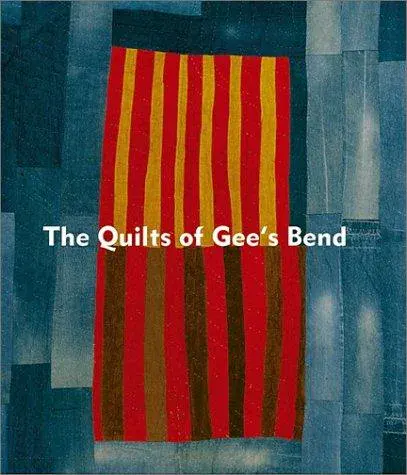
I had another thought about the Gee’s Bend quilts.
Many of the surviving 18th, 19th, and 20th century quilts are “best quilts.’ The workmanship and beauty of these quilts are on a very high level, produced by women of at least middle economic means, and these are likely reasons they have been cared for and preserved so that we may enjoy them today. In quilt research (or any artifact research) there is the issue of survival bias. This means that the conclusions we draw from artifacts are biased because we can only draw these conclusions from what has survived. For example, we do not know if red and green quilts were the most popular quilt type during the mid-1800s because we don’t know what sort of quilts didn’t survive. One of my frustrations with the study of historic costume has always been that the clothing of the common people didn’t survive. We can see incredible royal and court clothing. But the peasant clothing is lost to us. I’m an everyday person, I’m not royalty, so to see what an everyday woman would wear in the 1! 700s or 1800s has more appeal to me than a Worth gown worn to some society function. And the same for the quilts made for everyday.
One of the beauties of the Gee’s Bend quilts is that through them we CAN experience everyday quilts. We can see what “just folks” used to cover their beds, and how they brought beauty into their lives. We can see quilts that might not have otherwise survived, and through them, hear voices from the past that might otherwise have remained silent.
Consider the recent thread here on qhl about the tobacco quilts. Obviously these weren’t created to showcase the sewing skills of a lady of leisure. They wouldn’t have been lovingly handed down from daughter to daughter, only occasionally brought out to look at. But if we had them, they would provide illumination into lives of the past. Wouldn’t you like to hear their stories?
Judy Schwender
Date: Tue, 18 May | From: DDBSTUFF@
In a message dated 5/16/2004 12:46:50 AM Eastern Standard Time, qhl@ writes: Subject: Quilts have returned to Brimfield and the prices were LOW!!! In response to this email:
I have been doing Brimfield for the past 26 years and I have always been in the same spot. I guess most people consider me a “Quilt Dealer” but I don’t anymore. Why? Because I find it difficult to sell quilts. Why? Because people seem to want to “STEAL” them. I buy my quilts at auction, at antique shows and from private sources. I never have tried to “STEAL” them. Sure I like a bargain once in a while but I have always been willing to pay the price to get a good or unusual quilt.
I don’t “JACK UP” my prices either. In fact my markups have almost always been far less than the 200-300% that a lot of dealers, both quilt dealers and non quilt dealers mark theirs up.
This year I took a lot of very nice quilts and my prices ranged from $200 to $2000, most were under $500. I couldn’t get anyone to even open up a quilt. Perhaps, because I had 20-30 quilts, buyers automatically assumed that I would have “JACKED UP” prices.
I had one women come into my booth, pick up a $600 lone star quilt in mint condition and ask the price. I could tell by the way she handled it that she wasn’t a serious buyer so I told her it was $200. Of course she hadn’t opened it so she really had no idea what it looked like but she dropped it like a hot potato and angrily exclaimed, “Is the your dealer’s price?” and walked away.
I guess, she was one of those buyers who wanted to “STEAL” everything. Oh, well, I guess it was her loss.
Back in the “good ole days”, I used to sell 30-50 quilts during the week but now I guess there are just too many buyer’s who either don’t know what they are looking at or are only out to STEAL.
Sad, very sad.
Oh, and by the way, apparently there was one really good quilt that showed up on Wednesday and it was “stolen” for $3900. It was a 1840s mosaic of some sort (I didn’t get to see it) and it was in very excellent condition.
Thank God, at least one buyer was still willing to step up and pay for what he or she believed was good, at least one…
I did get to see a wonderful early pieced and trapunto quilt that a friend bought. It had wonderful blue fabrics on white and a date of 1820 and initials that were quilted and stuffed in a box in the center of the quilt. She too stepped up and paid the price.
I think the people who want to “STEAL” everything don’t really know what they are doing especially if they go around bragging about their “Steals”
Just for the record, most of the dealers that set up at Brimfield ar legitimate, honest professional dealers. Like me, they don’t know everything but they are trying to make an honest buck and they don’t mean anybody any harm or misfortune.
Regards,
Darwin Bearley
From: Gail Ingram <gingram@>
> One of the beauties of the Gee’s Bend quilts is that through them we CAN > experience everyday quilts. We can see what “just folks” used to cover th eir > beds, and how they brought beauty into their lives. We can see quilts tha t > might not have otherwise survived, and through them, hear voices from the past > that might otherwise have remained silent.
I agree that it is important to save representatives of the “ordinary, everyday-use” textiles, for they are critical to chronogling the history of an era. And many times, women put as much work into these as others, people with more means, put into quilts of finer design and construction.
I don’t, however, think it is this aspect of the Gee’s Bend collection that has been criticized or questioning on QHL. Instead, it is the uncritical response to a body of textiles, taken out of context and displayed as graphic design, when, in fact, they had a wider purpose and context.
The remark about the “artistes’ talk” strikes a chord with me. It would be interesting to record that talk and review it. Does it reflect genuine appreciation, pc, or a fascination with anything new and different that one so often encounters in the art scene today? Does it take into consideration the makers’ purposes? Does it consider, for instance, the quilting?
Personally, I always hate to see quilts made for beds considered only as graphic art designs, for I think such a view robs the artifacts of their humanity and their true meaning. It puts them in a false context. I know w e do this all the time with many objects (A friend tells me of a woman who served potato salad in a particularly lovely 19th-century chamber pot). I just prefer my potato salad in real dinnerware and my chamber pots tucked neatly under the bed.
And I like to make sure the Emperor really does have clothes on.
Gail
From: “Pilar Donoso” <quiltpd@>
In my store, I have an Elna, a Bernina a Singer, a Toyota, a Paff, and a singer Featherwight. I have check the Vikings also. Every machine have a plus, but if I have to decide for the most complete machine I will choose the Pffaf or the Bernina.
Singer machines are not longer what they used to be. Most of them are made in Brazil and all pieces are plastic. The new Singer “receive” the bobin in a plastic part that don’ t last more than 3 or 4 months. After that they start popping out. The featherweight hare great sewing machines for clases and have a wonderful stitch, but no zig zag, and not enough power to machine Quilt.
The Vikings /Husqvarna are very good machines, but I think they look better that they perform for their money.
The Pfaff is a good strong machine and I liked almost as much as the Bernina. I have my Bernina for the last 18 years and never have a real problem and what is the best, we have a GREAT service here in Chile.
I never thought I needed an expensive machine until I sew in one. You can drive a long distance in a $500 dollar car or in a $10.000 dollar car. You will get to the place you are going in both car, but you will enjoy the trip much better with air conditioner, confortable seats, music and automatic shift.
PilarPilar Donoso I. The Quilt Shop Santiago, Chile Fono/Fax 211 9877 EMail:
From: “J. G. Row”
It was a hot day in the studio today, and although some of our regulars couldn’t make the meeting (and were missed), Studio Quilt Study Group met anyway with 3 newcomers in attendance, and enough goodies to see so that we almost had to call time!! Our focus for the meeting was borders and bindings.
Sandy, one of our newcomers, who finally was able to play hookey from work to be with us showed us two spectacular quilts. The first was a sunflower quilt from the 1840’s. There were 49 pieced blocks in only two fabric designs, but two colorways of each fabric. In addition it had a spectacular applique scalloped border in Turkey Red.
She also brought a circa 1830 chintz medallion quilt, bound with “Trenton” tape. This quilt was a brilliant as the day it was made, unwashed. It included a few squares from a Toile-type fabric, many of them including signs such as: “Drawing a sand cart,” “Home Brewed Ale,”and “Hack on the Road.” It would be interesting to know if anyone else has seen the full repeat for this toile, and if they know its name.
Trudy, our one member with a long family history of quilts and a seemingly endless supply from the attic trunks showed us an early Prussian Blue and green “Path through the Woods” with a double sawtooth border. Most memorable was the purple stripe backing, as brilliant as the day it was printed, even though some of the tops blues had faded.
Mary Jo spread out a glorious dated 1939 friendship quilt with a mix of 42 pieced, appliqued, and embroidered blocks, absolutely the best of that era! It had 3 borders – pink, blue, and red.
We had only 3 Judys in attendance. One showed a Pa. German sampler quilt from the early fourth quarter of the 19th century, made in Lebanon Pa, with 72 blocks, and a double border, the outer one of a gorgeous paisley print. This quilt had no binding, but a “knife” edge with double rows of stitching.
Nancy showed a quilt embroidered by her grandmother in gold pearl cotton and then sent out to be quilted, spectacularly, by two 80 year old sisters. Nancy received it in 1965 and grew up with it.
Judy # 4 (as she calls herself) showed a blue and white Irish chain with an appliqued saw-tooth border which was turned to the back for binding. She also showed us a glowing mostly gold silk crazy quilt top, with a matching pillow cover which had a blue crocheted edging. And she brought a small roll of real “Trenton Tape”.
Judy # 2 showed a Bowmansville Star quilt, or as it was called by the family, a “Puzzle” quilt. IQSC has two in the on-line searchable database. This is a quilt made entirely of squares, laid out in a large 8-pointed star with a triangle border (of squares).
She also showed a Pa. German 4-block Geese variation quilt, in the usual colors – red, double blue, green, yellow and double pink. The sashing was flying geese in double blue and green with applique stars at the corners, then a sawtooth border of yellow and double pink. All this exuberance had to be contained with a plain red print border about 8 inches wide.
She also showed two pieced Pa. German pillow cases, one with a wonderful cheater cloth backing.
Barb showed us a poster underwritten in part by the US Forestry Service, which stated in bold lettering around 8 bright and beautiful 20th century blocks that these were the designs used to guide slaves through the Underground Railroad! Yes, our tax dollars at work! Some of our newer attendees had no idea what the fuss was about, so it was all explained yet again. Will it never end?
Barb showed us that she was ready to “go to housekeeping” as she had her quilt, a cross-stitch pillowcase, a show towel, a splasher, and an embroidered summer spread for a crib. She also showed a string-pieced on foundation fabrics quilt from the turn of the century, where the foundation fabrics were signed by the makers.
Joan, (Judy #4’s long lost twin sister – in looks not name) showed a lovely pink and white 1930’s star quilt with a sawtooth border. Her next quilt she called “Twisted Ribbons” from the Brackman book, but we’ve also heard it called Tear Drop or Hummingbird. Its border was effectively done by changing the color of the octagons in the outer two rows from the background color of white to a bright blue. We all thought that the quilting in the octagons was designed by tracing around a thread spool.
Our last presenter, another Judy, showed an early chintz star quilt, a T-quilt with a flounced border put on with a sort of ruching. Judy also showed a c. 1830 flying goose strippy quilt which used close to 80 different fabrics in the triangles, and had chevron quilting in ½” bands across the quilt. One of the fabrics was the same as one we saw in the very first quilt of the day, the Sunflower quilt. This was bound with a colored striped tape, perhaps “Trenton” Tape – who can tell?
We saw a double wedding ring quilt with yellow shield shapes at the crossing points instead of the usually seen 4-patches. This was a charm quilt – all the prints in the wedges were different – and the scalloped edges were bound in yellow bias.
A Penna. Rail fence quilt in red, black and a discreet use of yellow (among other colors) had a a double border – a narrow one of yellow and a very wide one of double pink. The double pink binding was almost 1 inch wide.
Our day ended with a 5-color Pa. Dutch Log Cabin quilt (those colors again, but no blue in this one, cheddar instead) with a perfectly worked -out border of full and half log cabin blocks on point, with perfect miters at the corners.
Mary, a non-quilter and non-collector, joined us for the first time, also taking a personal day from her teaching job to be with us . I think we may have made a convert!
We did have a lunch break and thank Nancy #2 for the California salad she makes for us once a year. And what would a group lunch be like without chocolate, bountifully provided for us by Sandy, in the thickest, gooiest most chocolatey fudge cake ever.
Our next meeting will be July 20th. Put it on your calendar now!
Judy Ringo
From: “Newbie Richardson” <pastcrafts@>
Hey guys, Thought you all would get a chuckle from one of my latest inquerries. I got a call from a lady on the Northwest coast who had a VERY old skein of home spun cotton. When I responded to her call, it turned out that she had a skein of crotchet cotton – lime green – from c 1930! It took me a while to convince her that: no, it would not pay for her daughter’s freshman year at college. I volunteered that these were not rare and that they were frequently found in old sewing boxes …that is exactly where hers had been found. She was very impressed by my “knowledge”. She was going to frame it in a shaddow box. Sigh Newbie
From: “J. G. Row” <JudyGrow@>
> She was very impressed by my “knowledge”. She was going to frame it > in a shaddow box. Sigh > Newbie
I hope you referred her to Frames & Framers in Lawrenceville, NJ, where you’ll find the very finest in conservation quality picture and object framing!
Judy ” Ringo” in Ringoes, NJ judygrow@
From: Anita Loscalzo
I agree heartily with Judy’s statements. In researching about machine-quilted quilts, the few survivors seem to be small crib or doll quilts and those with historic or sentimental value [such as the quilts made with the 1st sewing machine in a particular place or made by a treasured ancestor]. The aesthetic values of the day and whether it was utilitarian or for show also greatly affects the survival of a quilt.
Anita
Date: Wed, 19 May 2004 | From: Vivien Sayre <vsayre@>
Hello List, I will be in Oxford during the week of June 20th and wondered if any of our British list members could tell me about events which may be happening then. I would appreciate any and all input. Please email me privately.
Thank you, Vivien Sayre <vsayre&nesa.com>
From: Barbara Woodford
Darwin, your story about your proffered price of $200 is so revealing of the antique quilt market today. For some reason the casual quilt buyer thinks that we are making a bundle with our prices. Even the new quilters who have to pay a great deal for fabrics nowdays and then put in all their effort, price of costly machines, etc. can’t believe that it might be cheaper to buy an antique quilt than to make one. The last show I went to, I was lucky to sell two $900 quilts. My profit was $35, because I had had to pay so much for the lovely old things. But I wanted these special quilts to go to someone who loved them. Sometimes I think I”m in Social Services. Barbara Woodford
From: “Marcia Kaylakie”
HI all you historian people out there! This is truly quilt related, I promise, but I need an attribution to a particular quote “He also serves who stands and waits.” At first, I thought it might be biblical but cannot find it in any reference or concordance, so I am looking to the historical. Can anyone help me with this one? Marcia
From: “Charlotte Bull” <charlou@>
Sorry to be late, but I recall my guild in Tucson, some 20+ years ago, asking us to raid our drawers or those of our mother/grandmother for the White Gloves they’d worn to church in earlier years! They kept a box at the sign in table in case a guest wanted to touch a quilt, as well as for the “hostesses” who wandered around offering to turn a corner if you wanted to see the back! A guy once complained as all the white gloves were too small for his hands!
Sorry…but you do arouse old memories.
Yesterday I did a Clint Eastwood. I Made Her Day! I told a uninformed beginning quilter that she’d made a great purchase at a garage sale: A plastic box for 50 cents. Inside were 44 embroidered state flower blocks from the 1950s, complete with the iron on patterns, a List the maker made, a letter she wrote, and an ad dated 1956 she had sent to a friend (and her request to return it to her). Really great Box from Under the Bed. It also had some other small newer craft items and a full 9 yards of mint condition crème fabric with a price tag of 59 cents a yard! And she had been afraid her husband would scold her for wasting money! She’ll give the blocks to her ailing mother to set together and thereby make that quilter’s day as well! I was sinfully coveting the blocks, but I did offer to help the mother as a few needed a bit of repair and I have matching embroidery thread. I would have done it for her if her mother was not needing a project to do by hand while confined to bed.
Now back into my jail cell (my studio looks like granny’s attic!) to continue organizing. cb
OH YES, if you have not toured this museum or site, go take an hour off to do so.
http://www.thehenryford.org/museum/quiltinggenius/home.asp
I hope I got that right!
From: Ark Quilts <quiltarkmv@>
The quote is from John Milton’s “On His Blindness” and is the last line of the following: When I consider how my light is spent Ere half my days in this dark world are wide, And that one Talent which is death to hide Lodged with me useless, though my soul more bent To serve therewith my Maker, and present My true account, lest He returning chide, “Doth God exact day-labor, light denied?” I fondly ask. But Patience, to prevent That murmur, soon replies, “God doth not need Either man’s work or his own gifts. Who best Bear his mild yoke, they serve him best. His state Is kingly: thousands at his bidding speed, And post o’er land and ocean without rest; THEY ALSO SERVE WHO ONLY STAND AND WAIT.”
from p. 511, line 24 DICTIONARY OF QUOTATIONS, edited by Bergen Evans. New York: Delacorte Press, c1968.
Good luck–C. Ark
From: “Candace Perry”
Thanks for this link to the Henry Ford’s exhibit! I was interested to see that some sort of early printed spread was included that was NOT quilted…I would want to exhibit it too, but do you think it confuses the public to see such a piece in a quilt exhibition, when it is not a quilt? Or am I splitting hairs? (which I am good at!) Candace Perry
“He also serves who stands and waits.” is a WW2 expression as you will see on this website http://www.198sqn-raf.co.uk/198sqn_020.htm i want to say winston churchill was the originator, but i’m not sure…i just know of it in connection with the battle of britain and the large loss of RAF pilots. jeanL
Date: Wed, 19 May 2004 12:29:02 EDT | From: RAGLADY@
http://www.ushistory.org/carpentershall/blueprint/one.htm John Milton from his book “On His Blindness”
http://www.quoteworld.org/author.php?thetext=John%20Milton Quotes from Milton, the line is frequently used, but often without attribution and misquote. The actual line is: “He also serves who only stands and waits.”
HTH, Gloria raglady@ marciark@ writes: > HI all you historian people out there! > This is truly quilt related, I promise, but I need an attribution to a > particular quote “He also serves who stands and waits.” At first, I thought it > might be biblical but cannot find it in any reference or concordance, so I am > looking to the historical. Can anyone help me with this one? Marcia
From: Mary Persyn <Mary.Persyn@>
I was at an auction here in Valpo last Saturday. The items being sold were the possessions of a Valparaiso native who was also a member of our local Quilt Guild. There were a number of quilts sold ranging from tattered to good condition. I heard someone complaining that a 30s quilt with an interesting design got too high at $115. One of my guildmates got a pastel 30s churn dash for $17.50. I bid against a woman who talked the auctioneer’s helper into combining a blue and white quilt of uncertain age, pieces of redwork and blue work and several other items that I don’t remember in a antique laundry basket. That batch went for $75 because I was marshalling my money for a sort of funky Carolina lily. I think I spend the most on any quilt at the sale – the Carolina lily cost me $180 because someone else also wanted the quilt. The quilters in the crowd were surprised at the low prices that the quilts brought.
But then I thought a lot of the prices were low. A Victorian chest of drawers that I know I’ve seen in antique stores for $750 to $1000 brought $250. Marilyn had a collection of doll beds and they were selling for $5 to $20.
Is it just the times?
Mary
From: “Marcia Kaylakie”
Thanks to all of you who replied so quickly! the quote originates from Milton on his blindness. How nice to know that such references exist. I am adding a couple of websites to my bookmarks!! Marcia —– Original Message —–
From: Gail Ingram
Actually this is a poem, a sonnet. Milton had spent a lifetime preparing to do for the Christian West what Virgil had done in the Aeneid for the Roman world—to commemorate its greatness. From childhood he had begun preparing to write his great epic, “Paradise Lost.” The epic genre requires encyclopedic knowledge and information as well as great artistic skill and literary invention, and Milton had devoted his life to both elements. Then, he began to go blind. In the sonnet, the speaker questions God’s purpose for his life (“Doth God exact day labor, light denied?”). The reply that comes is that God does not need man’s work (“His state /is kingly: thousands [angels] at his bidding speed,/ and post o’er land and ocean without rest;/ They also serve who only stand and wait.”) In other words, one need not “earn” God’s favor through his works, however well-intended those works might be.
And it is “They,” not “He.”
Most people know this line, however, not from Milton’s sonnet but from one of Winston Churchill’s speeches during WWII, when German invasion seemed imminent. C. was remarking the importance of the English people’s going about their daily work as usual. ‘The gathering storm” speech, I believe.
Well, that’s probably more than you wanted to know about this subject!
Gail
From: Patricia L Cummings
Good afternoon:
For your enjoyment, we have just posted an article on our website. The history and textiles of Willimantic and Sharon, Connecticut are discussed. These are two friendly towns in the “Nutmeg State”, with two great museums, and two wonderful and gracious curators. I think that you will enjoy Jim’s photos.
While I believe the article to be free of typos, if it is not, please feel free to gloat. I am still waiting for the spelling police to arrest me for the last article (which I described to you at length) that had a few errors. Ah, the best laid plans of mice and moose! Who knows, if that kept up, I might be forced to spend the rest of my days eating “alphabet soup”! 🙂
Gosh, sometimes I’m happy to have an Irish heritage. I try to keep my smile handy at all times, and I’m always ready to grin in the face of adversity. I’m quickly coming to the conclusion that being “dead serious” about everything amounts to being “dead”…. my philosophical thought for the day.
I hope that you simply “love” the article. It is a labor of love.
Yours,
Pat Cummings www.quiltersmuse.com
From: “Sandra Millett”
More than we wanted to know? I don’t think so. Thanks so much. Makes it all fall into place.
Sandra Millett Author, Freelance Writer Quilting the Savory Garden, Krause Publications Needle ‘n Pen columnist, The Quilter Magazine
From: Gail Ingram
> > But then I thought a lot of the prices were low. A Victorian chest of > drawers that I know I’ve seen in antique stores for $750 to $1000 > brought $250. Marilyn had a collection of doll beds and they were > selling for $5 to $20. > > Is it just the times?
Mary, if you worked in the foundation at Valpo instead of the library, you would know the answer to that question. Fundraising is downdowndown. People near retirement age took such a beating in the past several years that they now have less disposable income. I know that is my case. I was just glad that my mother and father, who had known the Great Depression, were not around to see what happened to the funds they had left me and my sister, even though we had most of them in pretty conservative firms.
I also wonder what eBay has done to real-life sales. As you noted, even furniture prices seem to be significantly affected. I think in some places, it has inflated prices to the point of no-sales, which panics owners. And in others, it has drawn people to the computer and out of stores.
I firmly believe we must try to establish a semi-democratic government in the Middle East, and right now, Iraq looks like the best bet. But as a people we want instant results and panic when we don’t get them.
gi
From: “Margaret Geiss-Mooney”
Good evening, QHLers – Thanks for the great summary of using your washing machine as a soaking basin/water extractor, Judy. I couldn’t have said it better myself! BUT PLEASE DO NOT DO THIS IF YOUR WATER QUALITY IS NOT GOOD TO EXCELLENT (please excuse my shouting). If you don’t even drink your own tap water because of the smell/staining of the sinks/tubs/toilets, do not use it for washing anything that you want to save. Your water district must provide you a copy of the annual testing results required by the EPA. Get a copy and check out your water quality first. You don’t want to be leaving the contamination of the water behind in the quilt.
Also, do not use a washing machine that has had fabric softener used in it for years. The residue of the fabric softener will be left behind in the quilt.
And don’t forget to turn off those automatic lawn watering systems if the sprinklers would hit that deck where the quilt is drying! And lock up the 4-legged members of the family (hmmmm…maybe the two legged members of the family, too?)
Regards, Margaret (Meg) Geiss-Mooney Textile/Costume Conservator Professional Associate, AIC mgmooney@
From: “Rachel Greco”
The quote you are looking for is:
“He also serves who only stands and waits.” This quote is from the book Paradise Lost, written by John Milton (1608-1674), a famous English poet. The book is about the triumph of good over evil.
Rachel Greco Grandma’s Attic Sewing Emporium Dallas, Oregon
From: Laura Robins-Morris
OK, Marcia, now I’m really curious. Where’s the quilt part?? Patient DH waiting for years for his own quilt from his all-too-busy quilter wife? (Now how would I know about that.) Waiting for that over-extended quilter to finish her part in a Round Robin? Or…??? Inquiring minds want to know! Laura in Seattle
From: “Nance Searle” <nms@>
Hi there,
I have 3 duplicate books in my library. The titles are:
Quilted for Friends Delaware Valley Signature Quilts, 1840-1855. Historic Houses of Odessa Delaware
Nineteenth-Century Appliqué Quilts, Philadelphia Museum of Art.
Classic Crib Quilts by Woodard and Greenstein
If anyone is interested in purchasing them, please email me privately.
Cheers, Nance Searle International Society of Appraisers
Date: Thu, 20 May | From: Laurajbr@
I would be interested in the 19th Century applique quilts if it is still available.
Laura
From: Diane McGuire
Rachel Greco wrote:
The quote you are looking for is:
“He also serves who only stands and waits.” This quote is from the book Paradise Lost, written by John Milton (1608-1674), a famous English poet. The book is about the triumph of good over evil.
That is almost correct. It was written by Milton but the quotation is from his sonnet “On His Blindness” in which he laments that since he has become blind he can no longer serve God the way he used to. His conclusion is that he can also serve God by standing and waiting. He was Latin secretary to King Charles I (I think that is the right king) back when all diplomatic papers were written in Latin.
Date: Fri, 21 May 2004 10:26:58 -0500 | From: “Charlotte Bull” <charlou@>
Good Morning All. Yesterday, I had a lovely day looking at lots of old quilts spread over a long old fashioned wooden rail fence. And, yes, that is a quilt block, but not a joke. Annually my quilt guild has an Airing of the Quilts. This particular hostess lives on a lovely old farm site with a tremendous view. We ate & talked, of course, but we could have survived on just viewing quilts. This year almost all were very old family heirlooms.
It was not a QHSG ! But it could have been. A delightful afternoon. One lady commented that she had never really noticed the faded print in her family quilt until it was spread out in the sunshine and I commented on it. Suddenly it became much prettier to her. We did have sheets under each quilt! Usually we are only able to hang them on ropes between trees and they’re in the shade. This was such a lovely way to see them in their faded glory – but many were in mint condition! A few were dated, but most were those typical family quilts made by a great grandma or maybe her sister! One that really grabbed us was made by a girl who had been murdered in her early 20s. Such a story!
But the best tale of the day was one of those wild coincidences. It was a typical Double Wedding Ring which was made on an extremely small scale. The owner asked me if I could date it for her. I sort of choked with laughter as in the Newsletters I’d just passed out to them all was my story about a full bedsize quilt top I’d found of the same pattern and how, a few weeks later, I’d found its KC* pattern, dated, and now, here she was with a finished quilt from that pattern. You don’t often find everything coming together just perfectly. A pattern, a top, and a quilt with DWR arcs made from 7 small sections no wider than 3/4″! Very satisfying to have a specific answer for her and not the typical “Well the fabrics date it to the late 1930s!” Have a great weekend….cb
From: “Susan Wildemuth”
The next meeting of the Iowa-Illinois Quilt Study Group will be held 9:30 a.m. – Saturday, August 7, 2004 at the Kalona Quilt and Textile Museum in Kalona, Iowa.
Just want to give you a heads up, if your summer plans have you traveling I-80 through Iowa — please take the opportunity to stop in the Amish community of Kalona, Iowa and visit the Kalona Quilt and Textile Museum. The museum’s current exhibit is an amazing collection of Amish Quilts from 1920-1940. It is my understanding this exhibit will be shown at the museum until the 1st of September.
Sue in Illinois
Date: Fri, 21 May 2004 | From: QRACQUE@
We will be visiting in Nova Scotia in June (5th-12th). Does anyone from the list know if there are any shows, quilt collections and/or museums that we should be looking for? Our central point will be Halifax. Thank you. Marianne Williams
Date: Sat, 22 May 2004 02:51:22 -0400 | From: “J. G. Row” <JudyGrow@>
The New York Times Book Review, last Sunday, page 35. “Black, White and Brown.” A discussion between Cornel West ( Professor of Religion and African American Studies at Princeton University ) and Henry Louis Gates Jr. (Chair of African and African American Studies, and Director of the WEB Du Bois Institute for Afro-American Research at Harvard University ) on the historic Supreme Court Ruling, Brown vs Board of Ed.
Center Column, 2nd paragraph from the bottom. Gates speaking…..
“[Before affirmative action] you couldn’t just show up in the black community and apply [to Yale]. You had to go through filters within the race. You had to know somebody. There were these mechanisms. It’s the same [with] Rosa Parks. She did not spontaneously sit down on that bus. She was chosen for the role. She was trained. The way the mythology is perpetuated, she was tired, she was poor, she was black, and she sat down. Well, no, that’s not how it happened.”
Well, I’ll be!
Perhaps these two learned gentlemen should be told of another myth that has taken hold, spread by a white woman who was also “chosen” for her role, and her acolyte, another professor from the black community. Perhaps these two gentlemen can use their influence, their eloquence and their importance in the African American cultural community to tell the truth about the myth perpetrated by HIPV.
How do we reach them? Perhaps Giles Wright should make an appointment with Professor West.
Judy ” Ringo” in Ringoes, NJ judygrow@
Date: Sat, 22 May 2004 08:22:36 -0400 | From: Patricia L Cummings <quiltersmuse@>
J. G. Row wrote:
A discussion between Cornel West(Professor of Religion and African American Studies at Princeton University)and Henry Louis Gates Jr. (Chair of African and African American Studies, and Director of the WEB Du Bois Institute for Afro-American Research at Harvard University) on the historic Supreme Court Ruling, Brown vs Board of Ed.
and Judy said that……. Giles Wright should be in contact with Professor West.
Dear Judy:
I am sure that Giles would find these comments to be interesting, inasmuch as the Brown v. Board of Ed. situation was based in his home town, if I am remembering one of our conversations correctly.
Thanks, Judy. Very interesting information.
Pat Cummings