April 22 – 27, 2003
This page contains affiliate links. If you buy through them, I may earn a small commission at no extra cost to you. As an Amazon Associate I earn from qualifying purchases. Learn more
These restored messages come from the Quilt History List, an online forum where quilt historians, collectors, researchers, appraisers, and enthusiasts discussed antique quilts and related textiles. The archive dates from 1996 through approximately 2016 and is being restored gradually. Sign up in the form at the bottom of the page if you want to know when a new page is added. Original spelling, opinions, formatting, and inactive links may remain unchanged.
Primary topics of this QHL Digest:
- Sourcing the Out-of-Print “Calico & Chintz” — Members track down a copy of Jeremy Adamson’s rare *Calico & Chintz* for a graduate student researcher, eventually locating one through the Merryvale dealer. (see the article on cotton and textile terms)
- Marie Webster’s Garden of Sunflowers Quilt — A member’s Sunflower quilt is traced to a matching example pictured in a Marie Webster biography.
- Signature, Album, and Friendship Quilts: What’s the Difference? — A classic quilt-terminology question is answered with references to Barbara Brackman’s *Clues in the Calico* and *The Signature Quilt*.
- Volunteering in the Colonial Williamsburg Textile Conservation Lab — A member shares her experience preparing textiles for an upcoming Colonial Williamsburg exhibition. (see the article on early American quilts)
- A Memorial Day Community Quilt Project — A member asks whether anyone knows of a community group making a Memorial Day-themed commemorative quilt.
Date: Tue, 22 Apr 2003 22:07:31 EDT | From: KareQuilt@
Hi Julie et al. I am looking at your quilt’s twin on page 15 of Rosalind Webster Perry’s book “Marie Webster’s Garden of Quilts,” which in itself is a photo of the page from the 1912 edition of Ladies’ Home Journal. (I gave you the wrong date in a previous email.) This was the second issue of LHJ to run Marie’s quilts. The four that appeared in this issue were: Poppy, Morning glory, Sunflower and White Dogwood. In Marie’s Sunflower quilt there are seven stalks across each end and 8 stalks down each side. A similar quilt appeared on the cover of 1995 “Uncovering” but it has only four sunflower stalks across each end and 5 down each side. Plus the flower in the corner is very different from Webster’s design and placement. Marie’s is much more fluid. What a beauty! Do you know its history – the maker, etc? Since we just happen to be on the subject of Marie Webster, I would like to take this opportunity to announce that the official Grand Opening of The Quilters Hall of Fame will be July 15-18, 2004, in the restored home of Marie Webster in Marion, IN (about an hour NE of Indianapolis). We have been at this project 12 years! Come celebrate with us! I am so excited that we are finally going to open I could dance a jig. Have been working on corporate sponsorships and just got the word that Georgia Pacific (home of the infamous Northern Quilted Bathroom Tissue Ladies!!) has decided to become an annual corporate sponsor! Whoopee!! Many of the living honorees will be present to speak or do workshops. Email your name and address to our office (quilters@) if you would like to be on the mailing list to receive the Grand Opening Schedule — once we get everything shaped up. There will be a special quilt contest too. More on that later.
Karen B. Alexander Press Secretary The Quilters Hall of Fame
Date: Wed, 23 Apr 2003 12:09:49 -0500 | From: “Kathy Moore”
Kathy Moore here in Lincoln, Nebraska. I’m doing graduate studies in textile history and quilt studies at UN-L and I’ve learned a lot from reading the QHL digest. Keep the information coming, it’s great.
Now I need your help.
I’m looking for a copy of the book, Calico & Chintz: Antique Quilts from the Collection of Patricia S. Smith, by Jeremy Adamson. It was published in 1998 by the Smithsonian’s Museum of American Art. I’ve searched on the internet and cannot afford the one copy I’ve found. The seller wants $482 for it, and that’s down from $586 a couple of months ago! He’s not willing to negotiate any lower right now.
I’ve contacted the Smithsonian, but their director doesn’t seem interested in reprinting. The woman I talked to is keeping a list of interested persons and trying to persuade them to reprint, but she says it’s a very low priority item for them. Maybe if a LOT of us deluged them with requests we could get their attention.
Or maybe it’s not worth the trouble??? Any opinions???
Can anyone suggest a legal and affordable way to obtain a copy of this book?????
You can respond privately or on the net. Others might be interested. Thanks.
Kathy Moore
Date: Wed, 23 Apr 2003 10:29:55 -0700 | From: Judi Fibush <judi@>
Go to Amazon.com and try Powells.com bookstore in Portland, Or. They have a lot of our of print books. There are other sources for out of print books too. Try google
Date: Wed, 23 Apr 2003 14:51:27 -0400 | From: “Bobbi Finley”
I have recently been volunteering at the Textile Conservation Lab at Colonial Williamsburg preparing for an exhibition of their quilt collection at their museums in 2005. I try hard not to drool over these quilts as I see them! There’s talk of a book to coincide with the exhibit but everything is in the planning stage and CW, like many other organizations, has budget concerns so we must hope for the best! The subject of involving children in the exhibit came up. I think I heard of an exhibit where children could use a computer to design a quilt. I don’t recall where it was and I’m not sure if it was something like Block Base or something more simplified. Any ideas on involving children, computer related or otherwise, would be greatly appreciated.
Date: Wed, 23 Apr 2003 16:49:20 -0400 | From: “laurafisher”
anyone out there know of a community group that is making a memorial day type quilt, or other memorial day handicrafts, who would be willing to be interviewed for a TV program about such activities? A media contact of mine would love to feature such an enterprise, and would need to film it in the first few weeks of May for airing I gues,, Memorial Day. It would be preferable if they were located in the northeast U.S. You can email me privately: laurafisher@. Thanks. laura
Date: Wed, 23 Apr 2003 21:58:52 +0100 | From: “Sally Ward” <sallytatters@>
> Go to Amazon.com and try Powells.com bookstore in Portland, Or.
Or try Amazon .co. uk. Last time I looked for this book they were listing it as in stock. Sometimes that means they think they can get it from the US site and then find they can’t, but its just possible that they do actually have some over here. Worth asking, anyway.
Sally W
Date: Wed, 23 Apr 2003 23:07:18 -0400 | From: “Anita Grossman Solomon”
Last month at the Lancaster show in Paducah, the Merryvale Ltd vendor had copies of the Adamson Calico and Chintz book for sale. I think at $125 but certainly less than $200. He has been begging the Smithsonian to allow him to undertake or fund a reprinting of the book. His booth was not in the Lancaster Host property but across the highway with other vendors. I think he is Bonnie Benn (Quilt for a Cure) Stratton’s husband. He was kind and explained the Smithsonian printed only 2,500 exhibition copies of the book because that’s all the funds they had allotted for publication. I don’t have an address for him but I believe that you could track him through at http://www.bcrfcure.org/part_grassroots_stratton.html where I found Merryvale, Ltd. listed at 703-264-8959. Anita G. Solomon NYC
Date: Wed, 23 Apr 2003 22:38:33 -0500 | From: Jennifer Perkins
Wow, I feel fortunate to own this book, and it is one of my favorites, so I don’t want to get rid of it. I’m going to copy this email and stick in the book, so my kids don’t sell it cheap someday 🙂
Have you checked the AQSG library on campus? I’m sure they have a copy you could read. It’s not as good as owning it, though, so I hope your search goes well! Jennifer in Iowa
Date: Thu, 24 Apr 2003 00:50:16 -0400 | From: “Denise M. R. Nordberg”
This book is definitely worth consulting. Maybe you could try interlibrary loan. I’ve used this in the past for hard to find quilt books. Someone at a University library might we willing to help. Denise Nordberg in changeable NE Pennsylvania
Date: Thu, 24 Apr 2003 0:34:34 CST | From: jocelynm@
On Wed, 23 Apr 2003 14:51:27 -0400 “Bobbi Finley” wrote:
Any > ideas on involving children, computer related or otherwise, would be > greatly appreciated. > Bobbi, I’ve heard of shows giving out a scavenger hunt sheet, and kids that complete the sheet are eligible for a prize. It had pictures of various common blocks, and they had to write down the number of a quilt that used that block, or other categories like ‘a quilt with a cat on it’. It requires either knowing what will be entered ahead of time, or a lot of last-minute work, though.
Jocelyn
Date: Thu, 24 Apr 2003 07:36:19 EDT | From: PElkovitch@
Kathy Moore in Nebraska.. . . . .
Hi there! I am working on my Masters at Syracuse University in Museum Studies, so I know how important it is to get a book as quickly as possible for classes. I was given a copy of the Calico & Chintz by a wonderful woman in Washington that I had made quilts for.
The book is lavishly illustrated (full pages illustrations with pictures of the quilts and then close-ups) and is wonderful for fabric identification; I feel as though I can almost feel the textures. As to be expected, it is also well documented.
Let me know what you need, and say hello to Michael James!
Pat Elkovitch Skaneateles, NY
Date: Thu, 24 Apr 2003 21:32:45 -0500 | From: “Kathy Moore”
Thank you all for your responses and help in locating this book. You’ve only verified my good impressions of this book. I’m following up on all your leads.
As for library searches, yes the resources we have here are wonderful and there is at least one copy of this book in the collection. I have it checked out, but must return it soon. Therein lies my frantic search for my own copy!
I’ll let you know how my search turns out. And keep that information comin’.
Thanks to you all.
Kathy Moore
Date: Fri, 25 Apr 2003 07:30:02 -0400 | From: Judy Knorr <jknorr@>
Bobbi, Another idea I remember seeing at a quilt show was a set of blocks (I think there were several different sets) cut in squares and triangles and painted so children could arrange them to design their own blocks. I also saw a similar idea using paper with squares and diamonds etc. already printed on it and crayons or markers for children to design their blocks. The paper blocks can be displayed on a bulletin board. Any of these ideas should have table and small seats in an area out of the general traffic pattern at the show, but the children will find it!! Judy
Date: Fri, 25 Apr 2003 05:18:31 -0700 (PDT) | From: Lisa Portwood
Kathy,
I have a copy of this book and it is truly an amazing book. One worth seeking out if you can find it at an affordable price.
I have had good luck in the past locating hard to find books at Quilting Books Unlimited. Their phone number is 1-800-347-3261 or you can find them at www.qbu.com. Good luck with your search.
Lisa Portwood Oxford, OH
Date: Fri, 25 Apr 2003 10:15:42 -0500 | From: “Webb, Dixie J” <WEBBD@>
Anita –
I called the Renwick Gallery bookstore about a year ago and purchased a copy for less than $50 including shipping. My copy is paperback, but they still had them in stock. It is a great quilt book.
Dixie Webb Clarksville, TN
Date: Fri, 25 Apr 2003 16:39:29 -0400 | From: “Candace Perry”
Happy Friday afternoon, all: here’s a notice I received on another listserve and I thought I’d pass it along here. Candace Perry
The American Antiquarian Society’s Seminar in Visual and Material Culture will take place on Tuesday, May 13, at 4:30 p.m. Lynne Bassett (Connecticut Historical Society) will present a paper entitled ‘Documenting Regional Innovation in New England Whole-Cloth Quilts, 1750-1850.”
Please consult our website for full details about this seminar: http://www.americanantiquarian.org/Seminars0203/bassett.htm.
If you plan to attend the seminar or dinner, please go to the link and follow the directions for registering electronically, or email Ann-Cathrine Rapp (arapp@).
Thank you.
Joanne Chaison American Antiquarian Society
Date: Fri, 25 Apr 2003 22:16:03 -0500 | From: “Kathy Moore”
Just wanted you all to know I found a source for the Calico and Chintz book. Merryvale Inc., as suggested by Anita Grossman Solomon, does indeed have a few copies, brand new and still in their shrinkwrap, available. The cost is — cough, cough — more than I ever thought I’d pay for a book, but at least do able. If you’re interested, contact me individually and I’ll give you more specific information.
I also learned that Jeremy Adamson left the Smithsonian and they have the copyright, so he cannot republish/ reprint. Wouldn’t it be nice if he could talk the Smithsonian into some kind of arrangement that would allow reprints?
At any rate, thank you all for your amazing help.
Kathy Moore
Date: Sat, 26 Apr 2003 09:09:23 -0700 | From: “Susan Silva” <woody@>
Can’t help but be interested in information about Patricia Smith’s book. If is definately one of my favorites, and as of yesterday even more so, as I was at a sale and found a nine patch variation with one of the fabrics featured in her book. It is the Bird under the Palm. Hot dog! Susan in Spokane Washington, tickled pink with her new quilt!
Date: Sat, 26 Apr 2003 12:51:12 -0500 | From: “Susan Wildemuth”
What are the differences between Signature Quilts – Album Quilts – Friendship quilts? Are they three names for the same type of quilt? Does the name of the quilt change if the names on the quilt are written in ink and another are embroidered with embroidery thread? Does the name change if all the blocks are the same pattern versus all the blocks being different (sampler fashion)? Does the name change depending on the intended purpose of the quilt? Does the name change if it is a 19th century quilt or a twentieth century quilt?
Thanks
Sue in Illinois
Date: Sat, 26 Apr 2003 11:18:58 -0700 | From: Judi Fibush <judi@>
Susan,
To the best of my knowledge and I know the experts will chime in is that they are basically the same name for all the quilts. If they have names on the quilt whether or not they are actual signatures or printed by one person, they are the same. However, the title signature quilt would denote one that would have actual signatures on the them. An album or friendship quilt would not necessarily have names but could have been made by a group of friends or all of a family with special fabrics, etc. to tie them altogether. Ok, pros help me out on this
Judi in wet and windy No. CA
Date: Sat, 26 Apr 2003 11:31:01 -0700 | From: “Julie Silber”
Hi Everyone, Julie Silber here. I have had some really good and reliable feedback on the “complicated” Sunflower quilt currently on eBay (# 2525672314). You guys are the greatest!
There just happens to be another version of the design– the simpler one referred to — on eBay just now. It can be seen at # 2524826809. It’s quite a nice example — and it is the interpretation I have seen many times before. Must be the later Mountain Mist version. (Listed by “gb-best”.)
It might be fun to compare the two right now:
<img align=”left” alt=”2525672314.jpg (25710 bytes)” border=”2″ height=”110″ src=”./03102_files/2525672314_small.jpg” width=”100″/>Ours: http://cgi.ebay.com/ws/eBayISAPI.dll?ViewItem&item=2525672314&category
<img align=”left” alt=”2524826809.jpg (19834 bytes)” border=”2″ height=”120″ src=”./03102_files/2524826809_small.jpg” width=”100″/>The other: http://cgi.ebay.com/ws/eBayISAPI.dll?ViewItem&item=2524826809&category
(If you type in “Sunflower quilt” on eBay search, they both appear in thumbnails next to one another!)
From Jan Gessin in OZ: “Marie Webster came out with this pattern, “Sunflower” (her name) and it was published in Ladies’ Hone Journal in 1912. It is this pattern that was faithfully reproduced by the quilter who made your Sunflower. And if I am seeing it clearly, she even included the spider web quilting detail as per Webster’s instructions. Then Mountain Mist comes along and they publish this pattern as “Sunflower” or “Pattern No. P” in the 1930s (not sure exactly which year – it is included in my 1938 catalog but I strongly believe it was available earlier in the 30s). THIS is the pattern followed by gb-Best’s quilt maker and is obviously a simplified version of Webster’s original pattern. A number of Webster’s designs were stolen by Mountain Mist, as they never gave credit to Marie. I happen to have a Mountain Mist wrapper with the Sunflower pattern on it from the 30s, however, it is noted dated and the stamp has fallen off the envelope. It even has fabric swatches included. If you have Webster’s book, A Joy Forever, Sunflower is on page 21.”
From Susan Riley — “I checked my Mountain Mist catalog and my original wrapper. The M.M. has just 1 sunflower at a diagonal in the corners flanked by 1 straight flower from side/bottom making an odd triangle. The bottom/top centers: only 2 large flowers; the sides: 3 flowers. This quilt is much prettier-my Marie Webster book of patterns here does not have the sunflowers in it.”
You already got the scoop from Karen Alexander: “I am looking at your quilt’s twin on page 15 of Rosalind Webster Perry’s book “Marie Webster’s Garden of Quilts,” which in itself is a photo of the page from the 1912 edition of Ladies’ Home Journal. This was the second issue of LHJ to run Marie’s quilts. The four that appeared in this issue were: Poppy, Morning Glory, Sunflower and White Dogwood. In Marie’s Sunflower quilt there are seven stalks across each end and 8 stalks down each side. A similar quilt appeared on the cover of 1995 “Uncovering” but it has only four sunflower stalks across each end and 5 down each side. Plus the flower in the corner is very different from Webster’s design and placement. Marie’s is much more fluid. What a beauty!”
And one more: “Yes, it’s Marie’s pattern, shown in the 1912 Ladies’ Home Journal. The quiltmaker probably purchased the pattern from Marie or one of the stores she sold through (like Marshall Fields). She followed the pattern faithfully, with a slightly different border. Marie’s was wavy, with 3 colored bands, while the one on eBay is straight and has 4 bands. You can find a color photo of the original quilt and the pattern in A Joy Forever, page 21.”
THANK YOU ALL, Lovely QHL-ers. I have learned a lot on this subject and so many others.
Julie Silber
Date: Sat, 26 Apr 2003 13:48:30 -0700 | From: “Laurette Carroll” <rl.carroll@>
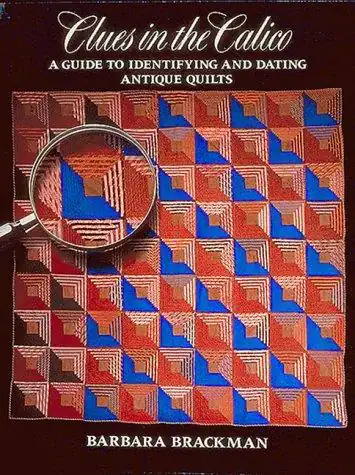
Hello, Susan, Barbara Brackman has addressed this topic in her “Clues in the Calico.” She explains each type of quilt, in detail, and there is much to much to include here. Each type of quilt has it’s own name. See her book starting with page 147.
Laurette Carroll Southern California
Look to the Future With Hope
> > What are the differences between Signature Quilts – Album Quilts – > Friendship quilts? Are they three names for the same type of quilt? Does > the name of the quilt change if the names on the quilt are written in ink > and another are embroidered with embroidery thread? Does the name change if > all the blocks are the same pattern versus all the blocks being different > (sampler fashion)? Does the name change depending on the intended purpose of > the quilt? Does the name change if it is a 19th century quilt or a twentieth > century quilt? > > Thanks > > Sue in Illinois > >
Date: Sat, 26 Apr 2003 15:21:49 -0700 | From: Chris Flynn <lovechris@>
Julie
Hi Julie, et al…. Anyone ever seen this sunflower deisgn? I’m clueless. Thanks, Chris
VIBRANT! Cheddar flower APPLIQUE QUILT 1940 #2525545933
Date: Sun, 27 Apr 2003 08:46:55 -0500 | From: “Webb, Dixie J” <WEBBD@>
Sue,
Barbara Brackman also makes distinctions for research purposes between these similar quilt styles in her article “Signature Quilts: Nineteenth Century Trends,” in the AQSG/Rutledge Hill publication Quiltmaking in America: Beyond the Myths, Laurel Horton, ed. For purposes of clarity she uses the terms sampler album and single-pattern friendship quilts. I just happened to have reread her article last night as I am using the compilation of AQSG articles to curate a show of the local county museum’s quilt collection.
Best, Dixie Webb Clarksville, TN
Date: Sun, 27 Apr 2003 10:59:06 -0400 | From: “pepper cory” <pepcory@>
Hello all-When Susan McKelevey and I wrote our book The Signature Quilt, we realized the first chapter (p.13) had to be ‘The Signature Quilt Defined.’ The broad definition is “…all quilts which contain signed blocks, whether those are inked, embroidered, cross-stitched or otherwise applied.” Then we got to categories within the species–‘friendship quilt’ seems to be a more recent term (1930’s on) and these are more likely to be the same pattern repeated but sewn and signed by different people. On the other hand, ‘album quilt’ seems to best be termed as different pattern signed blocks combined in the same quilt. Add to the mix ‘presentation quilt’-often made for a minister or departing teacher and ‘fund-raising quilt’-for a cause from Abolition to repairing the parish house roof. After all that, we opined that ‘signature quilt’ covered the subject. Funny that this subject should come up–I’ve just gotten word from EZ Quilting (former publisher) that The Signature Quilt’ is completely out of stock. Contact Susan smckelvey@ or myself if you’re searching for a copy. Cheers- Pepper Cory
Date: Sun, 27 Apr 2003 15:20:12 -0500 | From: “Susan Wildemuth” <ksandbcw@>
Thanks everyone for sharing the information about Signature-Album-Friendship quilts through e-mails and book titles. You are, as always, a generous group.
If you are interested in Signature-Album-Friendship quilts like me, here are some of the titles (books and/or articles) people have generously shared with me on this topic:
Signature Quilts
Brackman, Barbara. Clues in the Calico. McClean, Virginia: EPM Publications, 1989 ISBN: 0-939009-27-7 LCCN: 89-16873 Paperback edition
Cord, Xenia. “Signature Quilts.” Internet Web-Site:
Cory, Pepper and Susan McKelvey. Signature Quilts: Traditions, Techniques, and the Signature Block Collection. Saddle Brook, New Jersey: Quilt Publishing House, 1995. ISBN: 1-881588-14-9
Horton, Laurel, Ed. Quiltmaking in America Beyond the Myths. Nashville, Tennessee: Rutledge Hill Press, 1994. ISBN: 1-55853-319-2 LCCN: 94-22315 Hardback edition Brackman, Barbara. “Signature Quilts: Nineteenth-Century Trends.” Quiltmaking in America Beyond the Myths. Nashville, Tennessee: Rutledge Hill Press, 1994, 20-29. (Out of Print)
Lasansky, Jeannette( ed.), Pieced By Mother. Lewisburg, PA: Oral Traditions Project of the Union County Historical Society, 1988. ISBN: 0-917127-03-X LCCN: 87-31272 Paperback edition Clark, Ricky. “Mid-19th Century Album and Friendship Quilts, 1860-1920,” in Lasansky, Jeannette( ed.), Pieced By Mother. Lewisburg, PA: Oral Traditions Project of the Union County Historical Society, 1988, 76-85.
Lipsett, Linda Otto. Remember Me: Women and Their Friendship Quilts. Lincolnwood, Illinois: Quilt Digest Press, 1985 ISBN: 0-8442-2650-5 LCCN: 85-9525 Paperback Edition (Out of Print)
Thanks again,
Sue In Illinois
Date: Sun, 27 Apr 2003 15:19:15 -0600 | From: Xenia Cord <xenia@>
All of us are accustomed to seeing some the best, most creative, most innovative constructions in new quilts at Paducah – in competitive and in exhibited collections. But often ignored in our post-game writeups are the wonderful antique quilts that are a feature each year of the venue at the Paducah Rotary Show.
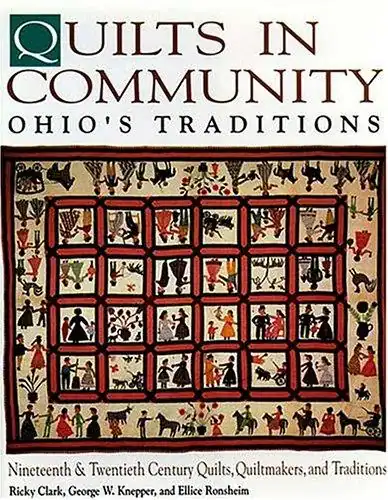
This year’s quilts were from York County, Pennsylvania (an amazing state with enough quilts to have a county by county quilt search with resulting search books), curated by Roberta Benvin and Joan Hamme. The quilts can also be seen in Angelo, Sharon P., Carol C. Blevins, Barbara A. Garrett, Joan U. Hamme, Dawn Heefner, Polly Stetler (Book Committee), Quilts, the Fabric of Friendship (The York County Quilt Documentation Project and the York County Heritage Trust). Atglen, PA: Schiffer Publishing, Ltd., 2000. ISBN 0-7643-1195-6
There were 30 items, ranging from huge quilts from the late 18th century to crib quilts and patchwork pillowcases, a peculiarly Pennsylvania practice (how’s that for alliteration?). Upon entering we were immediately confronted by an astonishing quilt reminiscent of the Jane Stickle opus, and dated c.1920. We “experts” were in universal agreement about the inaccurate date of the piece; the documentation is incontrovertible, however, and list the maker and her quilting relatives, who apparently made the quilt from vintage fabrics (see p. 30).
A dramatic wholecloth quilt in beautiful pencil blue French toile (p. 37) and two Palampore panels (p. 38) that came from different sources in recent years and were discovered to belong together introduced the magnitude of the grouping we were to see. American Quilt Study Group members may remember when the discovery of the relationship between the palampore pieces was shared at show & tell during a recent Seminar (Williamsburg?). We saw wonderful examples of broderie perse and other applique, crisp and bright chintz borders that were wide and luxurious (and appeared unused), an incredible Feathered Star (p. 45) in unwashed condition, a floral center Medallion quilt (p. 47) featuring a panel that may have been printed to be a quilt center or a chair back, and framed by eleven borders.
Bless the ladies: there were several dated quilts from the 1850s, allowing us to hone our fabric identification skills. And there were more modern quilts as well, including a funky and wonderful wool applique from around World War I (p. 28) featuring a “Doughboy,” a Red Cross nurse, farm animals and other folk art designs. The quilt was made by a woman for her soldier brother, who was badly wounded in the war, and probably many of the designs had significance that is not readily apparent today.
A nice flyer with descriptions of each item was given out, and entries were marked to indicate where (and if) they were published; those lent from private collections were similarly noted. Since these were nearly the only collected antique quilts on exhibit in Paducah (except for those for sale in vendor booths), the Rotary and the curators are to be commended on the excellence of the selections and thanked for the opportunity for many of us to see these quilts “up close and personal.”
Xenia (doing my best Cinda Cawley impression)