November 16 – 19, 2006
These restored messages come from the Quilt History List, an online forum where quilt historians, collectors, researchers, appraisers, and enthusiasts discussed antique quilts and related textiles. The archive dates from 1996 through approximately 2016 and is being restored gradually. Sign up in the form at the bottom of the page if you want to know when a new page is added. Original spelling, opinions, formatting, and inactive links may remain unchanged.
Primary topics of this QHL Digest:
- Is “Myth” the Right Word? — Gail Ingram asks whether “myth” or “error” fits better, and Xenia Cord and Karen Evans bring in folklore and a sociologist who would have called it a hoax. (see the article on quilt folklore)
- Pat Cummings’s Online UGRR File — Pat Cummings adds an oral message to her file, replies after catching up on the digest, and posts her 2004 article from The Quilter online.
- Blue Lines on Hand-Quilted Quilts — Kathie Holland asks about blue marks on a quilt, and members suggest wash-out markers, blue pencil, laundry bluing and carpenter’s chalk.
- Origins of the Inner City Pattern — Laurel Horton looks for a photo of Jeff Gutcheon’s quilt, and replies point to Jinny Beyer’s Inner City and the book Diamond Patchwork.
- Informal Appraisals and Unfinished Quilts — Pepper Cory asks how to treat an almost finished Flower Garden quilt, and Sally Ambrose and others explain verbal evaluations and finishing choices. (see the article on quilt appraisers)
- Books and Study Groups — Lucinda Cawley asks about a Mississippi family quilt book, Amy Korn recommends it, and the Eastern Shore Quilt Study Group and a regional study group article are discussed. (see the article on quilt study groups)
Date: Thu, 16 Nov 2006 01:37:57 -0700 | From: gingham
Laurel,
It might be Crystal Mountain 1977-78 which I found on page 69 of Robert Shaw’s The Art Quilt. The description says it is the first Gutcheon made employing Diamond Patchwork. As pictured the top half of the quilt is negative space (unpieced white fabric). The bottom half is composed of pieced patterns set within geometic shapes. It is a fractured tumbling block variation; predominate colors are blue and white with pink/red also.
Sandra Starley Professional quilt appraiser, lecturer, artist Moab, Utah ~~~~~~~~~~~~~~~~~~~~~~~~~~~~~
locate a photograph of Jeff Gutcheon’s quilt “Inner City”? … it’s possible I’m remembering the image, title, or artist incorrectly. Different quilt patterns on the facets of a large-scale tumbling blocks–a memorable piece. -Laurel
Date: Thu, 16 Nov 2006 07:12:10 -0500 | From: Xenia Cord (xenia)
Were we to be truly accurate, we would look to the discipline of folklore for a definition of the term “myth.” Folklore is generally defined as traditional material, transmitted orally or by custom and practice. So “myth” is an oral story that explains the origin of the present order, and takes place in a time that has preceded the present order. Oral tales (those that do not have their origin in print) are myths if they explain, for instance, the creation of the earth, sky, moon, stars, certain geological features, life-giving plants, the creation of man or of a tribe of people, the relationship of man to his environment, and so on.
On the other hand, ‘legends’ are stories that take place in the present world, usually in the immediately known past, and have attributes that seem to be verifiable if one searches diligently enough. They are oral stories stated in factual terms, usually describe in relatively obscured ways fears, concerns, and beliefs accepted by the listening audience, and are often attributed to a “friend of a friend” as the source.
Xenia
Date: Thu, 16 Nov 2006 6:35:44 -0800 | From: Karen Evans
The late sociologist Curtis MacDougall would probably have called HIPV a hoax, whether deliberate or not. I highly recommend his book on the subject, which has a section about modern, often inadvertent hoaxes such as H.L. Mencken’s joking “history” of the bathtub that took on a life of its own and was quoted in popular histories.
Karen Evans
Date: Thu, 16 Nov 2006 12:25:41 -0500 | From: Lucinda Cawley (lrcawley)
Threading The Generations: A Mississippi Family’s Quilt Legacy (Hardcover) by Mary Elizabeth Johnson, Carol Vickers, Elizabeth Shaifer Hollingsworth, J. D. Schwalm (Photographer)
Is anybody familiar with this book? Cinda on the Eastern Shore
Date: Thu, 16 Nov 2006 16:08:57 -0400 | From: Polly Greene (pjgreene)
Inner City is a pattern by Jinny Beyer and first appeared in her book “Patchwork Patterns” in 1979. Polly Greene
Date: Thu, 16 Nov 2006 12:30:30 -0800 | From: Marilyn Withrow (marilynquilts)
I recall seeing Tobin and Dobard, I think both of them being interviewed together, on Oprah’s show and some discussion on her show when the book first came out. (I’ve seen interviews with both of them at different times in different places, and the memories sort of run together.) I didn’t recall that HIPV was one of her book selections, though. Selective memory, I suppose. No one has mentioned yet that the niece of Ozella, I believe it was, was featured on Simply Quilts, demonstrating how to make one of the HIPV quilt blocks. I use the term “demonstrating” loosely……………….how she ever put that block together with her directions is more than I could fathom. I was so disappointed that SQ would give that story credence. But whatever we historians decide to do, I think all of us are constantly searching for the truth and trying to discover and disseminate it the very best way we know how. I agree with Kris that to continue to perpetuate this myth to our children — black, white, brown, or whatever color or race — is criminal and a disservice to the black community and all those who suffered under slavery. I also happen to agree with Pat Cummings’ opinions on the whole subject. She is a thorough researcher, and I respect her point of view (even if we both can be testy and opinionated seniors at times!) That’s why I have agreed to moderate a panel of historians to discuss it at the AQSG seminar in October of 07. Perhaps in this manner we will be able to nail down the truth and determine the best way to handle it. Marilyn Maddalena Withrow Professional Quilt Appraiser, Judge, Historian, Designer and Speaker Oregon State Co-Coordinator, Home of the Brave Project Editor, “Blanket Statements,” AQSG quarterly newsletter www.marilynquilts.com www.footscreekfarms.com
Date: Thu, 16 Nov 2006 | From: kathie holland (kathieholland)
I was wondering if someone could answer a question about blue lines that are on an antique quilt. I have a friend that bought an antique quilt, the fabric dates the late part of the 1800’s and the quilt is hand quilted. Under some of the quilting lines you can see a blue marker line… When did these markers become available? Has anyone sucessfully washed the lines out of an antique quilt????
I believe the quilt was quilted much later than the top was made. The stitches are noticably different in parts of the quilt so I beleive the quilt was quilted by more than one person.
Thanks Kathie
Date: Thu, 16 Nov 2006 19:05:41 -0800 (PST) | From: Pat Cummings (pat)
Hello, again!
I just recorded and added an oral message to my file online re: the secret quilt code. For those of you who would like to hear it, please click on the link below:
http://www.quiltersmuse.com/underground_railroad_and_quilts_blocks.htm
Pat Cummings
Date: Fri, 17 Nov 2006 13:17:12 | From: adi hirsh (adamroni)
I don’t know about markers as such, but Elizabeth Sanderson, the well-known quilt “stamper” who professionally marked quilts in England during the last decades of the 19th century, habitually used a blue pencil. In fact, those blue pencil markings, which remain under the hand-quilting stitches, plus her distinctive style, are the identification marks of a Sanderson quilt. Ady in Israel
Date: Fri, 17 Nov 2006 06:47:50 -0500 | From: kathie holland (kathieholland)
Yes it could very well be blue pencil marks and the estimated date of the quilt is the late 1800’s so this “fits” with the idea the quilt could have been quilted then too with the blue pencil marks. thank you for answering my question… would love to hear from others about this too. Now I am interested in knowing more about what was used to mark quilts in the 1800’s besides a lead pencil. Thanks so much kathie in nj
last decades of the 19th century, habitually used a blue pencil. In fact, those blue pencil markings, which remain under the hand-quilting stitches,
Date: Fri, 17 Nov 2006 04:22:07 -0800 (PST) | From: Barbara Burnham (barbaraburnham)
Kathie, If you are not sure what the blue lines are, they could be the washout blue marker, but they could also be a chalk, blue pencil, or who knows what. The blue washout markers have been around since at least mid-1980’s (when I first used them) but the chemistry could be different from one marker to the next. If the marks have been heated, as with an iron, they can reappear later. Many people use them successfully, but recommend that the marks must be thoroughly washed out with plain cold water before laundering or exposing to any heat, even as in a hot car. However, I would be much more concerned about washing, even wetting antique fabrics. How “antique” or fragile are the fabrics? What are they made of? Will they hold up? Some antique blocks that I have rinsed in cold water (to remove odor) lost all their color. Dyes could run or rub off onto other fabrics. You will have to weigh all the risks, or decide you can live with it the way it is. (Xenia Cord recommends to lay down and take a nap until the urge goes away…) If it were my quilt, I would take the quilt to a professional experienced with cleaning antique quilts, or love it the way it is. Barbara Burnham
kathie holland wrote: I was wondering if someone could answer a question about blue lines that are on an antique quilt. I have a friend that bought an antique quilt, the fabric dates the late part of the 1800’s and the quilt is hand quilted. Under some of the quilting lines you can see a blue marker line… When did these markers become available? Has anyone sucessfully washed the lines out of an antique quilt????
I believe the quilt was quilted much later than the top was made. The stitches are noticably different in parts of the quilt so I beleive the quilt was quilted by more than one person.
Thanks Kathie
Date: Fri, 17 Nov 2006 10:12:38 -0000 | From: Audrey Cameron (audreycameron)
Dear Folks, In respect to the Inner City pattern are you sure you want one by Jeffrey Gutcheon? Jinny Beyer used an Inner City pattern which is a type of tumbling blocks but based on a half hexagon. It can be seen as a black & white diagram in her The Scrap Look (diagram 36 with a short explanation on page 55.) Jinny Beyer also show Inner City in her The Quilter’s Album of Blocks & Borders on page 119.
All the best, Audrey Cameron in a cold, wet miserable England
Date: Thu, 16 Nov 2006 | From: Debbie (russhill)
It is interesting that you bring this up because back in Aug or Sept my friend discovered that laundry bluing was used like an ink to do the blue marking lines. We have been doing 19C reproduction quilts and patterns for when we do CW and 1830’s early TX or TX Rev events. She wanted to do the marking as close to what was done in the 19C. If that is what is on your quilt it should wash out. You could try hitting a spot that is not noticeable with a damp cloth and see if the blue comes off. As it turned out the color is the same as the blue markers you can find today so she is using it to make her quilt. All marking is done at home so no one can see the pen being used. LOL Debbie Russell russhill —– Original Message
I was wondering if someone could answer a question about blue lines that are on an antique quilt. I have a friend that bought an antique quilt, the fabric dates the late part of the 1800’s and the quilt is hand quilted. Under some of the quilting lines you can see a blue marker line… When did these markers become available? Has anyone sucessfully washed the lines out of an antique quilt????
Date: Fri, 17 Nov 2006 10:01:02 -0500 | From: Sandra G Munsey (munsey)
I don’t know when it was first available, but both tailor’s and carpenter’s chalk have been used for a very long time – at least 100 years. My rug hooking grandmother used the carpenter’s chalk to mark her rug burlap foundations because it was softer than tailor’s chalk.
And, doesn’t anyone else have a vague recollection of laundry bluing being used as an “ink”?
Sandra on gray and rainy Cape Cod
Date: Fri, 17 Nov 2006 | From: Pat Cummings (pat)
Good morning,
I receive the posts in digest form, so it was not until this morning that I read all the good posts by Gail, Xenia, Marilyn, and Karen, re: UGRR.
For the fun of it, I have looked up the word, “myth,” in the Oxford American Dictionary, which says:
myth n.> 1 a traditional story, esp. one concerning the early history of a people or explaining some natural or social phenomenon, and typically involving supernatural beings or events. *such stories collectively: the heroes of Greek myth.
2 a widely held but false belief or idea. eg. he wants to dispel the myth that sea kayaking is too risky or too strenuous/ there is a popular myth that corporations are big people with lots of money.
*a misrepresentation of the truth: eg. attacking the party’s irresponsible myths about privatization.
*a fictitious or imaginary person or thing.
*an exaggerated or idealized conception of a person or thing: eg. the book is a scholarly study of the Churchill myth.
Origin mid 19th cent: from modern Latin mythus, via late Latin from Greek mythos.
Myth is the perfect word to describe the situation, although, I have called it by other words, the latest one being “deception.”
Whattayamean? Whattayamean?
Not being Rhodes scholars, (and I speak for myself), I guess we probably don’t have to quibble about the meaning of the word, “is.” Our former leader succeeded in bringing to light that the word “is,” may have other meanings, depending on who is uttering the word. Right? Ah, semantics. “You gotta love it.”
Pat Cummings http://www.quiltersmuse.com
Date: Fri, 17 Nov 2006 18:59:03 -0500 | From: Pepper Cory (pepcory)
Hello fellow antique quilt lovers and appraisers–My friend has taken in an antique almost-finished Flower Garden quilt into her shop for binding. It’s a beauty–c.1935, completely quilted and basted around the edges with a little cotton batting still peeking out, all the flower hexagons fussy-cut, backed with Nile green, excellent quilting with tiny stitches (measured 12/inch). The lady (who bought the piece in a thrift shop in Honolulo 25 years ago!) is dithering about the cost to bind it. If it was me I’d pay to have it done right all by hand! Whether she has it done by hand or has it finished by whacking off all the little angles may be determined by the value of the piece. When I opined that it was a masterwork (did I mention it’s also huge–100×102 inches!) and worth between $10 and $00, the shop owner about had a cow. All right, shoot me down if I’m wrong……This is not a formal appraisal–the owner hasn’t asked for that…but your general opinion is sought. Sorry no pics–you’ll have to take my word on it-would appreciate input! Pepper
Date: Fri, 17 Nov 2006 19:47:31 EST | From: Mitzioakes
The Oxford said it all alright! Mitzi
Date: Sat, 18 Nov 2006 08:17:35 -0500 | From: Jean Lester (jeantomlester)
I have an obvious 1870’s quilt with the blue lines. I have had someone that seems to know, tell me that it is carpenter’s chalk. It certainly has never come out!
Jean
Date: Fri, 17 Nov 2006 23:42:41 EST | From: Quiltsappraised
Dear Cinda,
I have a book titled “Mississippi Quilts” by Mary Elizabeth Johnson; photographs by J.D. Schwalm. I recently bought this and it is one of the best quilt books I’ve seen. Printed by the University of Mississippi, Jackson in 01. I love all quilts but the southern quilt is my favorite, and the 1800’s my favorite era.
Alma
Date: Fri, 17 Nov 2006 16:57:23 -0800 (PST) | From: Stephen Schreurs (schreurs_ss)
Pepper, I own a lovely GF. I took it for a verbal appraisal 15- years ago, and at that time, I was told $600. It deserves to be bound correctly. Susan Schreurs
Date: Fri, 17 Nov 2006 10:37:15 -0600 | From: Susan Wildemuth (ksandbcw)
Is there anyone on the list who lives near Douglas County Nebraska or in Nebraska. If there is, would you e-mail me off-list.
Thanks– Sue in Illinois
Date: Fri, 17 Nov 2006 19:51:49 -0500 | From: Amy Korn (amyokorn)
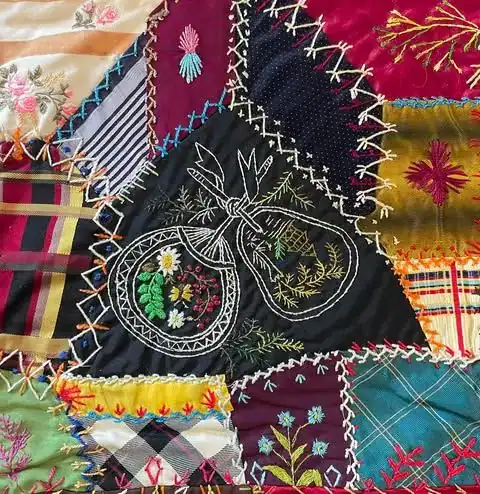
Cinda, I have this book and would highly recommend it! It’s small (8″ x 8″) and would make a nice gift. Four generations from one family share their quilts and the accompanying stories. I enjoyed reading it – and it is also the first place I came across the reference to “Temperance Ball” as another name for the “Pomegranate” or “Love Apple” pattern. Amy Korn
Threading The Generations: A Mississippi Family’s Quilt Legacy (Hardcover) by Mary Elizabeth Johnson, Carol Vickers, Elizabeth Shaifer Hollingsworth, J. D. Schwalm (Photographer)
Date: Fri, 17 Nov 2006 23:58:05 EST | From: Quiltsappraised
Curious, where was the quilt purchased and what did the previous owner know about the quilt. It’s hard to tell from the photos if it is a new or older quilt.
From the Florida Panhandle, Alma
Date: Sat, 18 Nov 2006 07:54:50 -0800 | From: Sally Ambrose (sally)
To Pepper Cory I lurk on QHL a lot but rarely post. I hope I am doing this correctly. Pepper, verbal evaluations of value are common and usually to be avoided. Why–you open yourself up to repercussions and not just verbal assults from a store owner. When a client requests a dollar figure because they want to sell the item or “just want to know”–usually translated into sell, my response is to attempt to explain the difference between a VOV (verbal opinion of value) and an appraisal. I discourage VOV’s because this gives the client absolutely nothing that is really worthwhile. It is an opinion that is not backed up by any market data research. Sure, I might have a good idea the value of a Flower Garden quilt. Any appraiser has seen tons of this style and some that are above the ordinary. The owner got an opinion from you. Someone else that appraises might have an entirely different opinion. That is OK–a VOV is an opinion that is not backed by market research. Period. Was the owner upset because she thought you opinion was too low or too high? Isn’t that the crux of an irate owner?
Pepper, unless an owner specifically asks for an opinion from me, I don’t offer it. When they do say , “Well, can’t you just tell me?” I respond, “Yes, but it will cost you”. Uh,oh–nasty word–cash. It is amazing how the subject is quickly dropped. Instead of asking for and receiving an appraisal that is written and a legal document, the owner has nothing. What if the workmanship on the binding is not to the owners delight or damage to the quilt occurs (please–no, but it does happen)? She will then think your unsolicited verbal opinon of value was the gospel and off to the lawyer she will go.
What have I said? Avoid giving your verbal opinion of value! If the client needs an appraisal, it sounds as if she should seriously consider this option, tell her why and how much it will cost. 90% of an appraisers job is to educate the client. I don’t know if I helped you, Pepper. I don’t even know if you will receive this. Happy Thanksgiving everyone! Sally Sally A. Ambrose, ISA CAPP International Society of Appraisers, Certified Appraiser of Residential Contents American Quilter’s Society Certified Appraiser-Quilted Textiles Phone: 509-548-7472 Fax: 509-548-0240 PO Box 536, Leavenworth, WA
Date: Sat, 18 Nov 2006 18:48:11 -0500 | From: Libby Wallis (LibQuilts)
Pepper, I have a GFG that sounds similar to the one you described. Mine has the tiny diamonds for the garden path. It was appraised at $1760, right within your range. Libby in Overland Park, KS new contributor to the list.
Date: Sat, 18 Nov 2006 | From: Lucinda Cawley (lrcawley)
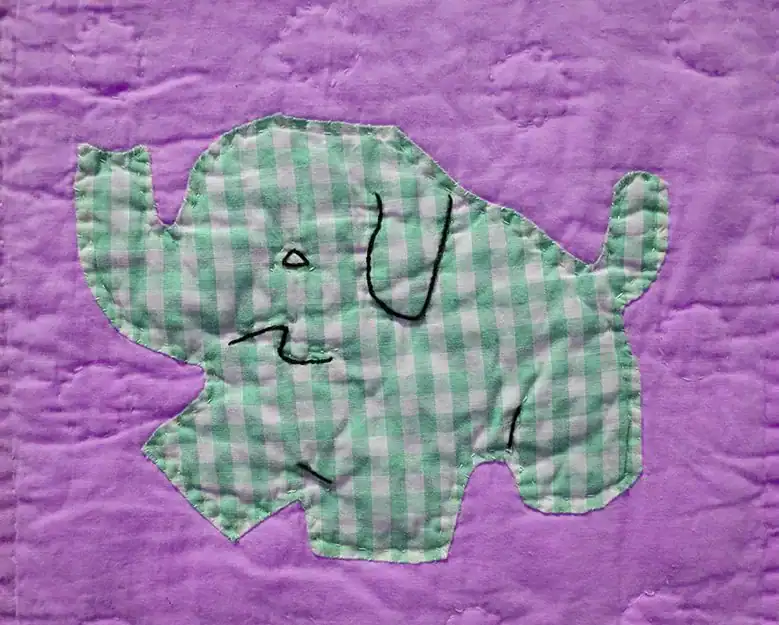
The Eastern Shore Quilt Study Group met on Wednesday in Denton, MD. Since most of us travel an hour or more to the meeting we’ve developed the habit of meeting for lunch at a delightful little cafe across the street from the library which gives us a chance to start the conversation early. Our topic of the day was “red” in all its myriad variations starting with a striking Ohio Star in claret on a variety of shirting backgrounds. We speculated that a huge 4-Patch and chintz stripy (circa 1830) with a wool batt purchased on E-bay probably came from New England. The back and some of the strips were a fabulous red and grey chintz printed with vases filled with flowers. A propos of shopping on E-bay its owner remarked “One man’s ceiling is another man’s floor,” obvious a variation of “One man’s meat is another’s poison” but one I’d never heard before. Just thought I’d pass it on in the interest of colorful speech. A crappy 9-Patch on point was set with bright red polka dot squares; the same fabric was used as the border. A Pine Burr from Williamsport, PA was a puzzle because the single solid red gave no clue to the date and the quilting patterns looked like those we used in the 1980s and 90s. The star of the show was an Eastern Shore quilt (appropriate) that came to us thanks to Madge Ziegler. Madge had done some restoration work for a woman who when she came to pick up her quilt brought some quilts she’d been given by a neighbor who has moved to a nursing home. Most of them were typical utility quilts, but one was exception. In spite of the fact that the back of the quilt is in tatters and the top is stained and worn it’s a triumph of folk art. Sixteen large (15-18″) squares are packed with folky appliqués in shirtings on a solid red background. The blocks seem to be organized thematically. There are three blocks with large sailing ships surrounded by fish, stars, moons, birds. Other blocks have jungle animals: lions, elephants, giraffes, monkeys. One block is filled with chickens and roosters. Another is filled with monkeys. Each creature is made in one piece but they are cut in great detail. These are not the typical cookie cutter shapes we’ve seen on other quilts. We were thrilled that Madge pleaded with her client, who couldn’t understand her enthusiasm for the sad old quilt, to let her bring the quilt to us. We’re guessing 1880s as a date. Our next meeting is set for Feb. 28, 07, same time and place. We always welcome new members and visitors. Cinda on the Eastern Shore a disappointed Michigan fan
Date: Sat, 18 Nov 2006 22:15:09 -0500 | From: J. G. Row (judygrow)
> A crappy 9-Patch on point was set with bright red polka dot squares; > the same fabric was used as the border. A Pine Burr from Williamsport, PA > was a
Cinda — you did mean Scrappy, didn’t you?
I am laughing so hard I might fall off my chair!
Love it! Love it! Love it!
J. G. Row
Date: Sat, 18 Nov 2006 23:59:46 -0600 | From: Gail Ingram (gingram)
> A crappy 9-Patch on point was set with bright red polka dot squares; > the same fabric was used as the border. (Cinda Cawley) Cinda — you did mean Scrappy, didn’t you? J. G. Row
I do not mean to put too fine a point on this typo, since I am awful about not proofing my emails to this list.
BUT, just let me ask this question of everyone on this list: How many times have you had someone show off a “special” quilt about which in your heart of hearts, you wanted—nay, needed—to employ the adjective that Lucinda Cawley used? A classic case of long-repressed feelings coming out in the wrong place. For I have no doubt the 9-Patch to which Ms. Cawley referred was quite lovely.
And I pray it did not belong to anyone on AQSG2 or QHL.
gi
Date: Sun, 19 Nov 2006 01:32:10 EST | From: CRantquilt
HI to all and a quick question,,, cleaning out my mother-in-laws house/garage and oh my,,, , I have seen more denim that one will ever see in a lifetime. Denim blue jeans(Lee, Levis, Wrangler, and you name it), overalls, and denim fabric , and LOTS of blue jean pieces, pockets, legs, etc, etc etc. We have taken lots to a mission house locally ,like a 14 foot cattle trailer load (really) packed full and have another load ready. Any thoughts of who else can use all this and how they could get it? We are in overload. Also going to try a few (150-200 )pairs of jeans in the sale. Will have a living estate auction. Also lots of fabric… She made denim quilts and donated all of them . I think of strip quilts and how many could be made . Well,, just had to get some of this denim off my mind tonight.. Cindy Rennels
Date: Sun, 19 Nov 2006 00:01:57 -0600 | From: SoldierGrrrl (soldier.grrrl)
On 11/18/06, Gail Ingram \<gingram> wrote:
> A classic case of long-repressed feelings coming out in the > wrong place. For I have no doubt the 9-Patch to which Ms. Cawley referred > was quite lovely.
I have to admit I horked my hot chocolate when I read that. I wasn’t sure if it was just brutally honest, or a typo, but I was hoping for the latter.
Cheers! — Blonde. It’s not just a hair color; it’s a way of life.http://soldiergrrrl.livejournal.com/
Date: Sun, 19 Nov 2006 09:32:15 -0600 | From: Andi (andi0613)
Hi list,
I’m planning to write an article about the rise of regional quilt study groups. My goal is to encourage readers interested in quilt history to learn if groups exist near them, and if none do, how to begin their own.
Thanks to Kris for keeping us posted about these study groups on her website:
http://www.quilthistory.com/study/AZQSG.htm – AZ
http://www.quilthistory.com/study/CRQSG.htm \nCRQSG – NY
http://www.quilthistory.com/study/DSSG.htm – LA
http://www.quilthistory.com/study/ESQSG.htm – MD,VA
http://www.quilthistory.com/study/FVF.htm – MD
http://www.quilthistory.com/study/IIQSG.htm – IA, IL
http://www.quilthistory.com/study/LLQSG.htm – MN
http://www.quilthistory.com/study/LLQAS.htm – VT
http://www.quilthistory.com/study/midwest.htm \nMidwest
http://www.quilthistory.com/study/moka.htm
http://www.quilthistory.com/study/nvdq.htm – VA
http://www.quilthistory.com/study/RCQSG.htm OR
http://members.cox.net/repiecers/ \nSCQHG – CA
http://www.quilthistory.com/study/SQSG.htm – NJ
http://www.quilthistory.com/study/VQSG.htm – ME
http://www.quilthistory.com/study/WQSG.htm – WI
http://www.quilthistory.com/study/az.htm \nMuseum-AZ
I would appreciate someone from each group contacting me offlist to serve as an interview source. Many thanks in advance from this freelance writer who’d really rather be quilting.
Andi in Keota, Iowa
Date: Sun, 19 Nov 2006 09:58:51 -0600 | From: Susan Wildemuth (ksandbcw)
Do you have an activities center for special needs adults in your area with rug looms? They might be able to use them. Denim jeans/strips make the neat rag rugs.
Hope this helps,
Sue in Illinois
Date: Sun, 19 Nov 2006 08:59:21 -0800 (PST) | From: catz
Personally, I would have been overjoyed to have been offered an opinion o n a few of my “orphans”. I cherish unfinished vintage tops and pieces (my favorites are 30’s). Generally, I look at them for awhile and try to get a sense of what the original maker may have had in mind for a color scheme or pattern. I finish the top or put the pieces together (usually trying to use other similar vintage materials) and then decide on the quilting. Some I have machine quilted ; custom work that I am happy to pa y for. Other tops, I think, require hand quilting. I got one very special GFG that has not been appraised. The top ( full size) is in near-perfect condition and is beautifully hand pieced – complete with those wonderful green triangle stepping stone pathways. I knew that this had to hand quilted – and so it is my on again, off again, hand project. It will take some time to complete, but when it is done it will certainly be a special quilt that will be, I hope, a credit to the original maker’s vision. Had someone told me never to “finish” this top because, in their opion, it wa s a ‘masterpiece’ top that should remain unfinished, I would certainly have thought twice about my next step – and would have been very grateful for the observation and opinion….. Marie Johansen Friday Harbor, Wa
Date: Sun, 19 Nov 2006 12:42:37 -0500 | From: Pepper Cory (pepcory)
Many thanks to all those who replied to my post regarding the unfinished Grandmother’s Flower Garden. This list has so much knowledge and thank goodness, we’re not afraid to share it! The owner of the GFG quilt in question has NOT asked me for a formal appraisal (she’d pay for that-) but my informal opinion (I hoped-) would help her make the right decision to have the lovely piece-finally-bound correctly. The person’s who’s doing the binding had presumed a rounded-off approach (and 1/2 machine-sewn) and quoted $95. The all-by-hand-around-every-angle approach is more like a $150-200 job and must be done very carefully (ask me why I know…) This piece is so pretty that it’s worth the expense….if the owner thinks the same way. Right now the piece is in limbo—quilted but with basting stitches still in place and batting and extra batting all around. Will keep you posted on what the owner decides. By the way, she found it in a thrift shop in Honolulu for $25! Pepper Cory on the NC coast
Date: Sun, 19 Nov 2006 12:46:26 -0800 (PST) | From: Pat Cummings (pat)
Good afternoon,
I have just uploaded the article that I wrote for the September 2004 issue of The Quilter magazine, since I realize that many of you did not read it. Just another resource.
The link is on the front page of my website, just below the TURKEY and info.
Also, another point has come up. People looking for other articles will not find them in Traditional Quilter (the former name of The Quilter).
I believe that someone got a bit confused, which is easy to do with all of the names of magazines, and recommended Traditional Quilter for the source of two articles that actually appeared in Traditional Quiltworks.
If you are the guilty party, and I won’t publicly embarrass anyone but you know who you are, please change your website to reflect the correct information.
For your convenience, those two articles and their details are listed at the bottom of the first article I put online.
I only mention this because others may have been confused too.
Gobbles to you, but not goobledygook,
Pat Cummings http://www.quiltersmuse.com