Pieced or Printed? The Story of Cheater Cloth
Every quilt carries clues about when it was made, if you know where to look. Telltale Textiles is an ongoing series digging into the fabrics, dyes, prints, and construction details that help you answer the question that matters most: is this old quilt worth saving? This entry: cheater cloth, the printed fabric that imitates pieced patchwork, and how to tell it apart from the real thing.
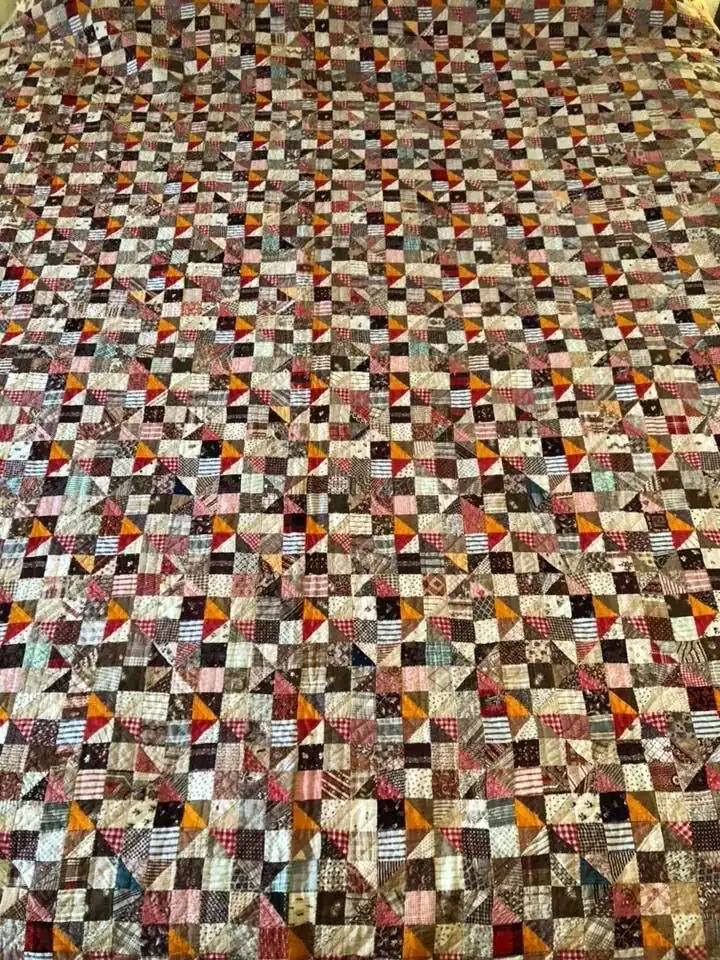
What is it?
The simplest description is this: fabric with a pre-printed design on it that makes it look as if it was pieced, but in reality, it is just a print. It is also sold and catalogued as preprinted patchwork, simulated patchwork, faux patchwork, geometrical chintz, and printed patchwork.
The name itself is newer than the fabric. Printed fabrics made to imitate patchwork may date to the 18th century in Europe. In the United States, surviving examples date from the 1830s and 1840s, while newspaper advertisements show that “patchwork prints” were being marketed by the late 1870s. According to quilt historian Barbara Brackman, the nickname “cheater cloth” was used for the first time in print in 1910 by America’s Textile Reporter. In 1929, Ruth Finley’s classic book Old Patchwork Quilts called it Faux Patchwork and Geometrical Chintz — a term still used at Winterthur Museum.
How to Identify It
At first glance, well-designed cheater cloth can be surprisingly convincing. The easiest way to identify it is to look past the printed pattern and study how the quilt was constructed. If possible, examine both sides and gently run your fingers across the apparent seams. Genuine patchwork seams usually create slight ridges and leave seam allowances visible or detectable from the back. Printed seams remain flat.
Other clues include:
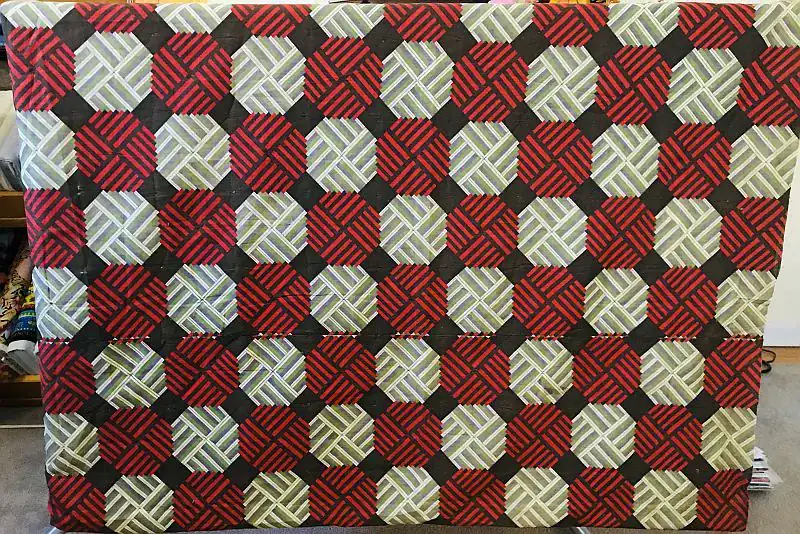
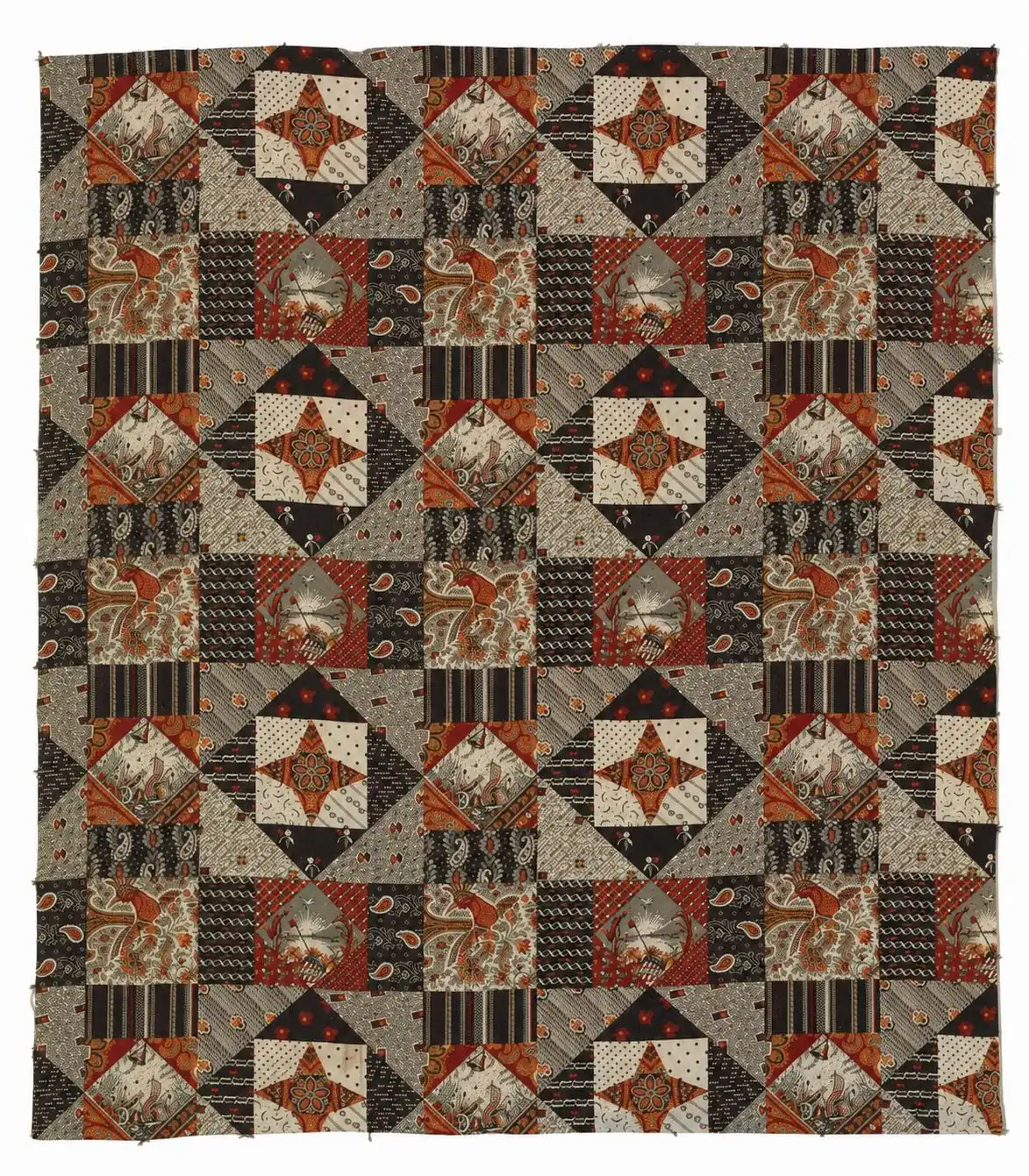
- The same arrangement of shapes, colors, and prints repeats exactly across the quilt as in the red and black image below.
- Printed seam lines, shadows, or imitation stitches create depth without any corresponding construction underneath.
- The design continues uninterrupted across areas that appear to be separate blocks or patches.
- The top is made from a few large panels rather than many individually cut pieces.
- Genuine seams may join widths of the printed fabric. These long construction seams can easily be mistaken for part of the patchwork design.
- The quilting may follow the printed lines, helping the flat design look more dimensional.
Not every quilt falls neatly into one category. Makers sometimes combined printed patchwork with genuine piecing, appliqué, embroidery, or borders. Cheater cloth might also appear only on the back of a quilt. Finding it in one area does not mean that the entire quilt was made from printed fabric.
A Short History of Printed Patchwork
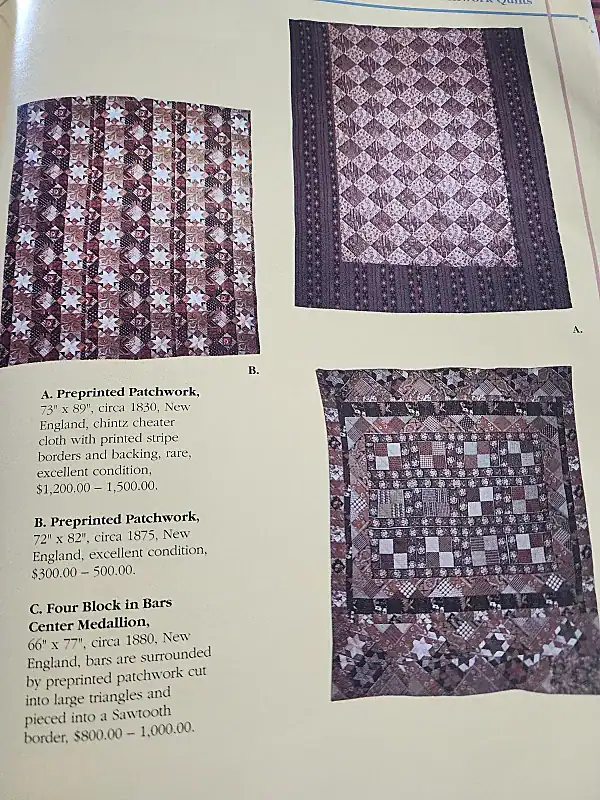
Researchers trace the phrase “patchwork prints” in advertisements to the mid-18th century, according to Deborah E. Kraak’s paper in Uncoverings. The idea was to imitate expensive imported chintz and the labor of patchwork with faster roller printing. Surviving examples show up in the 1830s–1840s, when pretend patchwork seems to have been especially popular. The first image below is a page from Antique Quilts and Textiles.
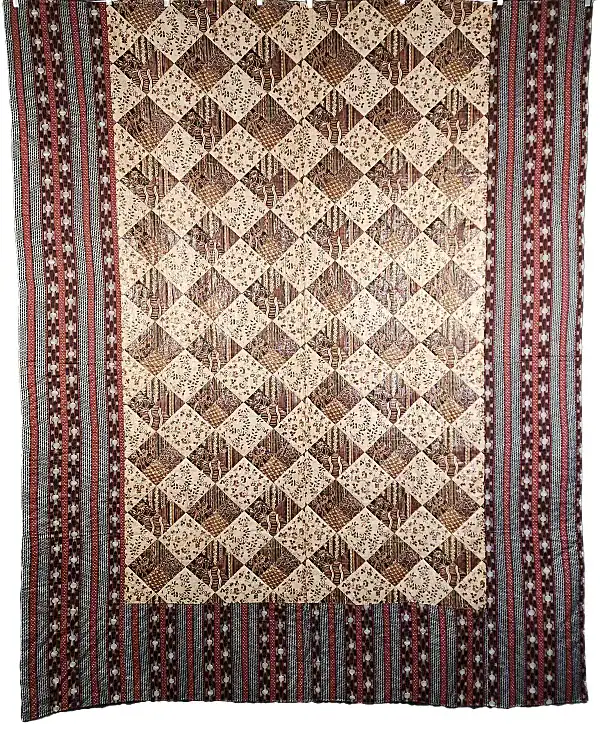
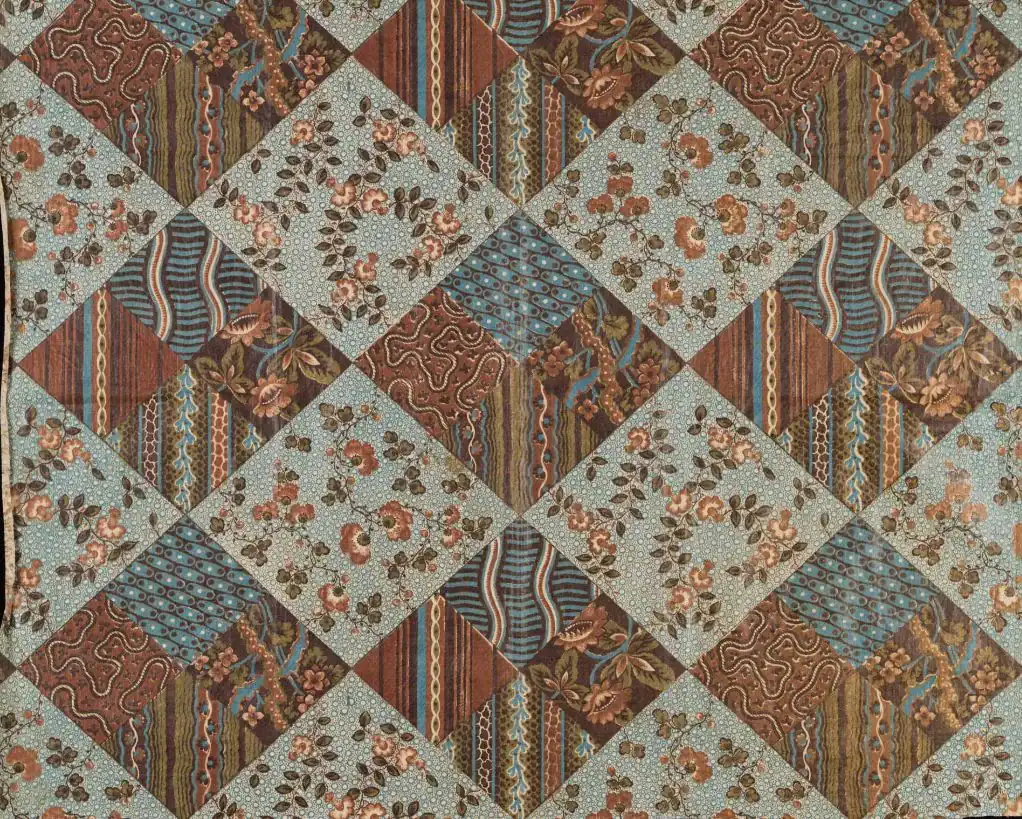
Colonial Williamsburg has an 1845 rectangular textile fragment of printed cotton in a design of blocks on point, described as faux patchwork. But the strongest evidence for an early American date is a Smithsonian quilt dated 1840–1860, made from cotton roller-printed in blue, brown, red-brown, and olive drab to imitate patchwork. (Click on the picture to see it close up.)
The Centennial in Philadelphia helped popularize printed patchwork, with multiple newspaper ads selling the cloth. One of the most popular printing companies of the time, the Cocheco Manufacturing Company, created a patchwork print for the Centennial Exposition. The print was so popular that variations were issued in later years.
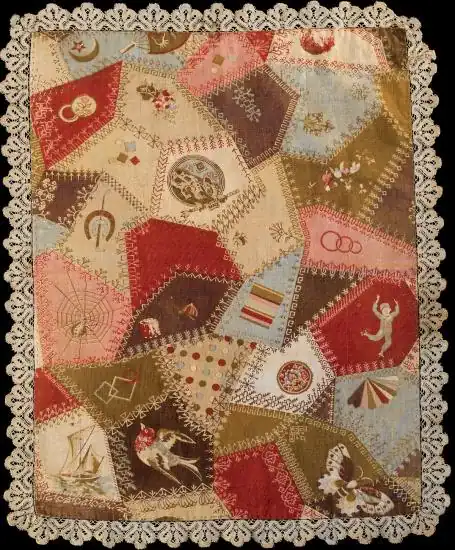
The Japanese displays at the 1876 Centennial Exposition are widely credited with influencing the crazy quilt fad that followed. Manufacturers quickly printed a fabric printed to look like it is pieced, appliquéd, embroidered, or all three.
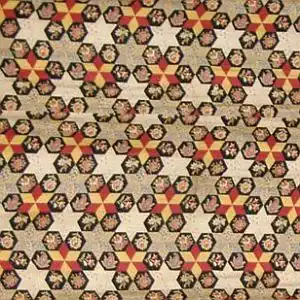
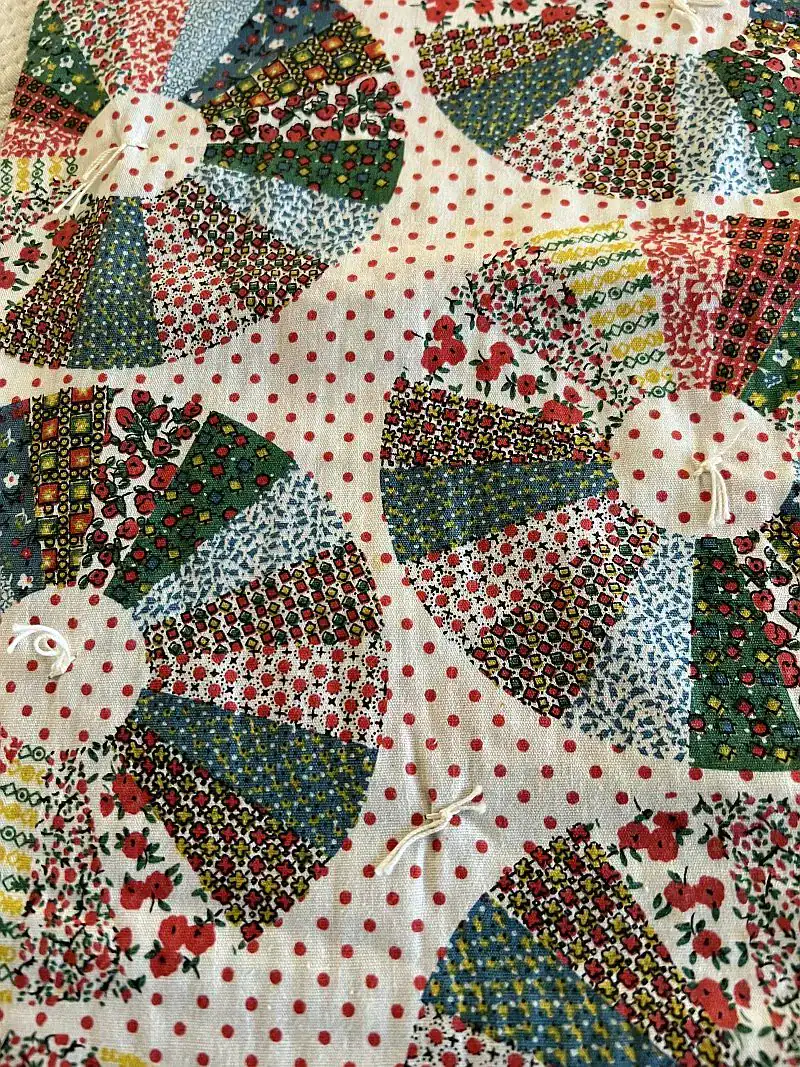
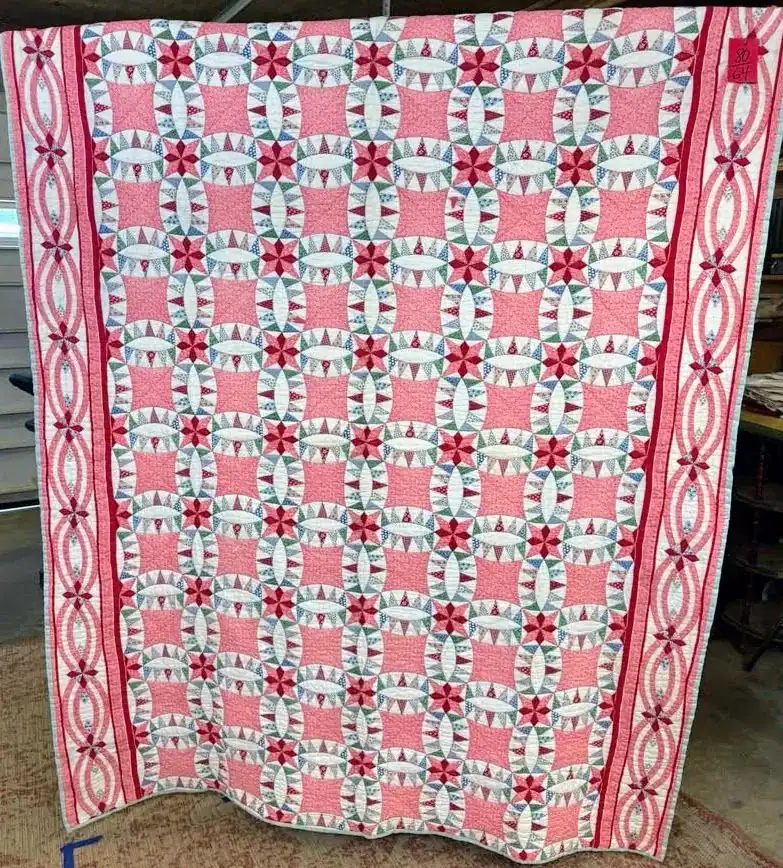
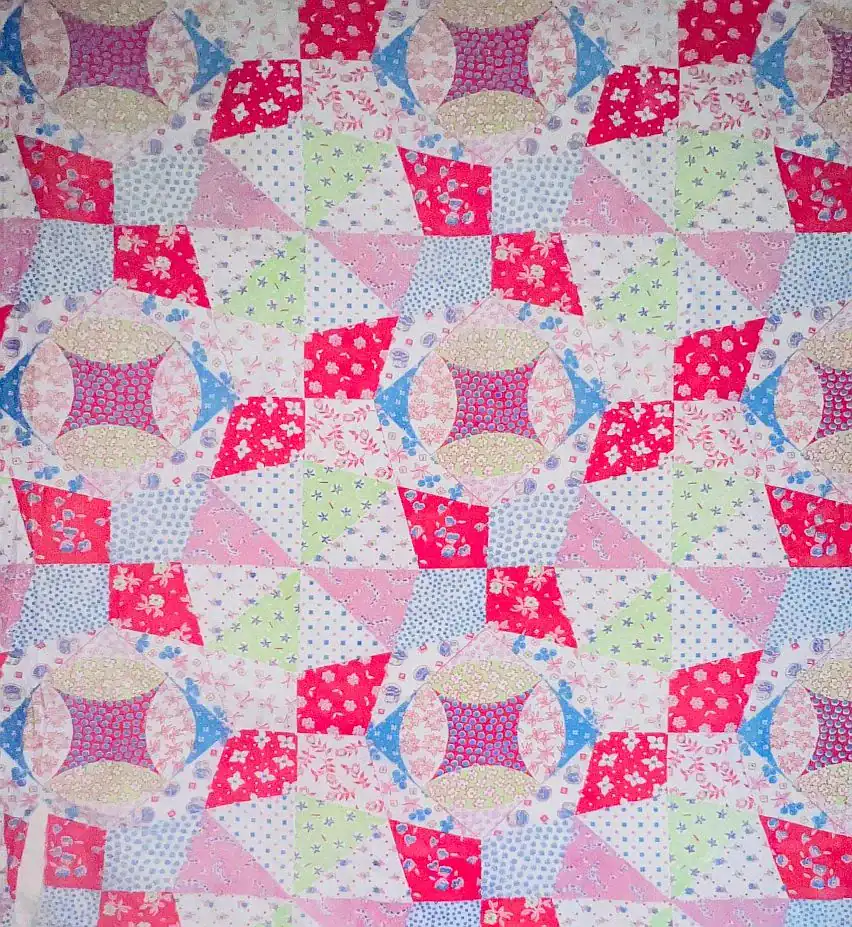
Women had long reused cotton commodity feedsacks, but colorful dress-print sacks became widely available in the late 1930s. By 1937, bag manufacturers were working with textile designers, and cheater-cloth versions of Double Wedding Ring, Dresden Plate, and other quilt patterns appeared on sack cotton.
During the later Depression years, World War II, and the postwar period, some makers quilted directly along the printed lines. Feedsack manufacturers were reviving an idea already more than a century old: using print to imitate diamonds, hexagons, and other traditional patchwork shapes.
Why Quilters Used It
Cheater cloth offered an elaborate look without requiring a large assortment of fabrics or hours of cutting and piecing. One coordinated print could imitate dozens of patches, colors, and seams, although the maker still had to layer, quilt, and bind the quilt. When used as backing, the fabric could also make a quilt attractive on both sides.
It also showed off what textile printers could accomplish. Complex geometry, shading, imitation seams, and coordinated colors could all be printed on one length of cotton. When similar designs appeared on commodity sacks, the appeal was even greater. The useful fabric came with flour, sugar, or feed and could be turned into a household textile instead of discarded.
Printed patchwork can also be useful in quilt restoration. In my own restoration work, I have sometimes used it to repair an area containing several damaged patches when an appropriate match could be found. This allows the repair to blend with the quilt’s overall appearance. It’s a time-honored method of making a quilt look more elaborately pieced than it really is.
The Tradition Continues
Cheater cloth never disappeared. It simply changed along with textile-printing technology. Nineteenth-century patchwork prints were followed by feedsack versions, preprinted panels, and today’s digitally printed quilt tops. The maker still chose the fabric, joined the necessary widths, layered the top with batting and backing, quilted it, and finished the edges. Some used cheater cloth for an entire top, while others used it for backing, borders, or selected areas alongside genuine patchwork. Even Jane Stickle — who made a masterwork quilt with 5,602 pieces — used a small section of cheater fabric. The purpose remained much the same: to create the appearance of complicated patchwork with fewer seams and less time spent cutting and piecing.
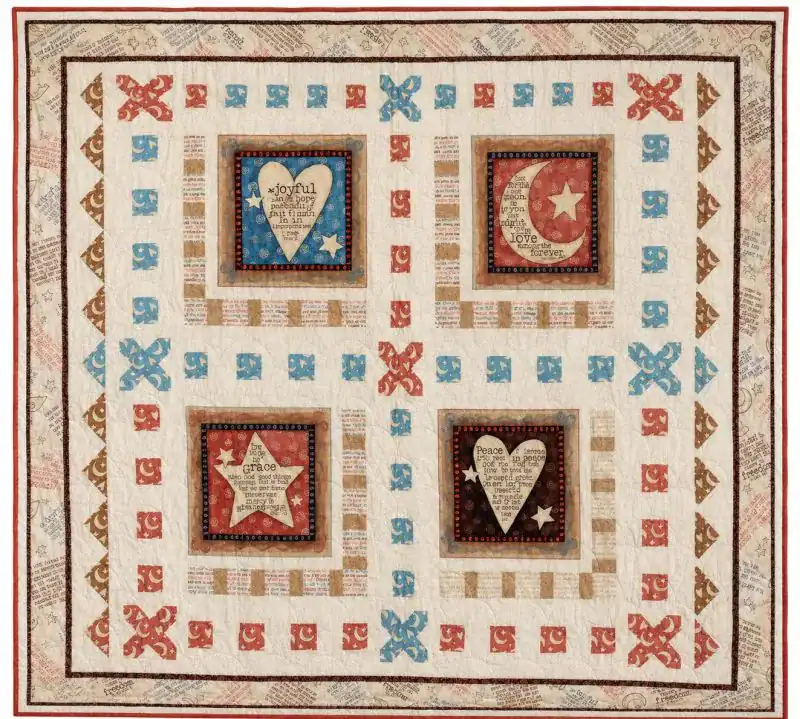
Cheater cloth does not make a quilt historically unimportant. Its printing, age, condition, quilting, and the way the maker used it all contribute to its story. If the apparent patches do not match the actual seams, look again. You may have found part of a printed-patchwork tradition that has been giving quiltmakers more design from fewer seams for well over 150 years.
