Telltale Textiles: Turkey Red
Every quilt carries clues about when it was made, if you know where to look. Telltale Textiles is an ongoing series digging into the fabrics, dyes, prints, and construction details that help pin down a quilt’s age. This entry: Turkey Red, one of the most recognizable and reliable reds in antique quilts.
What Turkey Red actually is
Turkey Red is a bright, durable red dye made from madder root, using a long and complicated process that originated in Asia and the Middle East before European dyers picked it up in the 1700s. The name came from the route by which Europeans associated the process with Turkey and the eastern Mediterranean. Unlike ordinary madder dyeing, which tends to give a duller, browner red, the full Turkey Red process produced a color that held up to light, washing, and bleaching far better than most other reds available at the time. It became a major British industry by the mid-1800s. Factories exported cloth and yarn around the world, especially to India and Southeast Asia.
Why it’s a reliable dye
The process behind Turkey Red was almost absurdly involved. Cloth was cleaned by boiling it with alkali, treated with oil, soda, and animal dung, mordanted with alum and sumac, dyed with madder, then washed and finished to brighten the color. In the early 1800s, the whole process could take three weeks or more, and it was famously foul-smelling, between the rancid oil, the dung, and the boiling dye vats. But it worked. That painstaking process is exactly why Turkey Red shows up in old quilts still looking bright and true, decades after everything around it has faded.
Around 1810, dyers figured out how to make patterned Turkey Red fabric, usually by dyeing the whole cloth red first, then removing the red in selected areas with acid and bleach to create a design, sometimes adding other colors like chrome yellow or Prussian blue into the mix. These discharge-printed Turkey Reds could be strikingly graphic, with pale or colored patterns standing out against a solid red ground.
Turkey Red’s reliability is the opposite dating problem from a fugitive dye like double purple. Instead of watching for fading, you’re watching for how well the red survived. In the early 1870s, synthetic alizarin began replacing madder as the source of red dye, lowering the cost but keeping much of the brightness and durability, so a vivid, long-wearing red in a quilt could be true Turkey Red or one of these early synthetic versions. Cheaper substitutes followed. Congo red arrived in the 1880s, a “direct” dye that skipped the long mordanting process but didn’t always hold up as well. Paranitraniline reds showed up in the early 1900s, inexpensive but prone to fading into a dull brick color, which is itself a useful tell. In 1914, Naphthol AS finally matched much of Turkey Red’s brightness and colorfastness through synthetic means, and by the 1920s it had made the old process largely obsolete.
Common quilt blocks from this era
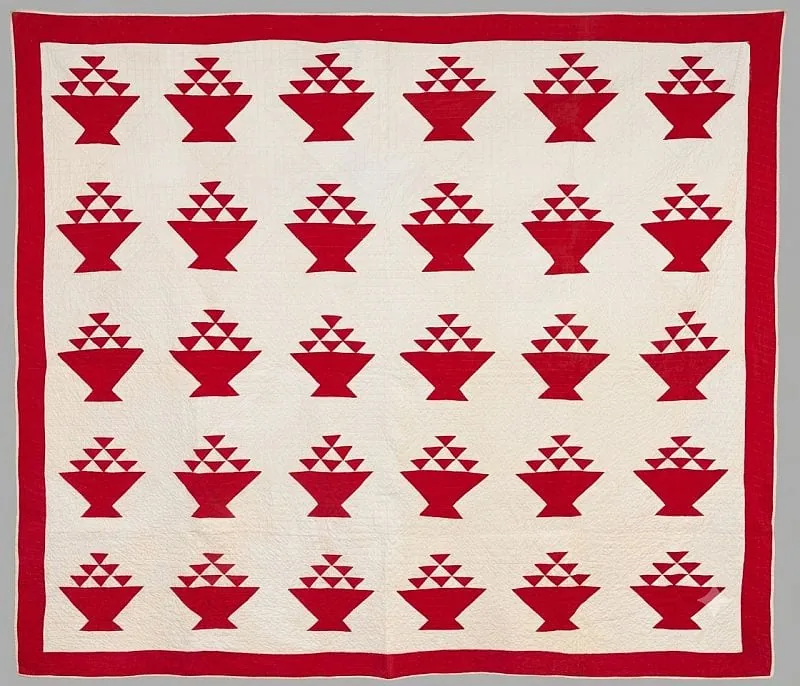
Turkey Red shows up constantly in quilts from the mid to late 1800s, often paired with white or green in classic combinations that were considered the height of fashion. If you find Turkey Red alongside one of these patterns, you’re looking at solid company for a mid-19th to early 20th century date:
Turkey Red and White or Turkey Red and Green: Not blocks so much as color schemes, but among the most iconic combinations in American quilt history, especially popular from the 1840s through the early 1900s.
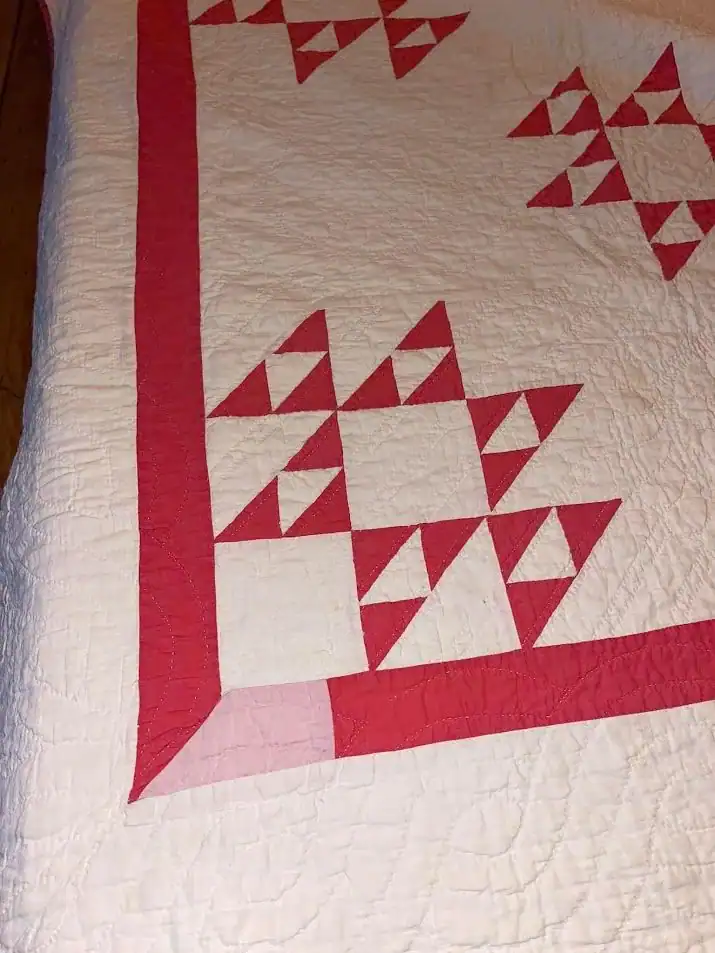
Wild Goose Chase and Flying Geese: Classic pieced patterns that made good use of a strong, solid red.
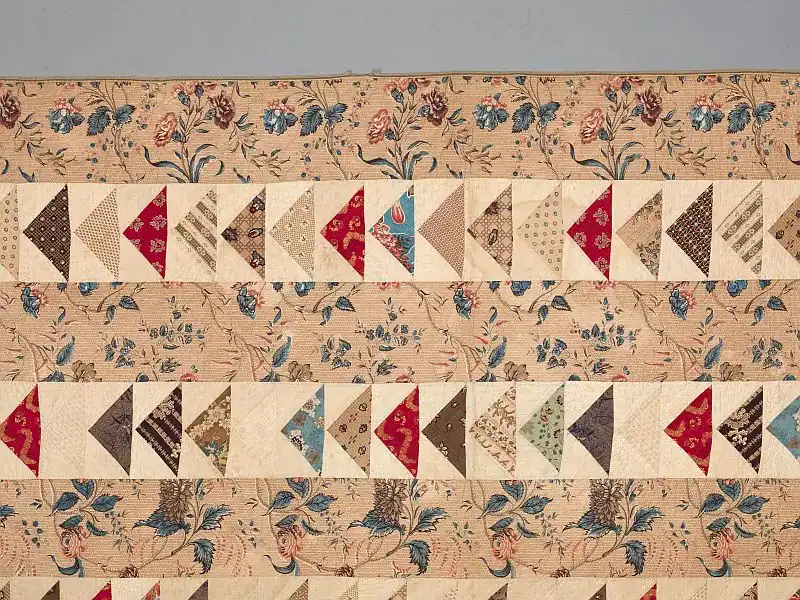
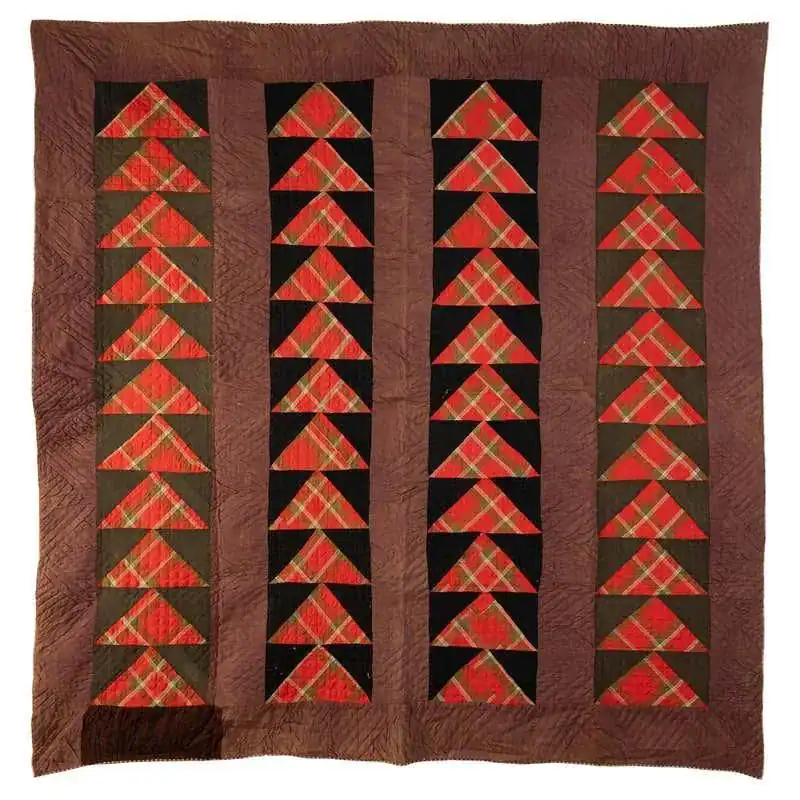
Nine Patch and Album blocks: Simple, scrap-friendly patterns often set off beautifully by a single bold red.
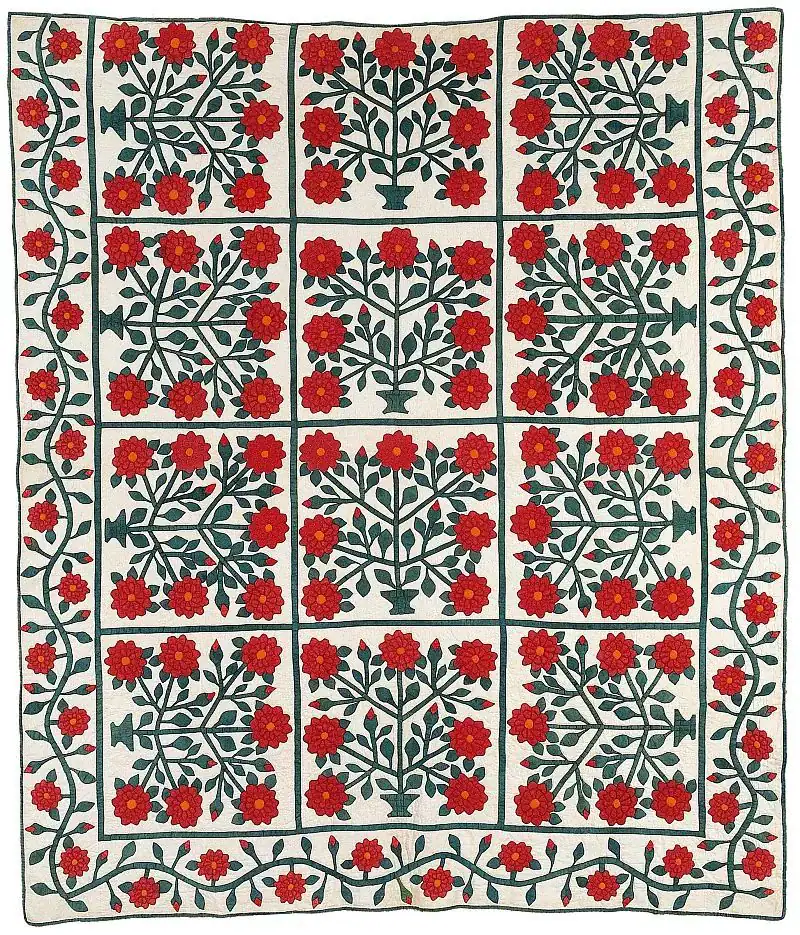
Oak Leaf and Rose of Sharon appliqué: Popular appliqué patterns from the mid-1800s that leaned heavily on Turkey Red for their stems, leaves, and flowers.
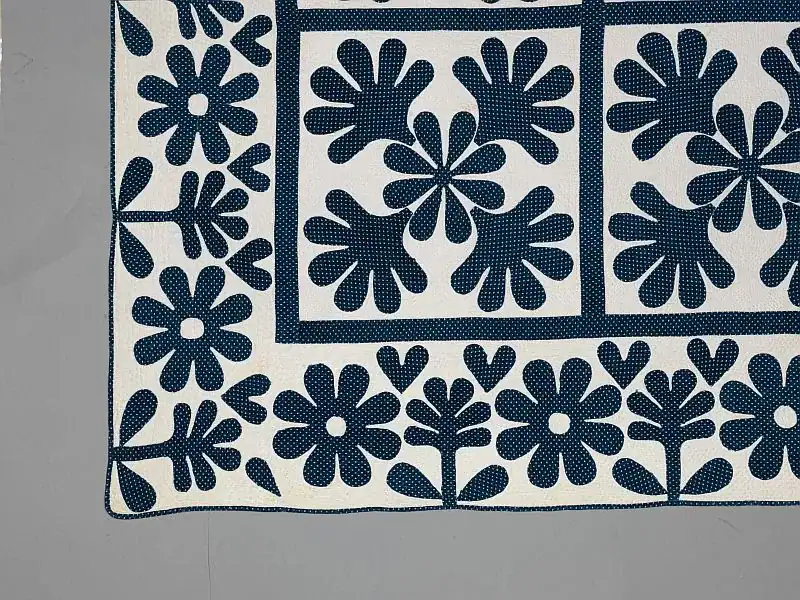
Turkey Tracks and Democrat Rose: Mid-century pieced and appliqué patterns strongly associated with the Turkey Red era.
20th Century Turkey Red
Traditional Turkey Red production declined through the 1920s and finally ceased in the 1930s, pushed out by Naphthol AS and other synthetic reds that were cheaper and nearly as good. By then, American quilters were moving toward a completely different palette anyway. The same postwar shift in dye chemistry that finally gave purple a stable, colorfast future on cotton also opened the door to the soft, clear pastels that define 1930s quilts. Turkey Red’s long reign as the reliable red of choice gave way to a whole new set of colors becoming trustworthy for the first time. But that’s a story for another Telltale Textile.
Learn More
Friendship Quilts (blog post) by Barabara Brackman
Material Culture (blog post) by Barbara Brackman
Metropolitan Museum of Art (images)
More on Turkey Red (blog post) by Barbara Brackman
Dating Fabrics: A Color Guide, 1800–1960 — the standard reference many appraisers use for pinning down a fabric’s era by color and dye type, including Turkey Red and its synthetic successors.
The Quilt Index — searchable database of documented quilts, useful for comparing your own Turkey Red fabric against dated, catalogued examples.
