Telltale Textiles: Double Purple
Every quilt carries clues about when it was made, if you know where to look. Telltale Textiles is an ongoing series digging into the fabrics, dyes, prints, and construction details that help pin down a quilt’s age. This entry: double purple, a fashionable calico print with a reputation for fading in a very particular way.
What double purple actually is
Double purple is not one specific shade. It is a print style featuring two or three tones of purple printed together in the same design, as opposed to “single purple,” which used just one. The term is old. Newspaper ads from the 1760s and 1770s already advertised “double and single purple” calicoes as imported goods, so this naming convention predates the fabrics most quilters think of when they hear it. The prints collectors usually mean by double purple, those spotted or mottled two-tone calicoes, became especially common and fashionable in the last decades of the 19th century.
Why it’s a fugitive dye
Before the mid-1800s, purple came from natural dye methods., mainly madder or logwood, fixed with mordants like tin or iron. These dyes were hard to stabilize and prone to fading into a dull brown or gray, sometimes within just a few years of use. Purple double prints were rare and unstable.
The first synthetic dye came about almost by accident. In 1856, an 18-year-old chemistry student named William Perkin was trying to synthesize quinine, the malaria treatment, from coal tar. He failed, but noticed the leftover residue turned silk a brilliant purple. He named it mauveine, patented it, and set off a real excitement over brighter, more stable purples. That excitement mostly played out in silk and wool first. Cotton purples, the kind you find in quilts, continued to lean on the older natural dyes well after synthetic purple appeared elsewhere, so a fugitive double purple calico kept showing up in quilts right through the late 1800s. The peak window for double purple calico in quilts, including its use in mourning prints worn after a death in the family is 1880 to 1900. Fading and browning from this period is common and expected.
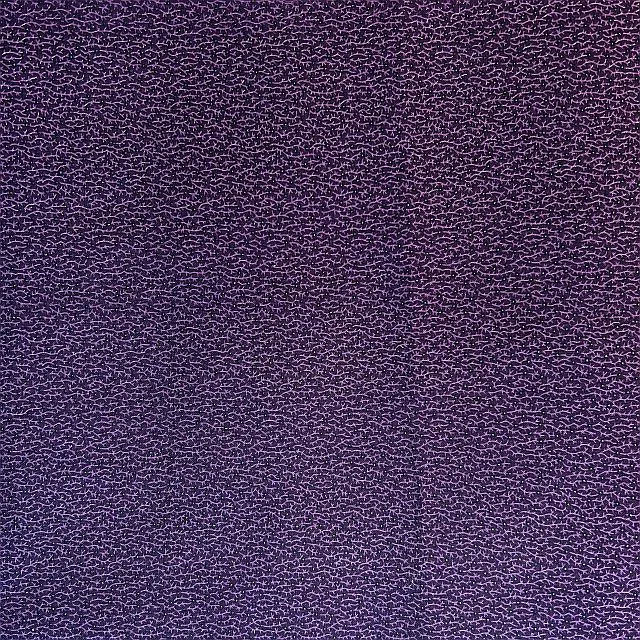
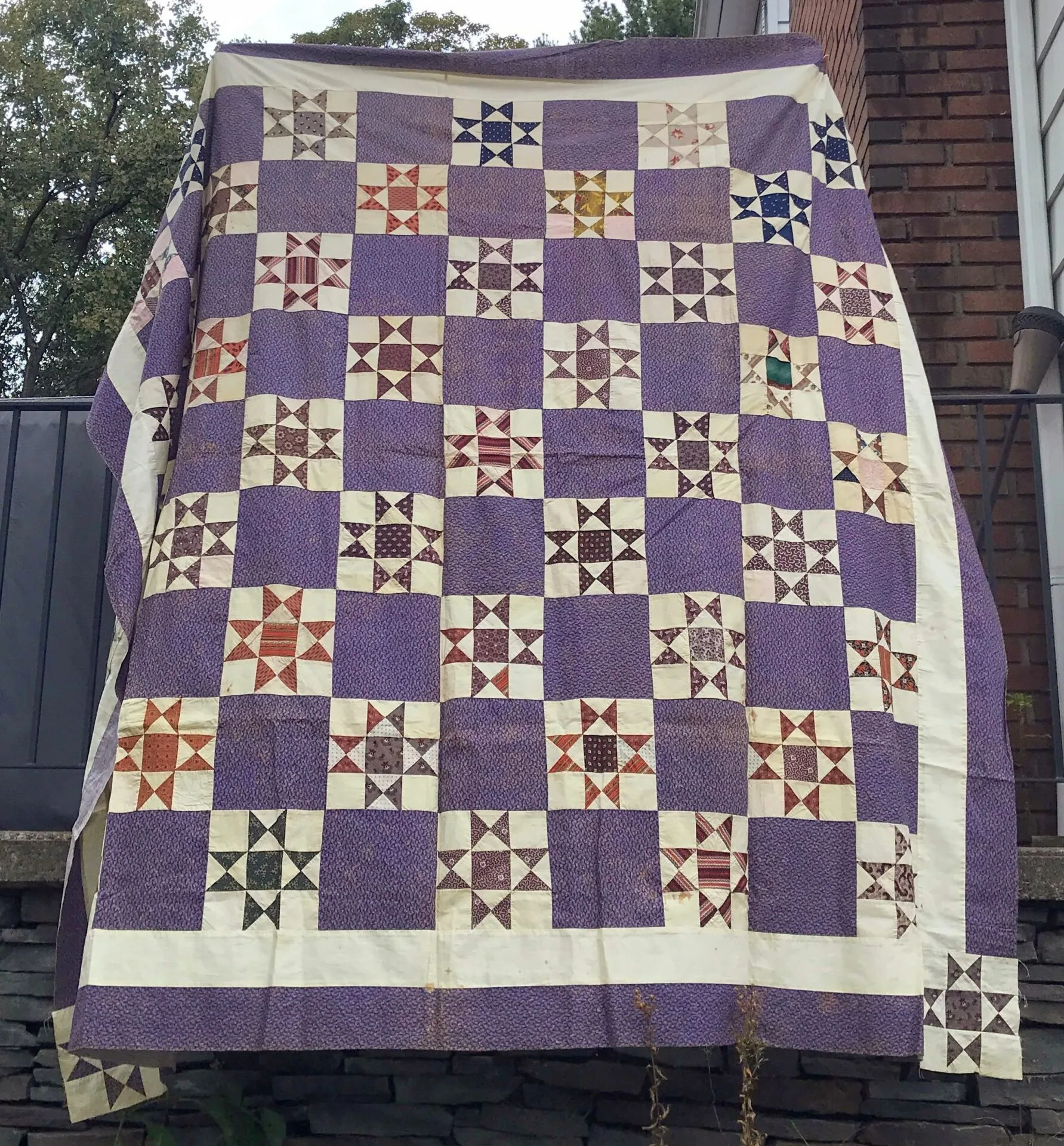
These images are from a circa 1860 quilt top
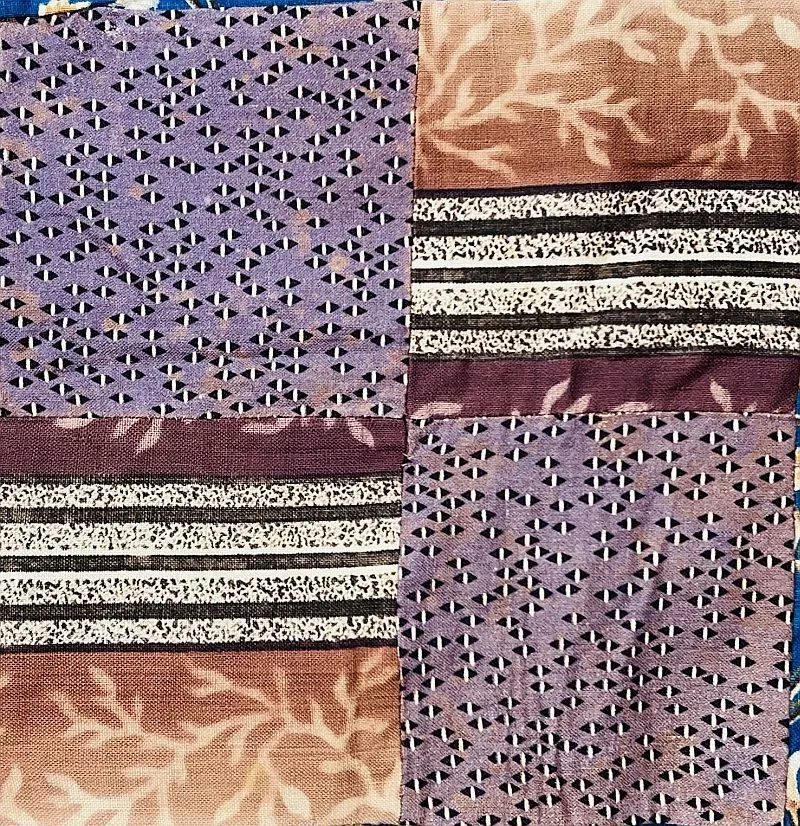
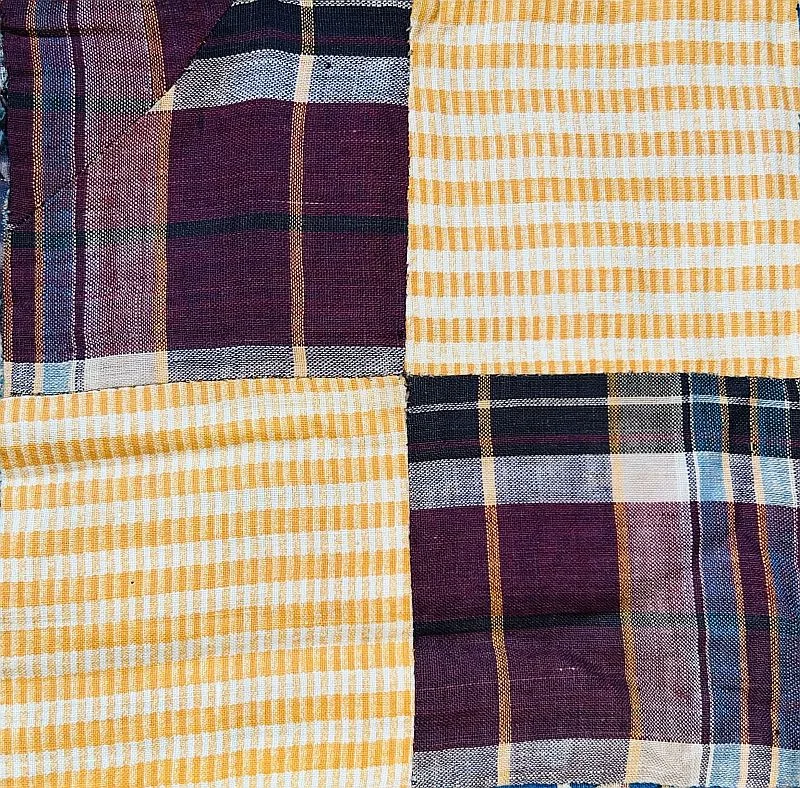
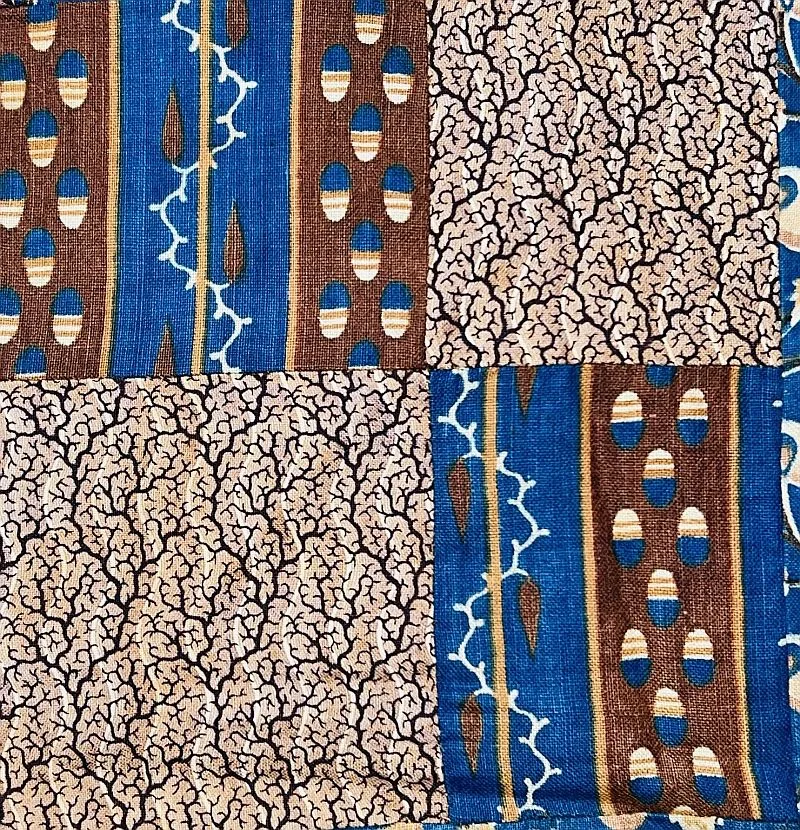
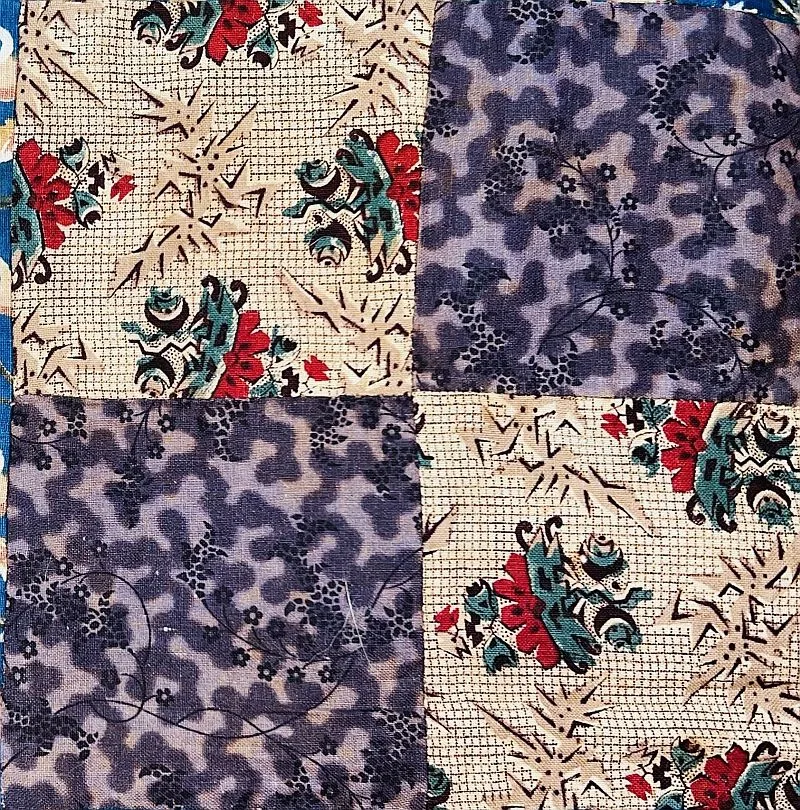
The clearest sign of an authentic 19th-century double purple is uneven fading toward brown or tan, often with a slightly darker overprinted pattern still visible where the original design was laid down in a second layer of dye. If the purple looks perfectly vibrant with no hint of browning, you are either looking at an exceptionally well-preserved piece that spent most of its life away from light, or a modern reproduction. Companies like Andover and Moda do reproduce these 1880s double-purple designs for today’s historical quilters, so vivid color alone is not a reliable sign of age.
Common quilt blocks from this era
Double purple calico shows up most often in scrap and everyday quilts from this period, frequently as sashing or as the plain alternate block in a block-to-block layout. If you find double purple alongside one of these patterns, you have a stronger case for an 1880 to 1900 date:
- Ohio Star (also called Variable Star): Often set alternating with a plain or printed square, a favorite way to stretch a prized calico across a whole quilt.
- Nine Patch and Double Irish Chain: Simple grid patterns that stayed popular across the whole second half of the century and made good use of scraps.
- Log Cabin: A Victorian favorite, especially in the 1870s and 1880s.
- Crazy Quilt: The signature style of the era, especially in silk and velvet with heavy embroidery, though double purple cotton scraps show up in cotton crazy quilts too.
- Bear’s Paw, Drunkard’s Path, and Flying Geese: All well documented in quilts from this window.
- Fan (sometimes called New York Beauty or Broken Circle when sashed with pieced strips): A pattern strongly associated with the 1880 to 1900 period.
- Split Nine Patch: Another pattern documented in quilts made from roughly 1890 into the following decades.
20th Century Purple
Purple did not become reliably colorfast on cotton until the 20th century, when quilters saw it come roaring back as a popular, stable color in the 1930s. Purple’s real turning point on cotton came after the First World War. Germany had dominated the world’s synthetic dye industry for decades, holding tightly guarded patents and formulas. When the US entered the war in 1917, the government seized German-owned dye patents and factories operating on American soil, and later sold thousands of those patents to American manufacturers. The Treaty of Versailles added to this by requiring Germany to hand dye technology and shipments over to the Allied powers as part of reparations. Between the two, American and other Allied manufacturers finally gained real access to the chemistry behind Germany’s superior dyes.
That access, combined with ongoing improvements through the 1920s, is a big part of why purple, along with several other colors, came back reliably colorfast on cotton by the 1930s. In fact, green, yellow, black, blue, pink, peach, aqua, and lavender all became achievable in stable, washable form for the first time. This is really the origin of the whole “1930s pastel” look people associate with Depression-era quilts. But that’s a story for another Telltale Textile.
Learn More
Websites:
Barbara Brackman: Purples, lilacs, and Mauve Brackman’s own blog is where the term “double purple” is traced back to 1760s newspaper ads, along with detailed posts on other fugitive and dating-friendly dyes like chrome orange and double blue
The Quilt Index — a searchable database of documented quilts with fabric dating references, useful for comparing real double purple examples.
Smithsonian: Dyes in World War I — a concise, well-sourced account of the Trading with the Enemy Act and how seized German dye patents reshaped American textile color.
The Materials and Techniques of American Quilts and Coverlets, Metropolitan Museum of Art — good general background on dye and printing processes referenced throughout this piece.
Antique Quilt History – many pictures of antique quilts with explanations.
Books
- Barbara Brackman, Clues in the Calico: A Guide to Identifying and Dating Antique Quilts
- Barbara Brackman, America’s Printed Fabrics, 1770–1890
- Barbara Brackman, Making History: Quilts and Fabric from 1890–1970
- Eileen Jahnke Trestain, Dating Fabrics: A Color Guide, 1800–1960
- Simon Garfield, Mauve: How One Man Invented a Color That Changed the World
