October 30 – November 1, 1997
These restored messages come from the Quilt History List, an online forum where quilt historians, collectors, researchers, appraisers, and enthusiasts discussed antique quilts and related textiles. The archive dates from 1996 through approximately 2016 and is being restored gradually. Sign up in the form at the bottom of the page if you want to know when a new page is added. Original spelling, opinions, formatting, and inactive links may remain unchanged.
Primary topics of this QHL Digest:
- Northwest PA Quilt Documentation Exhibit — Information about a quilts exhibit from the Northwest Pennsylvania Quilt Documentation project.
- Musty Quilt Odor Removal — Practical advice on removing musty smells from antique quilts, with members strongly cautioning against dry cleaning. (see the article on stain removal)
- Fabric Samples Preservation — Continued discussion on how to preserve fabric sample collections — members advocate keeping samples intact on their original cards. (see the article on repair, restore, or conserve)
- Dogwood Pattern Origins — Investigation into whether the Dogwood quilt pattern has Amish or Mennonite origins, with research from pattern indices.
- Anne Orr Information Sharing — Members coordinate to share what they’ve learned about Anne Orr, including her connection to Nashville and embroidery design.
- Favorite Antique Quilts — Members share personal favorites from their collections, including a ‘Tiny Triangles’ quilt with over 5,000 pieces.
- Cheater Cloth Research — A member seeks experts on cheater cloth — printed fabric that imitates patchwork — for dating and identification purposes. (see the article on cheater cloth)
- Amish Quilting Patterns — Xenia Cord responds to questions about Amish quilting design traditions and regional variations.
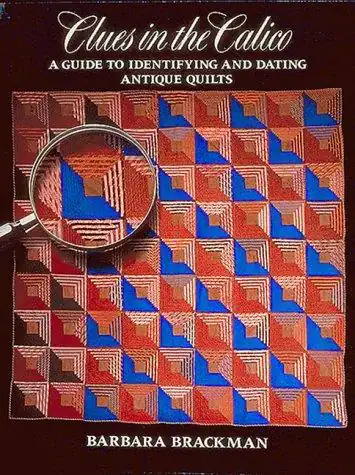
- Clues in the Calico Dating Discussion — Debate about the scope and currency of fabric dating information in Brackman’s Clues in the Calico.
- Airing and Caring for Antique Quilts — Practical tips on airing quilts outdoors for freshening, with suggestions for safe handling methods.
- New Member Introduction — Bill Wohlfart introduces himself as a retired quilter with a collection of older quilt tops.
Date: Thu, 30 Oct 1997 21:01:44 -0800 | From: The Waites
Hi Cinda and others interested in the exhibit of quilts documented by
the NW PA Quilt Documentation Project.
I communicated with Peg Weymer, who was on the committee, regarding
their selection criteria. She said Jeanette Lasansky looked at all
their color photos and the only trends she remarked on were the great
number of basket quilts and the remarkable signature quilts. That is
why they featured them. This is the type of quilt people saved rather
than use. They also had a lot of crazy quilts. Erie County made a
chart of types of quilts – patterns, colors, etc. – of the 375 they
documented but you’d have to contact them directly to get the results as
they deserted the second phase of the project.
The criteria they used was 20 quilts from each county for the regional
committee to view. That would be 140 quilts. These quilts should:
- Have a known quiltmaker (unless a group project)
- Be in good condition
- Have an interesting story
- Some feature to make it noteworthy
From that grouping they selected 50 quilts from slides. When they
actually saw the quilts for the professional photography session, 4 were
not in good condition. They were more interested in the stories of the
quiltmakers, their families and events in the community rather than
pattern trends.
Documentation forms are being kept at the Erie Co Historical Society
with a duplicate set in Meadville if anyone wants to delve further.
The exhibit continues at the Erie Art Museum, State Street, Erie, PA
through December 17th.
Audrey Waite in Sedona, AZ
(awquiltr [at] sedona [dot] net)
Date: Thu, 30 Oct 1997 22:21:04 -0600 (CST) | From: akcruz [at] ix [dot] netcom [dot] com (Alfonso & Alice Cruz )
Cindy & all –
I thought I had posted this in response to your question. I
didn’t remember ever seeing it, but figured my delete finger
got too happy so may those other notes I’ve written to individuals were
undelivered instead of ignored. Anyway, judging from a recent
post, you didn’t get it. So – my .02 worth –
Appraisers can tell you the $$ value of a textile. Of course,
it is much more complex than that one sentence. The experience
and knowledge, gained from a variety of sources, include
information on dating, rarity & condition. An appraisal does
nothing to change a quilt. otoh, a restorer,
such as myself, can take a damaged textile and make it like
new again. Whether or not that changes the value of the quilt
is something that must be considered, but the actual $$ value
has little to do with restoration. By that, I mean that we
can restore $35 junk imported quilts just as we can restore
an 1800’s treasure.
There are overlaps in the two job descriptions, but they are
not interchangeable. If you want to know what your quilts are
worth, go see an appraiser. THEN, if you want to do something
to change their condition, go see a restorer – either to do it
for you, or to guide you in doing it yourself.
Alice Cruz
The Quilted Chile
akcruz [at] ix [dot] netcom [dot] com
Date: Thu, 30 Oct 1997 21:06:55 -0800 | From: The Waites
Now that you are all filled with guilt for not answering questions,
here’s mine from early September – no responses:I visited with a young friend in Phoenix that inherited an old quilt
from her husband’s grandmother. The g-ma was from Iowa and was a
Mennonite (she said they may have been Amish originally, but g-pa was a
bit radical and departed from the church).The quilt was definitely 30’s fabric with a peach colored background
with yellow border then white border. It was beautifully quilted with
appliqued dogwood blossoms in white, yellow centers and green leaves.
Does this sound like an Amish or Mennonite quilt from that area? It
almost looked like a kit or published pattern from that era. The edge
was scalloped and bound with bias. Any help would be appreciated.Audrey Waite in Sedona, AZ
(awquiltr [at] sedona [dot] net)Date: Wed, 29 Oct 1997 12:28:54 -0400 | From: Diane McGuire Greetings, QHL,When I first joined this list over a year ago I mentioned a “restoration”
project that I planned. I haven’t
done the restoration yet, but I think my plan is still the best one I can
come
up with.The quilt is a 1880ties with basket squares on point. The basket is made=
from
two triangles and
machine appliqu’d half circle curved handle. I bought it very
inexpensively as
it had been in a barn
and had been home to several generations of mice. It is very dirty. It is
hand
pieced with coarse tan
thread and was tied with heavy tan thread.One summer I took it outside and took it apart. I saved a tiny part of the
batting for documentation,
sealed in a plastic bag. and tossed the filthy rest of it away.I am removing the sashing between the squares and plan to reconfigure the
best
of the squares
and sashing (perhaps cutting the remaining sashing pieces in half to make
them
go further) into a
smaller quilt. The fabric is very fragile. I know it will not stand up to
either
quilting or tying on its own,
especially if I use the best of the original backing also.Consequently, when I have everything apart I will baste all the squares and
sashing pieces to like
size pieces of light 100% cotton. I have some very thin batiste – like
cotton,
almost a soft viole.
THEN, I will layer the pieces in a sink and try to soak some of the dirt
off of
them. I figure with the
additional fabric support and care, they should come out ok. I will leave
the
support fabric on the
squares and restitch them together with cotton thread.I will probably use Cotton Classic batting and tie the layers together . Of course, this quilt will be
used only for display.Perhaps the support fabric idea would work for those who have very fragile
antique blocks that they
want to put together into a quilt.Does anyone else have any ideas? Has anyone tried anything similar?By the way, there was so much damage to the original quilt that there was
never
any question
about doing a total restoration. I brought it to a documentation session
and was
lucky enough to be
able to show it to Richard Cleaveland (founder of the Vermont Quilt
Festival).
That was much
before I found this list, but I still think he is one of the best quilt
experts
in the world. He told me I
was doing the right thing by trying to reconfigure it to a usable form.Thanks to this list I have collected more antique quilts and I am not
afraid of
using either antique
fabric or reproduction fabric because I feel that I have “done my
homework” and
can work with
confidence in these fields. Thank you for the support.DIane in Southeastern Massachusetts where Autumn is winding down in a
blaze of
golds and fire
orange.
Date: Fri, 31 Oct 1997 13:54:11 -0500 | From: Bill Wohlfart
Hi all,I usually just lurk but am retired (early, of course) and an avid quilter.
I do have a lot of UFO’s but I am working on them.I recently purchased two older quilt tops. One in a Paducah store just
screamed “take me home” and I did. It is a machine pieced, eight-pointed
star with a wild mix of fabrics, lattice of course muslin with red print
cornerstones. Some of the fabrics have metallic lines on them, not very
attractive for the background of a print star! Some stars look like
feedsack fabrics but I am not very knowledgeable about that subject.Other fabrics are one with a gold metallic gear print with red, blue and
black “paint splashes” on it. The oddest fabric is a dark teal with a
purple/pink building with minaretts on top and a figure with carrying a pot
on their head! Now you see why this needed a home.How would you date this quilt? Any info would be helpfulJeanann in orlando
Date: Fri, 31 Oct 1997 13:14:34 -0800 | From: Merry May
Thanks for the reminder, Alan, to get things back on track again. I do
think we need to have a LITTLE chit-chat here and there, but we seem to
have gotten off topic recently.Now, as per Lorraine’s request, MY favorite antique quilt (in my
collection) is one that I call “Tiny Triangles.” It has 5,376 triangles in
it (no borders), and is entirely pieced and quilted by hand… even the
long seams on the sacking back. Oh, and BTW, it hangs nice and straight,
too… something we all have trouble doing, even by machine!! It’s
beautiful, and a real show-stopper (if I must say so myself!). :-)OK, who’s next??Merry in “down Jersey”
gridgees [at] algorithms [dot] com
Date: Fri, 31 Oct 1997 16:43:11 EST | From: AJSNGS
Hi,I posted this earlier, and received no responses. So I’ll post again and
hopefully someone who knows about the Amish might be able to shed some=
light.Amish quilts are known for their exquisite quilting and I’m wondering if=
the
quilting patterns that they use are something that they originally came up
with, or did they borrow from other quilters?Please post to the list any answers since others have expressed an
interest in
this subject too.Thanks,Nancy in VA
AJSNGS [at] aol [dot] com
Date: Fri, 31 Oct 1997 14:46:41 -0700 |
From: Elizabeth Richards I recommend (and feel VERY STRONGLY) that the samples should be left on
their sample cards and donated to a museum who would understand what they
are and appreciate them.The Clothing and Textiles Study Collection at the University is trying to
collect just such sample so that we have a record of the types of fabrics
available to ready-to-wear manufacturers and home sewers. So…..if you
can’t find a local museum that would appreciate what you have, WE WOULD!!!!
-Date: Fri, 31 Oct 1997 13:14:35 -0800 | From: Marianne Lucio Could anyone please advise me about removing the musty smell from an old
crazy quilt purchased at auction? Should it be dry cleaned?
Thank you for your time.
—
Marianne Lucio
luciomar [at] mnsi [dot] net
Date: Fri, 31 Oct 1997 14:42:24 -0700 | From: Elizabeth Richards
This is in reply to the question about the quilt with the embroidered
squares of little girl themes and the pink bubblegum fabrics that made the
sashing.
It is not possible to distinguish among cotton, rayon and linen
through a burning test. All these fibers are cellulosic and will burn,
having an afteglow (like a cigaratte) on extinguishing and will leave a=
grey
flully ash (that probably will blow away as you blow out the flame). They
all smell like burning leaves when they burn.
The easiest way to distinguish between cotton and rayon is through
the microscope. Cotton is much more irregular than rayon and has
convolutions which form as the fiber grows. They are rather like a twisted
ribbon. If the cotton has been mercerized it will be less irregular than
unmercerized cotton because the NaOH (sodium hydroxide) used in
mercerization swells the fibers and the fibers become smoother and
straighter. Rayon (usually) looks very smooth because it is a manufacturer
fiber and it has striations – lines running down the length. You need=
about
a 100 magnification microscope to see these difference easily.-
Date: Fri, 31 Oct 1997 18:38:51 +0400 | From: Xenia Cord
In response to Nancy’s question about Amish quilting patterns, I will
offer MHO. If you look at illustrations of quilts from the Amish (or
better yet, the quilts themselves), you will see that there are certain
repeated quilting designs, among them an undulating double feather
border design, a U-shaped double feather for corners, and a distinctive
shallow S curve with elongated leaves or true feathers from one side
only. These patterns seem to have regionality, and while not uniquely
Amish, appear with frequency in Amish quilts, especially in the whole
cloth quilts.Any community that remains closed from the outside world, and thus only
little influenced by outside trends, will develop and solidify certain
traditions, including that of which quilting patterns are appropriate
within the culture. In exhibits of Amish quilts from Pennsylvania, or
Ohio, of Indiana, or elsewhere, quilts from one area may be so similar
in appearance (color, design, quilting) as to look like the work of just
one or two quilters.For a good read and reference, see Eve Wheatcroft Grannick, The Amish
Quilt, (Good Books, 1989). She has much to say on the appearance of
quilting designs, and their evolution, among the Amish.Xenia
Date: Fri, 31 Oct 1997 18:01:26 -0800 | From: Sharon Harleman Tandy
Marianne, I think you’ll find general agreement that the way to start
on the musty smell is to gently drape it (perhaps over a picnic table or
a hammock) outside to air it out, maybe for several days, with it being
turned every day or so. Under a patio roof and protected from the
weather or in a garage with the door open. When you’ve done that, let
us know the results and you can go on from there. At Quilters
Restoration Society ’97 conference in Omaha this fall we were advised by
Barbara Brackman to never have quilts/old textiles dry cleaned. Dry
cleaning is still wet and the agitation/abrasion is the same, maybe
worse. Sharon, Quilts & Answers, Boise, Idaho.
Date: Fri, 31 Oct 1997 20:48:01 -0500 (EST) | From: Baglady111 [at] aol [dot] com
I was wondering if anyone who emailed the lady seeking info on ANNE ORR=
would
be kind enough to post to the forum what was requested private .. others of
us (many) are also interested in your knowledge?
It has been my experience that some recipients don’t share what they have
requested and received freely..in some cases they are doing a paper,=
possibly
writing a book, maybe putting a program/lecture together and sharing ‘rocks
the boat’..If anyone else is interested in hearing what is know on ANN
ORR..please email me privately and I’ll take a count as to how many would
like the same info..Jane of THE FEEDSACK CLUB..
Date: Fri, 31 Oct 1997 20:20:39 -0600 | From: Laura Hobby Syler
Marianne Lucio (by way of Quilting Heritage ListServ ) wrote:Could anyone please advise me about removing the musty smell from an old
crazy quilt purchased at auction? Should it be dry cleaned?
Thank you for your time.
—
Marianne Lucio
luciomar [at] mnsi [dot] netMarianne: I whole heartedly agree with Sharon’s advise about airing the
quilt and under NO circumstances allow it to be drycleaned. One thing I
would mention…make a pot pourri bag of whole cloves and close it along
with the quilt in an airtight container (those Rubermaid tubs work well)
and leave it for a week or so. Take it out every couple of days and air
for an hour or two and replace in the tub. My grandmother used to do
this and it works pretty well. I don’t believe that there is any
residual damage to the textiles from the aromatherapy of the cloves.
JUst make sure that you have a couple of layers of cloth around the
cloves to protect from any oil seepage.
Date: Fri, 31 Oct 1997 23:42:50 -0500 (EST) | From: AMDOODAH [at] aol [dot] comDo we have any cheater cloth experts out there or know someone who is ? I’m
trying to research a piece that has Santas and toys on it – the Santas look
English. It has an 1880’s look but a 1920’s feel. Help !!
Joan-AMDOODAH [at] aol [dot] com
Date: Fri, 31 Oct 1997 22:30:26 -0700 | From: annbow [at] cio [dot] net (Ann Nash)Marianne:
Its amazing how an airing of a quilt in the great outdoors can improve it’s
odors. A crazy may be too heavy and too fragile to hang but how about
draping it over several chairs or a drying rack? Just a thought.
Annhttp://home.cio.net/annbow
Life is mostly froth and bubble. Two things stand like stone:
Kindness in another’s trouble; courage in your own.
(Princess Di to Nina Hyde Center for Breast Cancer
quoting YE WEARY WAYFARER by Adam Lindsay Gordon,
1867.)Date: Fri, 31 Oct 1997 23:12:40 -0800 | From: The Waites My question concerned the likelihood of the Dogwood pattern being an
Amish or Mennonite quilt made in Iowa in the 30’s in the colors
mentioned. I thought I had identified the pattern. The blossoms were
arranged in a large oval – not a block style. The green vine connected
the blossoms, and leaves in green accompanied each flower. It just gave
me the feel of a kit from that era and I had never heard of the Amish or
Mennonite working with kits or published patterns.I don’t have Barbara Brackman’s Encyclopedia of Applique Patterns
although I have her Encyclopedia of Pieced Patterns. I thought I had
every quilt reference book known to man but evidently not.Thanks Sharon; now I’m anxious to hear from the kit experts and anyone
with knowledge of the Iowa Amish/Mennonite communities.Audrey Waite in Sedona, AZ
Date: Sat, 1 Nov 1997 06:26:36 EST | From: JBQUILTOK eak [at] inet [dot] net asked for information on her great aunt Anne Orr. This woman
contributed so much to the needlework design world that I hope those with
knowledge of her will post to the whole board. I’ve seen a book of her quilt
designs that emphasised pictorial work done with squares It gave me the idea
of trying to convert some of my cross stitch patterns into quilt patterns.
Haven’t done it yet…but maybe someday!Janet
Date: Sat, 1 Nov 1997 07:30:56 -0500 (EST) | From: Baglady111 [at] aol [dot] comI received a magnificent post of info on the BIG EVENT in AZ..from our
own,,SHARON HARLEMAN TANDY..WOW!!! super events..BIT GUNS are going to be
there..Sharon, herself as well..MARY CROSS is one of the speakers/teachers
also..you who are on QHL know the discussion we have had in the past on hr
one book “TREASURES in the TRUNK” and her other book QUILTS & WOMEN of the
Mormon Migration”..anyway..it is a long post and I can forward what Sharon
sent me..or we can ask her to condense it..what I am looking for is this..the
dates are JAN 16-18, 1998. I will be in the L/A area to present a lecture on
the 21st..I am thinking of going to the AZ event and would like to know if
any of our readers on these digests are going to be there.. as well..I have a
couple of days to roam around…thought we could throw together a little side
trip..Jane of THE FEEDSACK CLUB..
Date: Sat, 1 Nov 1997 07:38:50 EST | From: AJSNGS Hi all,I was reading the post about the possible ways to clean a musty old crazy
quilt, and it reminded me of something I read several years ago. I remember
reading about a process of cleaning clothes using oatmeal. It was a dry bath
and I guess the oatmeal was used because of it’s absorbency. Has anybody else
heard of this? I wonder if this type of cleaning would help?Nancy in rainy Virginia
AJSNGS [at] aol [dot] com
Date: Sat, 1 Nov 1997 08:44:45 -0500 (EST) | From: Baglady111 [at] aol [dot] comIn a message dated 97-11-01 07:01:00 EST, you write:<< eak [at] inet [dot] net asked for information on her great aunt Anne Orr. This woman
contributed so much to the needlework design world that I hope those with
knowledge of her will post to the whole board. I’ve seen a book of her
quilt
designs that emphasised pictorial work done with squares It gave me the
idea
of trying to convert some of my cross stitch patterns into quilt patterns.
Haven’t done it yet…but maybe someday!Janet
>>
OK, JANET..WE’RE OFF TO A GOOD START..keep them coming..
Jane of THE FEEDSACK CLUB..and Janet..the lady wo requested the info later
advised us that the ANNE ORR is not her aunt..just names alike..but that’s
neither here or there..WE WANT INFO ON ‘THE’ ANNE ORR..
Date: Sat, 1 Nov 1997 07:43:50 -0600 | From: “Lisa Erlandson” Another alternative to draping a quilt over anything (when airing the
quilt) is to lay out a sheet (or sheets) on the grass, laying the quilt
face down on the grass, and covering the back with another sheet – to
protect it from being a target of high flying birds! This is best done
when the grass is green and the sun is not directly on the quilt. The
chlorophyl in the grass helps to act as a deodorizer on the fabrics. A
trampoline works great too. I never drape or hang an old quilt over
anything. Only lay it flat.
Lisa in Sunny, bright Texas
Date: Sat, 1 Nov 1997 09:08:27 -0500 (EST) | From: Baglady111 [at] aol [dot] comTHIS IS HARD TO BELIEVE!! the baglady asking aobut bags!!!! I’m looking for
a source for brown paper bags..sizes between 8″ x 9 1/2″..up to the size you
bring a loaf of bread home in..and the larger size we bring a LOAD of
groceries home..possibly with handles..please email me privately UNLESS
others are interested too..they are so cute decorated for an event..make
inexpensive totes for freebies..the smaller ones are great for your scraps
when taking classes..Jane of THE FEEDSACK CLUB..
Date: Sat, 1 Nov 1997 07:16:32 -0800 | From: RBCochran (by way of Quilting Heritage ListServ )In a message dated 97-10-30 07:57:20 EST, QHL [at] cuenet [dot] com writes:<< Their calendar for 1998 is
called Early New England Quilts and features quilts from their collection
said to be “the nation’s most extensive collection of early New England
quilts, nearly 250 pieces dating from the 1770s to the 1850s.” Now for
the good part. In the spring of 1998 the Visitors Center Galleries will
exhibit 40 plus quilts from the collection. >>In her post, Cinda was referring to Old Sturbridge Village. The following
post is somewhat long, but is taken from Old Sturbridge Village’s call for
papers. I haven’t seen this info on the list, and think it will be of
interest.In addition to the exhibit, there will be a symposium on Saturday, June 13,
1998. There has been a call for papers on the topic “What’s New England About
New England Quilts?” The keynote address will be given by Laurel Thatcher
Ulrich. There will be presentations on the New England states’ quilt
documentation projects. And the symposium will include five 25-minute
presentations of new research on New England quilts and quilmakers in the
17th, 18th, and 19th centuries. The papers may consider any aesthetic,
economic, technological, or social aspect of quiltmaking.One-page abstracts–along with a two-page vitae–are due by December 1, 1997
to the Curator of Textiles and Fine Arts, Lynne Bassett. Decisions will be
announced by Feb. 1, 1998. For more info, call Lynne Bassett at 508-347-0238.Rachel in NJ
Date: Sat, 1 Nov 1997 07:16:17 -0800 | From: Quilt97 [at] aol [dot] com (by way of Quilting Heritage ListServ )Sharon,I think a color chart is a wonderful idea. Bubblegum pink, etc., in
assocation with quilts, are new terms to me .Would it be possible to have a cross reference of color names from different
time periods, i.e., Double-pink, Bubblegum pink, etc.?ElisabethActually, since Barbara Brackman suggested it at QRS in September, I’ve
been planning to do exactly that, with input from anyone who has a
suggestion, of course. I’ve worked with the Pantone Color System for
many years and am looking into the cost of the larger, professional
version from which to “pull” colors as I only have the smaller, student
size. I’ll accept all help and suggestions so this can be from and for
all of us. Thanks, Sharon, Quilts & Answers, Boise, Idaho.>>
Date: Sat, 1 Nov 1997 07:16:14 -0800 | From: Palampore [at] aol [dot] com (by way of Quilting Heritage ListServ )When was Clues in the Calico written? I think we need to realize that things
have been unearthed from closets and musuems since then, so it is a good
reference but not the be all and end all. Lynn in NC (This sounds curt and
I don’t mean for it to—am in a big hurry)Date: Sat, 1 Nov 1997 07:16:25 -0800 | From: Sharon Harleman Tandy (by way of Quilting Heritage ListServ )And here’s your answer, Audrey, and anyone else interested in the
Dogwood pattern. Checking with Barbara Brackman’s Encyclopedia of
Appliqued Patterns I found ten listed as dogwoods.9.912 (listed in index as 9.92) unlikely, based on my own judgement
2. 21.14 unlikely, for the same reason
3. 22.34 four blossoms in corners of block, four leaves like a
pinwheel in center,Nancy Cabot, Chicago Tribune, 1935
4. 32.11 one blossom in block, centered with two leaves,
Wheeler/Brooks, no date
5. 32.13 one blossom, much smaller, centered with two much larger
leaves, Nancy Cabot,Chicago Tribune, 1936
6. 34.75 one blossom, centered with many leaves and surrounded by a
wreath of blossomsand leaves, Rainbow stamped block
7. 82.994 medallion style, one all-over design, Webster, Ladies Home
Journal, 1912
8. 82.997 one all-over design, Mountain Mist, no date
9. 80.13 one all-over design, Dogwood Basket, LAC
10. 82.998 all-over, Nancy Cabot, Chicago Tribune, no dateHope this helps identify your friend’s quilt, Audrey.Now, here’s a hint to help everyone format their questions. Are there
blocks? How are the design elements arranged in the block? Is it
whole-cloth applique? As you can see, much time can be saved if we know
more. The colors help us “see” the quilt better, but none of the
encyclopedias I own use color, since that is usually up to the
individual quilter, except in kit quilts. If your friend’s quilt is a
kit, Xenia Cord, Shirley McElderry, or Merrikay Waldvogel would be far
more knowledgeable sources. Just let me add, I would have been
disappointed not to have been told the colors, since I love seeing
quilts in my mind almost as much as for real! Good Luck, Sharon, Quilts
& Answers, Boise, Idaho.
Date: Sat, 01 Nov 1997 11:55:22 | From: rshink GREETINGS, i AM FINALLY BACK ON LINE AND GETTING MOST OF THE LIST.I HAVE A
LOVELY 1880’S CHARM top which I bought at Vermont Quilt Festival a number
of years ago and tied through the seam allowances to a muslin backing to
stabilize it . I also added a sleeve so I can occasionally enjoy it. B.
Brackman gave me that advice.For people reconstructing quilts I would
suggest Becky Herdles book Time Span Quilts as great. I want to send out
advice to people who have quilts out on consignment. I almost lost a new
Amish Variable Star quilt which I had on consignment in a local shop. The
owner had her shop contents seized by the Government for back taxes. We
should have seen the writing on the wall as her phone had been disconnected
etc. We hired a lawyer and I hope to get my quilt back( thank heavens I
have a good label on the back so I can prove to the ballif that it is mine
. I have restored two vintage quiltsAt 06:55 PM 10/31/97 -0800,
QHL-Digest-request [at] cue [dot] com wrote: this fal but the market in quebec is very
slow. I also did some work on an 1826 quilt. The madder browns did not like
water but the quiklt is cleaner with a better ph balance. Is it typical of
madders of that vintage to dissolve. I dried it rapidly with a hair dryer
and towels and damage is at a minimum but… any advice? I also took an old
9 patch to a dry cleaning specialist as the back is a homespun wool and the
browns wer runnung. It looks great but cost me $45 canadian . Has anyone
else had success with dry cleaning? Thanks from sunny Montreal where it is
warm enough to ride my bike again even though ther was enough snow in our
driveway for the plough last Monday. Diane
Date: Sat, 1 Nov 1997 07:16:28 -0800 | From: RBCochran (by way of Quilting Heritage ListServ )In a message dated 97-10-28 22:50:34 EST, rmaietta [at] csrlink [dot] net writes:<< On crazy quilts, I have seen many crazies with quilted backings. However,
these backs appear to be fabric that was purchased already quilted & then
just used as a back. I have also seen a beautiful early crazy that was
sewn/tacked (as opposed to quilted or tied) together with a small circle of
buttonhole stitch, about the size of a pencil. The thread used was glossy,
silk or rayon maybe & the effect was nice. From the back, these little
round buttonholes were done on a grid of about 6 or 8 inches. From the
front, you had to look for them because – well, you know what crazies are
like. >>Recently, I was at a quilt documentation day in Hunterdon County, NJ. There
was a small, beautiful crazy in wonderful condition that had a similar method
of tacking. While you couldn’t find the tacks on the front, on the back there
was a 6-8 inch grid of embroidered daisies about the size of a dime.–Rachel in NJ
Date: Sat, 1 Nov 1997 07:16:20 -0800 | From: Quilt97 [at] aol [dot] com (by way of Quilting Heritage ListServ )Thanks to Xenia and Sharon for explanations about Lancaster, Lafayette, and
Prussian blues. As a child, it was Prussian blue was one of my favorite
color crayons. 🙂 I also appreciate the bit of quilt history background
concerning the Lafayette Orange Peel design.ElisabethPrussian blue (ferrocyanides of iron) was so named, according to my
dictionary, because it was discovered by Diesbach in 1704 in Berlin, then
capital of Prussia. I believe it was used to dye wools for military uniforms
in Prussia. I think this is also the color some on the list are referring to
as Lancaster blue and Lafayette blue. It is a bright, saturated medium blue,
popular in cotton prints until the middle of the
19th century, and persisting especially in s-eastern Pennsylvania for the
rest of the century, after it fell from common use elsewhere. Prussian blue
prints from PA are often tight, randomly sized small dots or spatters on
white.Lafayette blue would probably also refer to a military uniform color. The
Marquis de Lafayette, as I have posted here before, was a Rev. War military
figure who returned to the US in 1824 for an anniversary tour and was given a
hero’s welcome. At least one quilt pattern was spawned by that visit
(Lafayette Orange Peel). Soldier blue or cadet blue is a lighter variant.>>
Date: Sat, 1 Nov 1997 07:16:22 -0800 | From: Palampore (by way of Quilting Heritage ListServ )Apparently I was not specific enough in my query about the quilt that came
from BaltimorePA. I was just hoping to find a person in the
area who might give me some advice about where to go in that immediate area
for help. I researched my own families’ history so I am familiar with using
the phone to call for info. I do appreciate the stuff regarding the
Mormons—-that was several years ago that I used them and yes I should see
what they now have available. thanks–Lynn in NC
Date: Sat, 1 Nov 1997 07:16:34 -0800 | From: Bill Wohlfart (by way of Quilting Heritage ListServ )Hi all,I usually just lurk but am retired (early, of course) and an avid quilter.
I do have a lot of UFO’s but I am working on them.I recently purchased two older quilt tops. One in a Paducah store just
screamed “take me home” and I did. It is a machine pieced, eight-pointed
star with a wild mix of fabrics, lattice of course muslin with red print
cornerstones. Some of the fabrics have metallic lines on them, not very
attractive for the background of a print star! Some stars look like
feedsack fabrics but I am not very knowledgeable about that subject.Other fabrics are one with a gold metallic gear print with red, blue and
black “paint splashes” on it. The oddest fabric is a dark teal with a
purple/pink building with minaretts on top and a figure with carrying a pot
on their head! Now you see why this needed a home.How would you date this quilt? Any info would be helpfulJeanann in orlando
Date: Sat, 1 Nov 1997 07:16:13 -0800 | From: “Kathryn c. Cole” (by way of Quilting Heritage ListServ )Good Morning All:It’s been quite a while since I’ve posted, didn’t feel I could add to any
of the discussions. I would like to add my comments about the general
content of this list: 95% of the time I feel the questions/comments are
appropriate and interesting. The only real problem I have is with the
totally personal messages.If folks like myself, would lurk a little less and participate a little
more, I think some of the concerns would sort of fade away.So here’s my topic/question:Last year I participated in the first Boxes Under the Bed Conference. The
main idea behind the conference was to explore ways to document our
quiltmaking heritage. We’ve started the process by documenting our quilts,
ie the state projects, but we must think broader, documenting our
quiltmakers and all of the materials we’ve gathered over the years related
to our quiltmaking activities.This year the introductory program was repeated, plus a one-day program for
the first group. I couldn’t attend this year due to a conflict. I will be
presenting a speech on the topic of, Preserving our Quilting Heritage, next
May and I’m interested in ideas from this talented group on what this
phrase might mean to you individually. Remember, this goes beyond
documenting the quilt, to the quiltmaker and her/his history.I believe your thoughts would be interesting to all, most certainly to me.
If any of you attended last year’s conference, or this year’s follow-up and
would like to talk about your activities,please let us know that also. Any
personal messages or thoughts please send to me.Thanks in advance for your input.Kitty Cole in Milford Mich
msnavigationmsnavigation